







New Delhi: India has strongly objected to Turkey’s handling of negotiations on a UN General Assembly resolution concerning cooperation between the United
Nations and the Organisation of Islamic Cooperation (OIC), saying New Delhi and several other member states were deliberately left out of consultations.
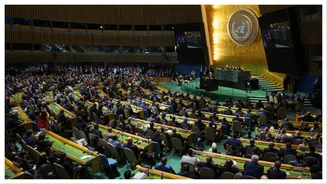
India voted against the resolution, which was adopted on Monday with 112 votes in favour, six against and 39 abstentions. Armenia, Cyprus, Greece, Israel and the US were among those voting against it. Iraq introduced the resolution while Turkey acted as its facilitator.
India’s Deputy Permanent Representative to the UN, Ambassador Yojna Patel, said the OIC Permanent Observer Mission had excluded India and other countries while circulating successive drafts. She said the process raised serious concerns about the way negotiations were conducted.
“My delegation has voted against this resolution not only because of its substantive aspects, but also for an even more concerning matter regarding the working methods adopted by the facilitator who convened negotiations on the same thing,” Patel said.
India calls exclusion ‘intentional’
Patel said India was deeply disappointed by the lack of inclusive consultations. She said the OIC mission “chose to exclude not only my delegation but a number of other countries when circulating successive drafts of the resolution.”
“This is not only shocking but also sets a bad precedent of delegations excluding specific member states to enable their agendas,” she said.
She added that even after objections were raised, some countries continued to be left out. Basic procedures, including acknowledging inputs, were “blatantly disregarded indicating that it was done by design rather than by mistake.”
Patel said such practices went against the UN’s principles of sovereign equality inclusivity and multilateral cooperation. India urged the General Assembly president to investigate the matter and prevent similar incidents.
India questions OIC role and references to Kashmir
New Delhi also questioned the substance of the resolution particularly its proposal to expand the OIC’s role in addressing conflicts. Patel said, “The rationale for seeking to extend the role of the OIC in this manner is unclear. The OIC is not a regional organisation.”
India also objected to references to the OIC Ministerial Conference on Women held in Islamabad in July, whose declaration referred to Jammu and Kashmir. Patel said the OIC had been “systematically misused by one Member State to weaponise OIC resolutions and declarations against India through false and baseless allegations,” in an apparent reference to Pakistan.
Cyprus, Greece and EU also raise concerns
India was not the only country to criticise the negotiation process. Cyprus said it had repeatedly been excluded from communications despite requesting to be included.
Greece also raised “serious concerns” over Turkey’s conduct as facilitator, saying its submissions were not meaningfully addressed. Ireland, speaking for the European Union, also cited a “lack of transparency and inclusivity throughout the negotiation process”.
Despite the objections, the resolution was adopted by the General Assembly.