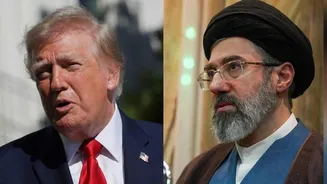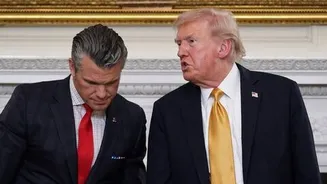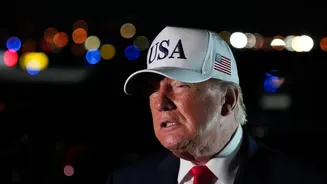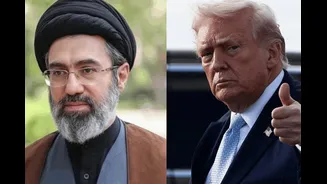




New Delhi: US President Donald Trump has indicated that Washington will refrain from launching fresh military strikes against Iran for the time being,
following appeals from regional countries seeking to prevent further escalation. The announcement came after Trump met Qatari Prime Minister Sheikh Mohammed bin Abdulrahman Al-Thani at the White House on Monday.
Trump said the US would continue its naval blockade in the Strait of Hormuz but did not rule out further military action. He said Qatar, Saudi Arabia, the United Arab Emirates, Bahrain and Kuwait wanted a peaceful resolution to the conflict.
“The United States of America is fully locked and loaded with the best equipment ever made, and we don’t think there’s going to be any reason to use it,” Trump told reporters.
The meeting comes as diplomatic efforts to end the conflict intensify following last week’s US midterm elections. However, senior American and Gulf officials have indicated that an immediate agreement remains unlikely.
Iran’s ceasefire proposal rejected by US
Qatar’s prime minister visited Tehran last week before travelling to Washington for discussions with Trump and Vice President JD Vance. Al-Thani described the discussions as positive and said they focused on reaching an agreement and restoring peace in the region.
However, differences between Washington and Tehran remain significant. Iran’s proposal for ending the war includes an end to the US naval blockade of its ports, the lifting of some sanctions and a halt to American bombing. In return, Tehran has offered to stop its own blockade of the Strait of Hormuz, with discussions on its nuclear programme and other sanctions to follow.
The Trump administration has rejected the proposal. US Secretary of State Marco Rubio described Iran’s conditions as unrealistic, while Iranian Foreign Ministry spokesperson Esmaeil Baghaei defended the offer as the most reasonable proposal currently available.
Rubio has also said he does not expect an immediate diplomatic breakthrough. Senior UAE official Anwar Gargash similarly warned that a comprehensive political settlement would be difficult, cautioning that the region could face a prolonged period of uncertainty.
Military attacks continue despite diplomatic efforts
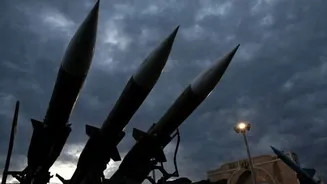
The diplomatic discussions have taken place alongside continuing military activity in the region. Iranian state media reported that US strikes hit Iran’s Qeshm island on Sunday night. An Iranian provincial official said the attacks did not damage vital infrastructure or services.
A senior Iranian source told Reuters that the strikes targeted radar systems used for air defence and ship navigation, along with bases linked to missile launchers and mine-laying systems. Washington has not publicly commented on the reported strikes.
Iran has also continued attacking vessels in the Gulf and the Strait of Hormuz. A state television reporter claimed that 11 tankers had been disabled over the previous 10 days. Attacks on commercial vessels in the region have increased sharply since October.
Meanwhile, Turkish President Tayyip Erdogan has urged Washington to avoid further escalation, saying the conflict could be resolved through dialogue and diplomacy.
The war, which began with US and Israeli strikes against Iran on February 28, has now continued for more than eight months. Pressure on the Trump administration to find an exit has also increased following the Republican Party’s losses in last week’s midterm elections.