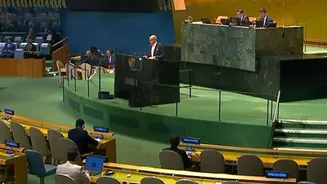





New Delhi: India once again called for major reforms in the United Nations, including extending the “veto power” to all the members of the UN Security
Council (UNSC). India’s Permanent Representative to the UN, Parvathaneni Harish, made the country’s position around the matter clear, during a recent meeting.
The diplomat said, “Limiting the veto cannot be separated from the questions of categories of membership, regional representation, size and working methods. We need to move forward on all five clusters together. India reiterates its call for a comprehensive approach towards Security Council reforms.”
Delivered India’s statement at the UNGA Plenary on the use of the Veto
Highlighted:
➡️ Veto is a responsibility, not a tool of narrow political expediency. We note that two of the P5 have not exercised veto for over three and a half decades. Most vetoes or threats of vetoes have emanated from three of the P5.
➡️ Piecemeal reforms will not work. All five clusters of UNSC reform must be addressed together.
➡️ Veto initiative of 2022 was seen as a harbinger of change. However, actual record of large number of vetoes cast since UNGA 76/262 tells a contrary story.
➡️ Unwritten consensus rules enable de facto vetoes in Council decisions and sanctions committees.
➡️ Consensus cannot become a disguised veto in the Inter Governmental Negotiations (IGN).
➡️ India aligns with the Common African Position: As long as the veto exists, all permanent members must enjoy equal rights.
➡️ New long-term seats without veto powers would create second-class members and perpetuate inequity. All permanent members, including new ones, must enjoy equal rights.
➡️ Begin text-based negotiations with clear timelines. The UNSC must reflect today’s realities, not those of 1945.
— Parvathaneni Harish (@AmbHarishP) October 26, 2026
He further said that the privilege of veto, carries an immense burden of responsibility that also requires restraint. He said that India had always maintained that the veto, which is currently only the prerogative of the 5 permanent members of the UNSC, is a responsibility to be exercised with great restraint. This is especially true in case of matters dealing with international peace and security, said Harish.
The Indian diplomat concluded by saying that the veto “should not be an instrument of narrow political expediency.”
Notably India has for long called for reforms at the UN, including extending the “veto power” in the Security Council to all member countries. However, so far there has not been much movement on the matter. The big and powerful countries, including the US, have been resisting parting with their veto privilege, or one can say sharing it with other countries, whom they view as underdeveloped.