









New Delhi: On Guru Purnima, India celebrates far more than a festival. It honours an idea that has shaped the country’s civilisational identity for thousands
of years — the belief that knowledge is sacred, and the one who imparts it deserves the highest reverence. Observed on the full moon day (Purnima) of the Hindu month of Ashadha, Guru Purnima is dedicated to teachers, mentors and spiritual guides. The festival is also known as Vyasa Purnima, commemorating the birth anniversary of Maharishi Ved Vyasa, revered as the compiler of the Vedas and the author of the Mahabharata. In 2026, Guru Purnima falls on Wednesday, July 29.
While every individual’s guru may be different, history remembers a handful of extraordinary teachers whose ideas transformed not just India but the world. Their philosophies influenced religion, politics, education, literature, science and human consciousness itself.
Here’s a look at 10 gurus whose teachings continue to shape humanity.
1. Maharishi Ved Vyasa – The Adi Guru of knowledge
No list of great gurus can begin anywhere else.
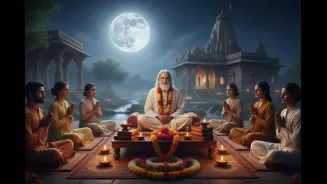
Guru Purnima itself is dedicated to Maharishi Ved Vyasa, who occupies an unparalleled place in Indian tradition. Credited with compiling the four Vedas, composing the Mahabharata – the world’s longest epic and authoring the 18 Puranas, Vyasa is regarded as the architect of India’s spiritual literature.
His greatest contribution wasn’t merely writing scriptures but preserving knowledge in a structured form, making it accessible across generations. His work continues to define Hindu philosophy, ethics and spirituality thousands of years later. Guru Purnima is therefore also celebrated as Vyasa Purnima.
2. Gautama Buddha – The Guru who redefined compassion
Born as Prince Siddhartha in the 6th century BCE, Gautama Buddha renounced royal life in search of answers to suffering.
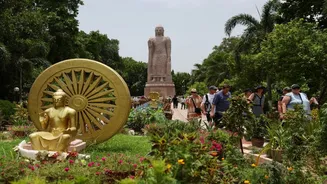
After attaining enlightenment at Bodh Gaya, Buddha delivered his first sermon at Sarnath – an event that Buddhist traditions associate with Guru Purnima. His teachings on mindfulness, compassion, moderation and self-awareness evolved into Buddhism, one of the world’s major religions.
Today, his philosophy influences psychology, meditation practices and ethical thought far beyond religious boundaries.
3. Adi Shankaracharya – The Philosopher who unified India
At just 32 years of age, Adi Shankaracharya achieved what few thinkers have accomplished in a lifetime.
He revitalised Hindu philosophy through Advaita Vedanta, the doctrine of non-duality, arguing that the individual soul and the universal consciousness are one. Travelling across the Indian subcontinent, he established four major monasteries (mathas) in the north, south, east and west, helping unify diverse philosophical traditions.
His commentaries on the Upanishads, Bhagavad Gita and Brahma Sutras remain foundational texts for students of Indian philosophy.
4. Chanakya – The Guru who built an Empire
Long before political strategy became an academic discipline, Chanakya (also known as Kautilya or Vishnugupta) had already mastered it.
Teacher, economist, philosopher and royal adviser, Chanakya mentored Chandragupta Maurya, helping establish the Mauryan Empire around the 4th century BCE. His treatise, the Arthashastra, remains one of history’s most influential works on governance, diplomacy, economics and statecraft, earning comparisons with Machiavelli centuries later.
5. Guru Nanak Dev Ji – The Teacher of equality
The founder of Sikhism, Guru Nanak Dev Ji challenged rigid social divisions and religious orthodoxy during the 15th century.
His central message – “There is no Hindu, there is no Muslim”—emphasised humanity above identity. He advocated equality, honest living, service (seva) and remembrance of the divine. The institutions of langar (community kitchen) and collective service continue to embody his teachings, making them as relevant today as they were over 500 years ago.
6. Swami Vivekananda – The Guru who took India to the world
Few spiritual leaders changed global perceptions of India as profoundly as Swami Vivekananda.
His address at the Parliament of the World’s Religions in Chicago in 1893, beginning with the iconic words, “Sisters and Brothers of America,” introduced Vedanta and Yoga to Western audiences.
A disciple of Sri Ramakrishna Paramahamsa, Vivekananda emphasised education, self-confidence, nation-building and service to humanity. His influence continues across education, youth leadership and spirituality.
7. Sri Ramakrishna Paramahamsa – The Mystic behind a global movement
Though he rarely travelled beyond Bengal, Sri Ramakrishna Paramahamsa became one of India’s most influential spiritual masters.
His teachings centred on the direct experience of God rather than ritual alone. He believed all religions ultimately lead to the same truth – a philosophy that deeply influenced Swami Vivekananda. Through Vivekananda and the Ramakrishna Mission, Ramakrishna’s message reached audiences across the globe.
8. Sadhguru Jaggi Vasudev – A Contemporary global spiritual voice
Among today’s most recognisable Indian spiritual teachers, Sadhguru Jaggi Vasudev has brought discussions on yoga, meditation, ecology and inner well-being into mainstream global conversations.
Founder of the Isha Foundation, his initiatives such as Save Soil have combined environmental advocacy with spiritual awareness. Through books, digital platforms and international events, he has introduced millions of young people to yogic traditions in contemporary language.