




Ignoring an unpaid traffic challan could soon create bigger problems than simply carrying a pending fine. The Supreme Court has directed States and Union
Territories to tighten recovery measures, including impounding vehicles found with unpaid e-challans during random checks and restricting several online vehicle-related services.
The directions came on September 28 in the long-running road safety matter, S Rajaseekaran v. Union of India. The Court was told that around ₹49,194.05 crore was recoverable through e-challans across the country, with about ₹26,175.05 crore recovered so far. The Bench said issuing large numbers of challans would mean little if authorities failed to collect the fines.
What happens if your e-challan remains unpaid?
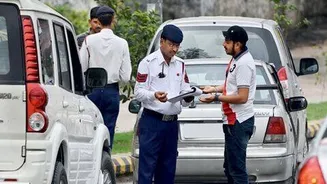
As per a Live law report, the Court directed authorities to conduct random vehicle checks. If officers find that an e-challan has not been paid, steps can be taken to impound the vehicle.
It also called for stronger digital restrictions against vehicles carrying outstanding fines. These include blocking ownership transfers, refusing certain registration-related services, denying fitness certificates and blacklisting vehicles on the Parivahan Portal until dues are cleared. Vehicles with repeated violations could face action linked to driving licence renewal as well.
The Court said, “It is not just sufficient to keep issuing e-challans to the person who is alleged to have violated the provisions of the Act.”
For a vehicle owner, this could mean discovering a pending challan at the worst possible moment, such as during a sale, fitness renewal or roadside check.
Can unpaid challans be added to electricity bills?
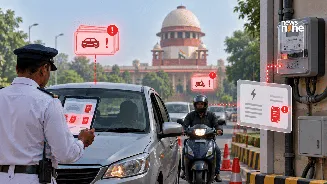
The Bench discussed using electricity bills as another possible route for recovering unpaid traffic fines. This was an oral suggestion during the hearing and was not part of the formal directions reported in the order.
The Supreme Court has also sought stronger electronic enforcement, including AI-enabled systems capable of detecting specified traffic violations. A public dashboard is expected to track implementation, enforcement devices and challans generated across States and National Highway corridors.