







New Delhi: Kerala is getting ready to welcome its most beloved festival, with the celebrations culminating in Thiruvonam on August 26. From the first Atham
pookkalam to the grand Onam Sadya, here is everything you need to know about the festival’s dates, traditions and the legend of King Mahabali.
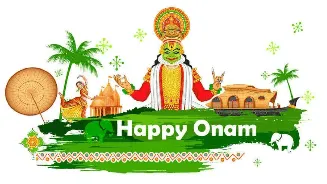
There are festivals that mark a date on the calendar, and then there is Onam, which seems to transform an entire state. As August gives way to the festive season in Kerala, courtyards begin filling with flowers, kitchens prepare for an elaborate vegetarian feast, traditional songs and dances return to the streets, and the familiar image of King Mahabali takes centre stage. In 2026, the 10-day Onam celebrations will begin with Atham on August 16 and culminate with Thiruvonam, the most important day of the festival, on Wednesday, August 26. The dates are also reflected in the Kerala government’s official 2026 holiday calendar.
When is Onam 2026?
Thiruvonam, the main day of Onam, will be celebrated on Wednesday, August 26, 2026.
The celebrations traditionally begin on Atham, the first of the 10 Onam days, which falls on August 16, 2026. The festival therefore runs through a sequence of 10 days, ending with Thiruvonam on August 26. Kerala Tourism describes Onam as a 10-day celebration beginning with the Atham asterism in the Malayalam month of Chingam.
The Kerala Government’s official 2026 holiday notification lists First Onam on August 25, Thiruvonam on August 26, Third Onam on August 27 and Fourth Onam on August 28.
Onam 2026: Key dates at a glance
| Occasion | Date | Day |
|---|---|---|
| Atham — Day 1 | August 16, 2026 | Sunday |
| Chithira — Day 2 | August 17 | Monday |
| Chothi — Day 3 | August 18 | Tuesday |
| Vishakam — Day 4 | August 19 | Wednesday |
| Anizham — Day 5 | August 20 | Thursday |
| Thriketta — Day 6 | August 21 | Friday |
| Moolam — Day 7 | August 22 | Saturday |
| Pooradam — Day 8 | August 23 | Sunday |
| Uthradom — Day 9 | August 24 | Monday |
| Thiruvonam — Day 10 | August 26 | Wednesday |
Why is Onam celebrated
At the heart of Onam is the enduring legend of King Mahabali, or Maveli, the mythical ruler remembered for his generosity, prosperity and egalitarian rule.
According to the popular legend, Mahabali was an Asura king whose kingdom became extraordinarily prosperous. His popularity and power worried the devas, who sought Lord Vishnu’s intervention. Vishnu appeared before Mahabali in his Vamana avatar, disguised as a dwarf Brahmin, and asked the king for as much land as could be covered in three steps.
Mahabali agreed.
That annual homecoming is at the emotional centre of Onam. According to the tradition, Thiruvonam is the day when Mahabali returns to see his subjects, who welcome him with flowers, food and festivities.
The legend is particularly powerful because Mahabali’s kingdom is remembered as a place where people lived in prosperity and equality. Kerala Tourism notes that the festival is celebrated across communities and has come to embody ideas of unity, abundance and communal harmony.
What happens during the 10 days of Onam?
Each of the 10 days carries its own traditions and builds towards Thiruvonam.
Atham: The celebrations begin
Atham, on August 16 in 2026, marks the beginning of the 10-day celebration. One of the most recognisable traditions begins here: the Athapookkalam, a floral carpet created in front of homes.
The pookkalam traditionally grows more elaborate as the days progress, with flowers arranged in increasingly intricate patterns as families prepare to welcome Mahabali.
Chithira and Chothi: The festive preparations grow
The second and third days see pookkalams expand with additional layers and flowers. Chothi is traditionally associated with buying new clothes and jewellery for family members.
Vishakam and Anizham: Food and boat-race traditions
By Vishakam, preparations for the grand Onasadya gather pace. Anizham is particularly associated with Vallamkali, Kerala’s famous snake-boat races, in which long traditional boats are rowed by teams to rhythmic chants and songs.
Moolam and Pooradam: The festival comes alive
Moolam marks the beginning of Onasadya offerings in many places, while folk performances become an important part of the celebrations.
On Pooradam, traditionally the eighth day, clay figures representing Mahabali and Vamana are placed at the centre of the pookkalam
Uthradom: The eve of Thiruvonam
Uthradom, the ninth day, is traditionally associated with the final preparations for Mahabali’s arrival. Homes are stocked with fresh produce and delicacies, while families make the last preparations for the main celebration.
Thiruvonam: The grand finale
Then comes Thiruvonam on August 26, 2026 – the tenth and most important day.
Families dress in traditional clothes, decorate their homes, prepare the elaborate Onasadya and gather together for the day’s celebrations. For many Malayalis, it is as much a family reunion as it is a religious or cultural festival.
The central idea is simple and enduring: Mahabali has returned, and his people are ready to welcome him.
Perhaps what makes Onam endure is that its central story is not simply about a king returning from the netherworld. It is about the memory of a society imagined as prosperous, fair and free of suffering, and the hope that, for at least a few days each year, people can recreate something of that world around their own homes and communities.