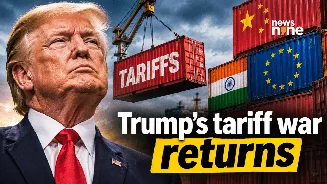









New Delhi: Donald Trump’s tariff war appears to be entering another phase. The United States is preparing to raise import duties on China, the European
Union (EU) and several other economies, including India, over concerns that government-backed industrial production overseas is hurting American manufacturers. The move could trigger fresh uncertainty across global markets.
According to a report by The Wall Street Journal on November 24, US Trade Representative Jamieson Greer could announce the findings of a months-long investigation as early as this week. The proposed tariff changes could affect dozens of countries, considering the European Union alone comprises 27 member nations.
Read more: Who was Naim Abu Nahal? Israel kills Hamas internal security chief in Gaza
Why is the US preparing to raise tariffs again?
On March 11, 2026, Washington launched investigations under Section 301 of the US Trade Act of 1974 to examine excess industrial production across 16 economies.
The Trump administration believes that government subsidies, cheap loans and other forms of financial assistance allow overseas manufacturers to produce goods beyond market demand and sell them at prices that American companies struggle to match.
The investigation covers China, the EU, Singapore, Switzerland, Norway, Indonesia, Malaysia, Cambodia, Thailand, South Korea, Vietnam, Taiwan, Bangladesh, Mexico, Japan and India.
How high could the new US tariffs be?
According to The Wall Street Journal, Japan, South Korea and EU members could face tariff rates of 15 per cent or lower. India and Vietnam could face higher rates depending on their respective trade arrangements with Washington.
The final rates, product exemptions and implementation dates are yet to be officially announced.
Read more: Pope Francis saw the Devil three times and peeped into Hell, his private diary reveals
US tariff hike: What does it mean for India?
India could find itself back at the negotiating table over tariff rates. In February 2026, Washington and New Delhi announced a trade framework that envisaged an 18 per cent reciprocal tariff on Indian goods.
The latest investigation specifically examined India’s manufacturing capacity, including solar modules. Fresh duties could put pressure on Indian exporters across sectors such as textiles, footwear, chemicals, engineering goods and renewable energy equipment, depending on the products covered.
Higher import duties could make Indian products more expensive for American buyers, squeeze exporters’ profit margins and affect employment in export-dependent industries.
What could be the global impact?
Fresh tariffs could increase costs for American businesses, raise consumer prices and disrupt international supply chains. Companies may reconsider sourcing contracts and manufacturing investments. Much will depend on the final tariff rates and whether affected trading partners respond with retaliatory measures.