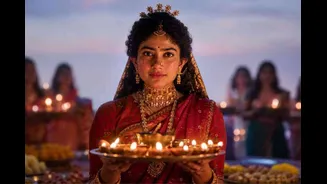





Mumbai: Karwa Chauth may have become a grand cinematic spectacle over the years, but the festival has been part of Hindi films for decades. While filmmakers
like Karan Johar gave it a larger-than-life treatment, earlier directors had their own ways of weaving the tradition into their stories, often using it to bring out emotions, relationships and dramatic twists.
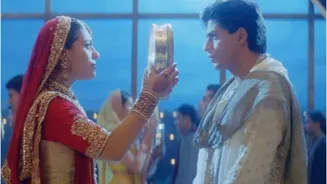
In Kabhi Khushi Kabhie Gham, Karan Johar devoted an elaborate sequence to the festival. Jaya Bachchan’s character explains the significance of Karwa Chauth and the tradition of preparing sargi to her daughter-in-law, played by Kajol. The sequence almost becomes a story within the film, introducing audiences to the rituals and emotions associated with the occasion.
However, long before Karwa Chauth became synonymous with lavish sets, designer outfits and romantic songs, Manmohan Desai had used it to create a dramatic moment in Suhaag. Nirupa Roy’s character observes the fast for her husband, played by Amjad Khan, who is a smuggler. As she raises the sieve, his face comes into view, turning a traditional ritual into a significant cinematic moment. Desai used the festival in a manner that suited his distinctive storytelling style.
Romance took centre stage in Dilwale Dulhania Le Jayenge, where Kajol’s Simran pretends to faint so that Raj, played by Shah Rukh Khan, can offer her water and help her break the fast. The moment remains one of the film’s memorable romantic sequences.
Sanjay Leela Bhansali’s Hum Dil De Chuke Sanam brought its own visual grandeur to the celebration, with the song Chand Chupa Badal Mein capturing the romance and anticipation associated with the moonlit occasion.
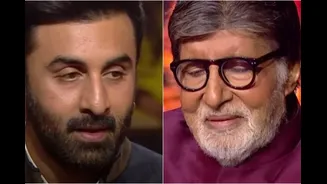
In Baghban, Karwa Chauth became a moving expression of love and separation. Amitabh Bachchan and Hema Malini’s characters, forced to live apart after their children separate them, observe the festival despite the distance. Once the moon is sighted, they connect over the telephone and break their fast, making the sequence one of the film’s most emotional moments.
Films such as Biwi No. 1 and Yes Boss also incorporated the festival into their narratives. In Yes Boss, the occasion becomes particularly meaningful as Juhi Chawla’s character begins to recognise her true feelings for Shah Rukh Khan’s character, even though she is romantically involved with his boss.
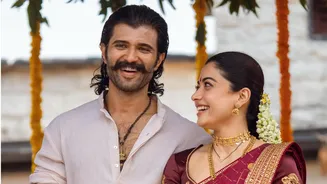
More recently, Sandeep Reddy Vanga’s Animal presented Karwa Chauth in an entirely different light. Instead of a conventional romantic celebration, the sequence unfolds through an intense confrontation between Geetanjali, played by Rashmika Mandanna, and her husband Ranvijay, portrayed by Ranbir Kapoor.
Geetanjali questions Ranvijay’s violent behaviour, his obsessive attachment to his family and the turmoil surrounding their marriage. What would traditionally be a moment of love and togetherness becomes an emotionally charged exchange reflecting the couple’s troubled relationship.
The scene also attracted considerable attention after a brief portion featuring Rashmika’s dialogue delivery and expressions appeared in the trailer. The clip went viral, triggering widespread trolling and criticism on social media.
From the dramatic storytelling of Suhaag and the romance of Dilwale Dulhania Le Jayenge to the emotional separation in Baghban and the marital conflict in Animal, Karwa Chauth has continued to evolve on the Hindi film screen. What began as a ritual woven into the narrative has, over time, become a cinematic device through which filmmakers explore love, longing, devotion and even conflict.