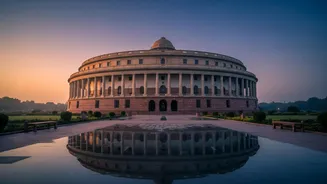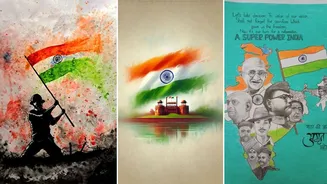




New Delhi: As India prepares to celebrate its 80th Independence Day on August 15, 2026, the tricolour once again becomes a powerful reminder of one of history’s
greatest freedom struggles. The journey to independence was neither swift nor simple. It was a decades-long movement driven by countless revolutionaries, reformers, political leaders and ordinary citizens who challenged nearly two centuries of British colonial rule.
From mass civil disobedience campaigns and underground revolutionary networks to landmark political negotiations and immense personal sacrifices, India’s path to freedom reshaped not only the nation but also inspired anti-colonial movements across the world. Yet, the dawn of independence also arrived alongside one of the largest and most painful human migrations in modern history, making August 15, 1947, a day of both celebration and profound tragedy.
How British rule took hold in India
British influence in India began through the East India Company, which initially arrived as a trading enterprise in the early 17th century. Over time, military victories, political alliances and territorial expansion transformed the company into the dominant power across much of the Indian subcontinent.
Following the Revolt of 1857, often regarded as India’s First War of Independence, the British Crown dissolved the East India Company’s rule and assumed direct control through the Government of India Act, 1858, ushering in the era known as the British Raj. While the British introduced railways, telegraphs and administrative reforms, colonial policies also led to economic exploitation, famongs, political repression and growing demands for self-governance.
Birth of India’s organised freedom movement
The establishment of the Indian National Congress (INC) in 1885 marked a turning point in India’s political awakening. Initially seeking greater Indian participation in governance through constitutional reforms, the movement gradually evolved into a nationwide campaign demanding complete independence.
By the early 20th century, nationalist sentiment had strengthened significantly. Leaders such as Bal Gangadhar Tilak, Lala Lajpat Rai, Bipin Chandra Pal, Gopal Krishna Gokhale, Annie Besant and later Mahatma Gandhi, Jawaharlal Nehru, Sardar Vallabhbhai Patel, Subhas Chandra Bose, Bhagat Singh, Chandrasekhar Azad, Sarojini Naidu, Maulana Abul Kalam Azad and countless others helped shape the movement through differing ideologies but a shared vision of freedom.
Freedom movements that changed India’s destiny
India’s independence struggle unfolded through several defining milestones:
Partition of Bengal (1905)
The British decision to divide Bengal sparked widespread protests and gave momentum to the Swadeshi Movement, encouraging Indians to boycott British goods and promote indigenous industries.
Jallianwala Bagh Massacre (1919)
On April 13, 1919, British troops under General Reginald Dyer opened fire on thousands of unarmed civilians gathered at Jallianwala Bagh in Amritsar. The massacre shocked the nation and permanently altered public opinion against British rule.
Non-Cooperation Movement (1920–22)
Led by Mahatma Gandhi, millions of Indians boycotted British institutions, schools, courts and foreign goods, demonstrating the power of non-violent resistance.
Civil Disobedience Movement and the Dandi March (1930)
Gandhi’s iconic Salt March challenged the British monopoly on salt and became an international symbol of peaceful protest.
Quit India Movement (1942)
Launched during World War II, Gandhi’s “Quit India” call demanded an immediate end to British rule. Although its leaders were imprisoned, the movement intensified pressure on Britain and strengthened India’s demand for complete independence.
Final road to freedom
After World War II, Britain’s weakened economy and growing political pressure made continued colonial rule increasingly untenable.
On June 3, 1947, the Mountbatten Plan proposed the partition of British India into two independent dominions – India and Pakistan.
The Indian Independence Act, 1947, received Royal Assent on July 18, 1947, formally authorising the creation of the two nations. Power was officially transferred at midnight between August 14 and 15, 1947, ending British rule in India.
‘Tryst with destiny’: A speech that echoed through history
Just before midnight on August 14, 1947, India’s Constituent Assembly convened in New Delhi, where Jawaharlal Nehru delivered his immortal “Tryst with Destiny” speech.
His words – “At the stroke of the midnight hour, when the world sleeps, India will awake to life and freedom.” – captured the hopes of a newly independent nation and remain among the most celebrated speeches in modern history. Shortly afterwards, India officially became an independent dominion, with Nehru assuming office as the country’s first Prime Minister.
How India celebrates Independence Day today
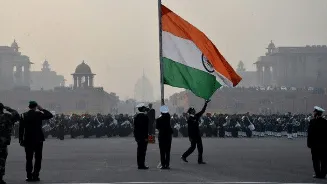
Every year, Independence Day begins with the Prime Minister hoisting the national flag at Delhi’s Red Fort, followed by the national anthem, a ceremonial Guard of Honour and an address to the nation highlighting achievements, challenges and future priorities.
Across the country, schools, colleges, government institutions and communities organise flag-hoisting ceremonies, patriotic cultural programmes, parades and tributes to freedom fighters. The day also serves as a reminder of the values enshrined in the Constitution – democracy, unity, equality and justice.
Enduring legacy of August 15
Eighty years after India won its freedom, Independence Day remains far more than an annual national celebration. It is a tribute to generations of Indians whose courage, conviction and sacrifices transformed the dream of self-rule into reality.
As the nation celebrates Independence Day 2026, the occasion is not only about remembering iconic leaders but also honouring the countless unsung heroes whose stories remain woven into the fabric of India’s freedom struggle. Their legacy continues to inspire every generation to uphold the ideals of liberty, democracy and national unity that defined the birth of independent India.