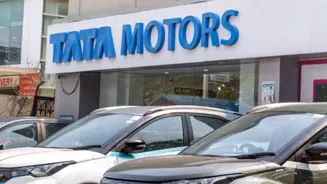









Jaguar Land Rover is preparing for a major round of job cuts as falling sales, higher costs and US tariffs put more pressure on the Tata Motors-owned carmaker.
Reports suggest as many as 4,000 positions could go over the next two years, equal to roughly 10 per cent of its global workforce.
The UK government has made clear that it does not plan to use taxpayer money to stop the restructuring. Business Secretary Jonathan Reynolds told the BBC on Sunday, “I don’t intervene and run businesses. They need to know what the right footprint for them going forward is.”
JLR opens voluntary redundancy programme
JLR has confirmed that it has opened a voluntary redundancy programme for salaried and management staff.
The company has not confirmed that exactly 4,000 jobs will be removed. That figure comes from reports in The Times. JLR employs around 40,000 people globally, with about 33,000 based in the UK.
The move forms part of a wider plan to save around £1.7 billion over the next two years.
JLR said: “As we deliver the next phase of our strategy we need to adapt to evolving global market conditions while targeting approximately £1.7bn of savings over the next two years and reduce break-evens to 300,000 vehicles.”
The company added that it needs to simplify its organisation and improve efficiency.
Why JLR is cutting costs
The carmaker has been hit from several directions.
Its revenue fell 9.6 per cent year-on-year to £6 billion in the quarter ended June, according to figures reported by Sky News. JLR has faced weaker vehicle sales, production disruption and tariffs affecting exports to the US.
The US is one of JLR’s biggest markets, making tariff pressure particularly significant for expensive models such as Range Rover vehicles.
A cyberattack in September 2025 had already forced JLR to halt global operations for several weeks. Production has faced other interruptions too, including disruption linked to a supplier fire.
Chinese carmakers add another challenge
Competition is getting tougher across Europe.
Chinese manufacturers are increasing sales of lower-priced electric and hybrid vehicles. JLR is competing at the premium end of the market, but consumers now have a much wider choice of electrified SUVs.
The problem is not limited to JLR. Volkswagen and other European manufacturers are cutting costs and jobs as they adjust production and spending plans.
UK government says no bailout
Reynolds is expected to meet JLR chief executive PB Balaji and representatives of trade union Unite this week to discuss the planned restructuring.
The minister said the government wants to reduce the effect of any job losses, but stopped short of promising financial intervention.
“A company the size of JLR, which is a huge British success story, at various times in its business cycle the number of, directly, people it employs will change,” Reynolds said.
He added: “If this is about making sure over time that the workforce is right to make the business as competitive as possible, that’s the conversation we need to have. Of course you want to mitigate any job losses.”