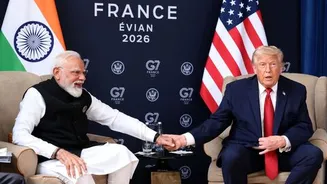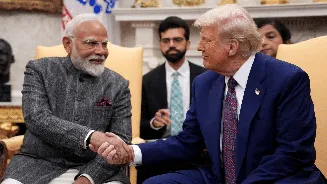




New Delhi: Leaders of India, the United States, Japan, and Australia are set to meet in Manila on Tuesday, November 17, for the latest summit of the Quadrilateral
Security Dialogue (Quad). The meeting will be the first in-person leaders’ summit of the four-nation grouping since September 2024 and is expected to focus on regional security, economic cooperation, and emerging technologies.
The summit will take place alongside the Association of Southeast Asian Nations (ASEAN) summit in the Philippine capital. US President Donald Trump, Prime Minister Narendra Modi, Japanese Prime Minister Sanae Takaichi, and Australian Prime Minister Anthony Albanese are expected to attend.
Japan’s government confirmed on Friday that Takaichi would take part in the meeting. Japanese media reports also indicated that the four countries were making arrangements for the leaders to meet on Tuesday.
The last Quad leaders’ summit was held in Wilmington, Delaware, in September 2024, during the administration of former US President Joe Biden. Although the four countries have continued their engagement through ministerial-level meetings, a leaders-level gathering has remained pending for more than two years.
Quad Summit 2026: Key issues on the agenda
The Quad brings together four Indo-Pacific democracies but does not operate as a formal military alliance. Its main areas of cooperation include maritime security, economic resilience, critical technologies, and humanitarian assistance during natural disasters.
Economic security and strategic infrastructure are expected to be among the major topics in Manila. The leaders may discuss ways to strengthen supply chains, improve regional infrastructure and expand cooperation in critical and emerging technologies.
Artificial intelligence and maritime domain awareness are also expected to feature in the discussions. These areas have become increasingly important as countries look to improve technological capabilities and address security challenges across the Indo-Pacific.
China factor and regional security in focus
The summit comes at a time when competition between China and the United States continues to influence regional affairs. Tensions between China and the Philippines over the South China Sea have also added to concerns about maritime security.
The Quad has consistently supported the idea of a free and open Indo-Pacific, although its four members have different diplomatic and economic ties with Beijing.
For India, the meeting provides an opportunity to strengthen partnerships with key regional countries while supporting a multipolar Indo-Pacific. The US, Japan and Australia also see cooperation with New Delhi as important for regional stability and reliable supply chains.
The leaders are expected to discuss practical areas of cooperation and possible joint initiatives. Details of any agreements or new projects will depend on the discussions and the joint statement released after the summit.