





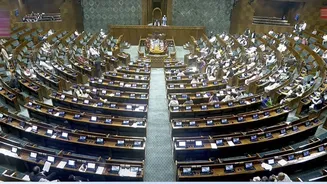
New Delhi: A discussion on the alleged NEET paper leak and the Public Examinations (Prevention of Unfair Means) Amendment Bill, 2026, witnessed an unusual
trend in the Lok Sabha, with BJP MPs using Gen Z expressions to make political points.
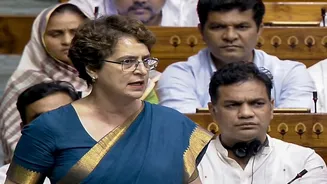
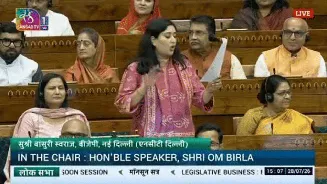
BJP MP Bansuri Swaraj attracted attention after praising Prime Minister Narendra Modi with a popular Gen Z phrase while defending the government’s proposed changes to the law on examination malpractice.
‘Clocked it’ used in debate
During her speech, Swaraj said that, in Gen Z language, the Prime Minister had “clocked it” by bringing the amendment.
The phrase “clocked it” is commonly used by young people to praise someone who has correctly understood a problem and provided the right solution.
She argued that the amended law would strengthen action against organised examination fraud by ensuring faster investigations, speedy trials through fast-track courts and stricter punishment for those involved in paper leak cases.
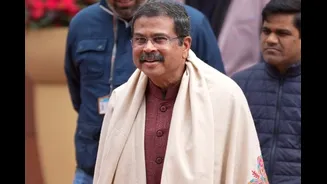
The debate came days after the NEET paper leak controversy led to the resignation of Dharmendra Pradhan as Union Education Minister.
Opposition targeted with youth slang
Other NDA MPs also used popular internet expressions while criticising the Opposition.
The term “delulu”, a shortened form of “delusional”, was used to suggest that the Opposition was mistaken in believing that young voters were fully supporting them.
Another expression, “FOMO” (Fear of Missing Out), was used by MP Shrikant Shinde, who alleged that Opposition parties joined the student protests only after they gained nationwide attention.
The abbreviation “MIA” (Missing In Action) was also mentioned, with NDA leaders claiming Opposition politicians were absent while students protested for 37 days.
Changing political communication
Bansuri Swaraj also drew comparisons with her late mother, former Union Minister Sushma Swaraj, by including a poetic reference during her speech. She quoted lines by poet Dushyant Kumar while responding to the Opposition’s criticism.
The debate highlighted how political leaders are increasingly using social media culture and Gen Z vocabulary in Parliament to connect with younger audiences while discussing major national issues.