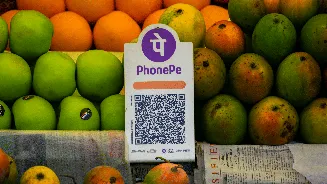








Kolkata: October 15 is the date from which MDR or merchant discount rate will come into effect. It will require the merchant to pay a 0.4% fee for payments
received above Rs 2,000. The point to remember is that this rate will be effective on person-to-merchant transaction and not on any other type of transaction. The question now on many lips is whether one could split up a bigger amount into tranches of Rs 2,000 and pay the merchant. However, the new system will discourage such tactics and the bank’s fraud monitoring system may consider this pattern unusual if you repeatedly send the same amount to the same merchant within a short period of time.
Can a bill of ₹8,000 be divided into four bills of ₹2,000 each?
The MDR calculation will vary on a transaction-by-transaction basis. Therefore, four separate payments of ₹2,000 for a ₹8,000 bill will fall within the prescribed limit each time. Conversely, if the entire ₹8,000 is paid in a single transaction, the MDR will come into effect. However, this doesn’t mean that customers should consider splitting payments completely risk-free.
Banks to monitor payments to the same shopkeeper
As of now, there is no official daily limit on the distribution of such payments under the National Payments Corporation of India (NPCI) guidelines. However, banks constantly monitor customer transaction patterns as part of their fraud prevention systems. If a customer repeatedly sends the same amount to the same merchant within a short period of time, this pattern may appear unusual to the bank’s system.
In such cases, the bank’s automated security systems may initiate additional checks. In some circumstances, transactions may be temporarily blocked or the UPI service may be suspended.
Also daily transaction limit
Fraud monitoring isn’t the only concern with frequent payments of ₹2,000. Bank accounts typically have limits on the number of transactions that can be made in a day. Therefore, if a customer splits several large bills into smaller ₹2,000 payments, their account’s daily transaction limit could be reached quickly. Even if each small payment is individually within the limit, making too many payments could expose the customer to other bank limits.
Merchant’s requirements
There is also the issue of the merchant demanding a single payment for a single bill. There could be reasons such as accounting, bill reconciliation, refunds or fraud prevention. Payment methods should be based on the actual purchase and transaction volume, rather than based on MDR limits.
Therefore, if the bill is for ₹8,000, then technically the customer can pay ₹2,000 four times, but it is not mandatory for the shopkeeper to accept payment in this manner.
MDR is not to be charged from the customer
It must be clearly understood that MDR is a fee levied on the merchant and the customer should not pay for it. Generally, merchants should not charge the customer for MDR separately. If a merchant asks the customer for a separate payment in the name of UPI MDR, the customer may refuse to pay. In such a situation, the customer can complain through their UPI app or the relevant bank.
Can the rules change?
As things have been planned, the ₹2,000 limit applies to each individual transaction. However, if a large number of people attempt to avoid MDR by splitting a single bill into smaller payments, new rules could be developed in the UPI system in the future to combine such transactions or prevent such practices. Therefore, making multiple payments of ₹2,000 payments for a bigger bill could be treated as separate transactions under the current proposal, but repeated transactions could result in a pattern being detected by a bank’s security system.