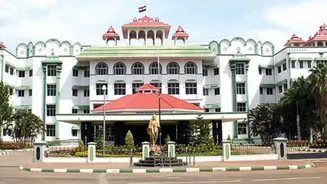









New Delhi: The Madras High Court has clarified that there is no restriction on singing Tamil Thai Vazhthu before Vande Mataram at government functions
in Tamil Nadu. The court noted that a recent Union Home Ministry notification does not place the state song in any fixed position.
The clarification came while hearing a public interest litigation filed by Chennai-based Ananya Radhakrishnan. She sought directions for Tamil Thai Vazhthu to be sung at the beginning of government functions in the state.
The petitioner argued that beginning official events with the Tamil anthem and ending them with the National Anthem has been a long-standing practice in Tamil Nadu. She also challenged a January 28 Union Home Ministry circular, claiming it required functions to begin with Vande Mataram.
What Centre told court
Representing the Centre, the counsel referred to a fresh notification issued by the Home Ministry on July 9. The notification requires Vande Mataram and the National Anthem to be sung consecutively, with Vande Mataram coming first.
However, the Centre told the court that the notification does not mention state anthems and does not say that Tamil Thai Vazhthu must be sung after the two national songs.
A bench comprising Chief Justice Sushrut Arvind Dharmadhikari and Justice G Arul Murughan noted that the same sequence is followed at the Madras High Court on Independence Day, with Tamil Thai Vazhthu first, followed by Vande Mataram and the National Anthem.
Dispute over anthem order
The issue has remained politically sensitive in Tamil Nadu. The debate intensified after former Governor RN Ravi sought to have the National Anthem played before his address in the Assembly, a demand rejected by the then DMK government.
The matter resurfaced at Chief Minister Joseph Vijay’s swearing-in ceremony, where Vande Mataram was followed by the National Anthem and Tamil Thai Vazhthu.
The Tamil Nadu Assembly has also passed a resolution seeking to make Tamil Thai Vazhthu the opening song at government, educational and public sector events. After hearing the arguments, the High Court reserved its order on the petition.