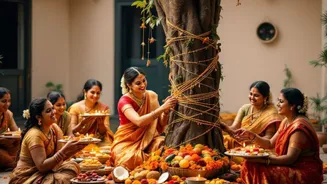








New Delhi: Vat Savitri Vrat will be observed on Saturday, 16 May 2026, and married women across India will keep this sacred fast for the long life, protection,
and well-being of their husbands.
This traditional Hindu vrat is deeply connected with the legendary story of Savitri and Satyavan, where Savitri’s devotion and determination compelled Lord Yama, the god of death, to return her husband’s life. Even today, women observe this vrat with faith, prayers, and rituals under the Banyan tree, also known as the Vat tree.
Vat Savitri Vrat 2026 Date and Timings
Vat Savitri Vrat 2026 Date
- Saturday, 16 May 2026
Amavasya Tithi Timings
- Amavasya Begins: 05:11 AM on 16 May 2026
- Amavasya Ends: 01:30 AM on 17 May 2026
All timings are according to New Delhi, India.
Why Is Vat Savitri Vrat Celebrated?
Vat Savitri Vrat is observed by married Hindu women for the health, prosperity, and long life of their husbands. The vrat symbolises loyalty, strength, patience, and unwavering devotion in marriage.
The Banyan tree holds special importance during this vrat because it represents long life, stability, and immortality in Hindu tradition. Women tie sacred threads around the tree and pray for a blessed married life.
The vrat is especially popular in Uttar Pradesh, Bihar, Madhya Pradesh, Haryana, Punjab, Maharashtra, Gujarat, and several southern states.
Vat Savitri Vrat 2026 Puja Rituals
Women usually wake up early before sunrise and take a bath before beginning the vrat. Many women observe a nirjala fast, while some consume fruits and water depending on family traditions.
Common Rituals Followed on Vat Savitri Vrat
- Wear clean or traditional clothes, especially red or yellow attire
- Apply sindoor, bangles, bindi, and other suhag items
- Prepare puja thali with flowers, fruits, diya, roli, akshat, incense sticks, and sacred thread
- Visit a Banyan tree nearby
- Offer water, milk, flowers, and sweets to the tree
- Tie the sacred thread around the Banyan tree while doing parikrama
- Listen to or read the Vat Savitri Vrat Katha
- Pray for the long life and happiness of the husband
Many women also donate food, clothes, or fruits after completing the puja.
Significance of the Banyan Tree in Vat Savitri Vrat
The Banyan tree is considered highly sacred in Hinduism because it symbolizes eternal life. Its continuously spreading branches and deep roots are seen as signs of strength, stability, and continuity.
According to beliefs:
- Lord Brahma resides in the roots
- Lord Vishnu in the trunk
- Lord Shiva in the branches
This is why worshipping the Banyan tree during Vat Savitri Vrat is considered highly auspicious.
Vat Savitri Vrat Katha
The story of Savitri and Satyavan comes from the Mahabharata and is one of the most respected tales of devotion in Hindu tradition.
Princess Savitri chose Satyavan as her husband despite knowing that he was destined to die within a year. On the predicted day, Satyavan collapsed while cutting wood in the forest.
Lord Yama arrived to take Satyavan’s soul, but Savitri followed Him with complete faith and courage. Impressed by her intelligence, dedication, and purity, Lord Yama offered her several boons.
Savitri cleverly asked for blessings that ultimately required Satyavan to be alive. Pleased with her devotion and wisdom, Lord Yama returned Satyavan’s life.
Since then, married women observe Vat Savitri Vrat seeking blessings for a happy and long married life.
Who Observes Vat Savitri Vrat?
Traditionally, married women observe this vrat, but in some families, unmarried girls also pray for a good life partner and a stable future marriage.
The vrat is especially significant for women who believe in traditional Hindu rituals connected with family well-being and marital harmony.
What Foods Are Eaten After the Fast?
After completing the puja and vrat rituals, women usually eat sattvic food. Common foods include:
- Fruits
- Kheer
- Poori
- Halwa
- Seasonal dishes prepared without onion and garlic
Food traditions may vary from region to region.
Spiritual Importance of Vat Savitri Vrat
Vat Savitri Vrat is not only about fasting. It reflects emotional strength, patience, prayer, and the belief that sincere devotion can overcome even the toughest circumstances.
For many women, this vrat is also a moment of gratitude for family, relationships, and togetherness.
Vat Savitri Vrat 2026 will be observed on 16 May and remains one of the most meaningful fasting rituals for married Hindu women. From worshipping the Banyan tree to listening to the sacred story of Savitri and Satyavan, every ritual carries a message of faith, love, and commitment.
As families continue to celebrate traditional festivals with devotion, Vat Savitri Vrat continues to hold a special emotional and spiritual place in Hindu culture.
(Written by: Tanya Singh, Astropatri.com. For feedback, please write to hello@astropatri.com.)