








New Delhi: Every year, Guru Purnima is celebrated as a day of gratitude towards teachers, mentors and spiritual guides. But behind the rituals, prayers
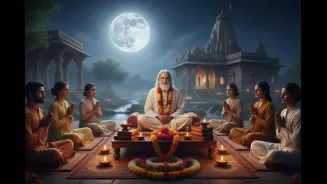
and reverence lies the towering legacy of one extraordinary sage – Maharishi Ved Vyasa, the seer whose intellectual and spiritual contributions continue to define India’s civilisational identity thousands of years later. Revered as the Adi Guru (the First Guru) of the guru-shishya tradition, Ved Vyasa is remembered not merely as a scholar, but as the architect of India’s vast knowledge tradition.
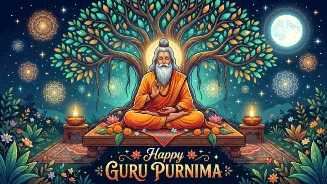
Guru Purnima, also known as Vyasa Purnima, marks his birth anniversary and honours the man who preserved the Vedas, authored the Mahabharata, composed the Brahma Sutras and is traditionally credited with compiling the eighteen Puranas. As Guru Purnima 2026 approaches, his life offers a powerful reminder that the greatest inheritance a civilisation can pass on is knowledge.
When is Guru Purnima 2026
Guru Purnima is observed on the full moon (Purnima) of the Hindu month of Ashadha, a day dedicated to expressing gratitude towards gurus, teachers and mentors. In 2026, the festival will be observed on Wednesday, July 29, according to most Hindu Panchangs, although lunar timings begin on the evening of July 28 and vary slightly depending on regional calendars.
The occasion is celebrated across India and Nepal and is also observed in Buddhist and Jain traditions, albeit with different historical associations.
Who was Maharishi Ved Vyasa
Known by several names – including Krishna Dvaipayana, Badarayana and simply Vyasa, Maharishi Ved Vyasa occupies an unparalleled position in Indian philosophy and literature.
According to Hindu tradition, he was born to Sage Parashara and Satyavati on an island in the Yamuna River. His dark complexion earned him the name Krishna, while Dvaipayana refers to his birth on an island (dvipa). The title “Vyasa”, meaning “compiler” or “arranger”, was bestowed upon him after his monumental work of organising Vedic knowledge.
Unlike many legendary figures remembered for a single achievement, Ved Vyasa’s influence extends across literature, philosophy, theology and history, making him one of the most influential sages in the Indian knowledge tradition.
Why is Ved Vyasa Called the Adi Guru
The Sanskrit word guru means “one who dispels darkness (ignorance) with knowledge.” Ved Vyasa is honoured as the Adi Guru because he transformed scattered oral traditions into an organised body of knowledge that could be preserved and transmitted across generations.
His greatest contribution was systematising knowledge rather than merely creating it.
Tradition holds that he classified the vast corpus of Vedic hymns into four distinct Vedas:
- Rig Veda
- Yajur Veda
- Sama Veda
- Atharva Veda
He then entrusted these texts to different disciples, laying the foundation for the enduring guru-shishya parampara, or teacher-disciple tradition, that continues to influence Indian education and spirituality.
Sage behind India’s Greatest Epic
Perhaps Ved Vyasa’s most celebrated literary achievement is the Mahabharata, regarded as the world’s longest epic poem.
Containing nearly 100,000 verses, the Mahabharata is far more than the story of the Kurukshetra war. It explores ethics, governance, family, justice, politics, philosophy and human nature. Embedded within it is the Bhagavad Gita, the timeless dialogue between Lord Krishna and Arjuna that has influenced philosophers, freedom fighters, spiritual leaders and political thinkers across centuries.
According to tradition, Lord Ganesha served as the divine scribe while Ved Vyasa dictated the epic, making it one of Hinduism’s most enduring narratives.
Beyond the Mahabharata: Monumental literary legacy
Ved Vyasa’s contribution extends well beyond the Mahabharata.
He is traditionally credited with:
- Compiling and classifying the four Vedas
- Composing the Brahma Sutras, one of the foundational texts of Vedanta philosophy
- Authoring the Mahabharata
- Compiling the 18 Mahapuranas
- Composing the Bhagavata Purana, according to many traditional accounts
Together, these works shaped the theological, philosophical and cultural foundations of Sanatan Dharma and continue to be studied across India and the world. While historians continue to debate the precise dates and authorship of some texts, Hindu tradition consistently attributes these monumental works to Maharishi Ved Vyasa.
Guru Purnima: More than religious festival
Guru Purnima is not simply a Hindu festival; it is a celebration of learning itself.
In Hinduism, devotees worship their spiritual teachers and remember Maharishi Ved Vyasa. Students honour teachers and mentors who have guided them throughout life.
In Buddhism, the day commemorates Lord Buddha’s first sermon at Sarnath, where he set the Wheel of Dharma in motion after attaining enlightenment.
In Jainism, Guru Purnima marks the occasion when Lord Mahavira accepted Gautama Swami as his first chief disciple, highlighting the importance of the teacher-disciple relationship.
Guru Purnima is ultimately a celebration of gratitude – the acknowledgement that every journey of learning begins with someone willing to teach.
At the heart of that tradition stands Maharishi Ved Vyasa, the sage who transformed India’s oral wisdom into an enduring intellectual heritage. His works continue to inspire scholars, philosophers, spiritual seekers and ordinary readers alike, reminding generations that knowledge is civilisation’s greatest inheritance.