






Imagine a schoolteacher from a small town, whom we shall call Mr. Pillai, climbing a staircase in Delhi in the winter of 1948. He has taken leave from school and
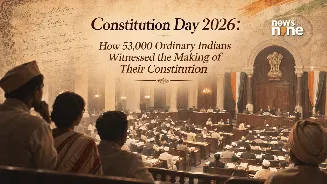
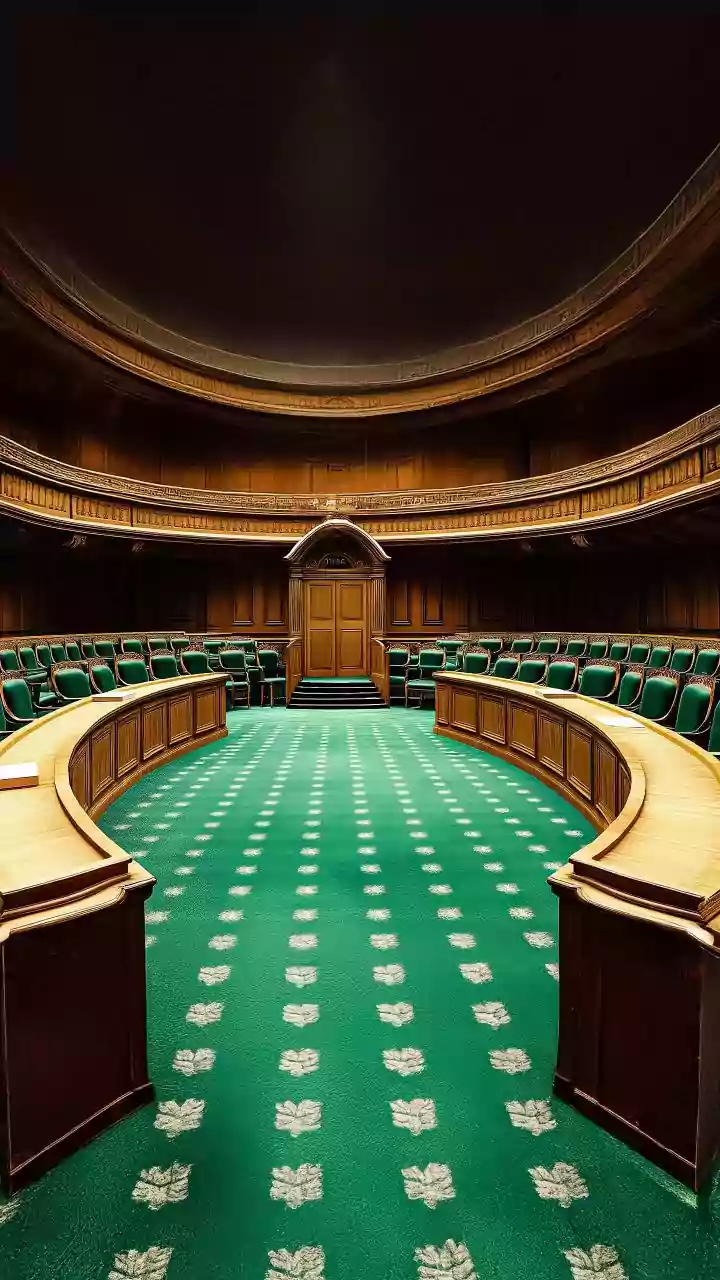
spent two days on a train, with a cloth bag and a pass he got after standing in a queue. At the top of the stairs is a gallery, a balcony above a large hall where men and a few women sit in rows below. He is not allowed to speak. He is not allowed to clap. He may only watch. But below him, in the hall, the country is being written down, and for the whole of that morning nobody tells him to leave.
It is easy to forget that this hall had a gallery at all, and that it was used. The Constituent Assembly of India met for two years, eleven months and eighteen days, and its work was spread over 167 sitting days across eleven sessions. Over that time, more than 53,000 citizens came to watch from the visitors’ gallery, according to the government’s own factsheet. Think about that number. Before a single sentence of the Constitution came into force, more than fifty thousand ordinary people had already stood in the back of the room.
Read more from the column: Your India | Know it. Question it. Improve it.
What did citizens witness during India’s Constituent Assembly debates?
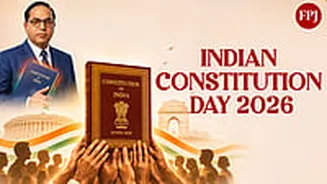
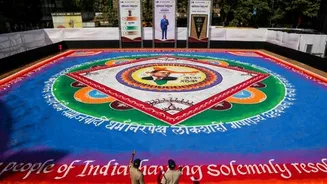
What were they watching? A long argument, mostly, and a patient one. Members argued about languages, about land, about the meaning of the word “citizen”, and about which rights a court could enforce and which could only be written down as promises for the future. Some won their points and some lost them, and the record of who said what was kept, so that anyone could read it later. The Assembly adopted the Constitution on 26 November 1949, a date now marked every year as Constitution Day. It came into force on 26 January 1950, with 395 Articles, 22 Parts and 8 Schedules.
The 284 signatories and the 15 women of India’s Constituent Assembly
There is a second thing about that hall that is worth knowing. On 24 January 1950, 284 members signed the finished document. Fifteen of the people who sat in that Assembly were women, among them Sarojini Naidu, Rajkumari Amrit Kaur, Hansa Mehta, Sucheta Kripalani and G. Durgabai. Fifteen is a small number next to the men, and yet each of those women spoke, argued and signed like everyone else in the room.
Read more: India’s 2024 Election Had Record Voters, Yet Turnout Fell. Here’s Why
How the original Constitution of India was handwritten and illustrated
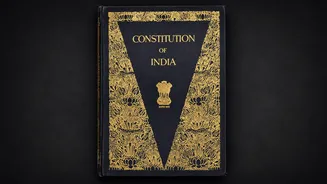
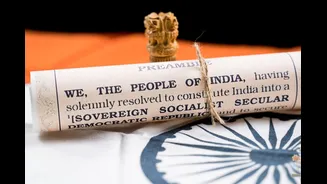
The Constitution itself was not printed. It was written by hand, in English and in Hindi, by a calligrapher named Prem Behari Narain Raizada in Delhi, and its pages were decorated by artists from Shantiniketan working under Acharya Nandalal Bose, with twenty-two illustrations. A document that decides the fate of millions was, in the end, a piece of paper that someone sat bent over for months with a pen. It runs to roughly ninety thousand words, every letter formed by a human hand.
What the visitors’ gallery represented for ordinary Indian citizens
Back in the gallery, Mr. Pillai is not asked what he thinks. Nobody in the Assembly turns to look up. But he writes something in a small notebook, and on the long journey home he reads it again. The country was being written in his hearing, and he realises that of all the people in the building, he is one of the few who has no vote, no title and no stake except that he will have to live under whatever is decided. His notebook is lost now, like many others. What is not lost is the idea that a constitution is written in front of the people it will govern.
Constitution Day: How well do Indian citizens know their Constitution today?
It is worth asking what that gallery means today. Visitors can still watch Parliament from a gallery today. But most of us meet the Constitution at second hand: in a headline, a court order, a school textbook, a family WhatsApp message. We do not often read its pages. It is a document about us that many of us have never seen with our own eyes.
Read more: Farm Income in India: Wages, Livestock, Crops and the Debt Behind the Numbers
An invitation to witness democracy that still stands today
The gallery in Delhi was an open invitation of a very simple sort. Come and see how this is done. Whether we still take up that invitation, in whatever form it now comes, is a question each of us answers quietly.
If you could have sat in that gallery and asked the Assembly one question, what would you have wanted to know?
Sources: Press Information Bureau, Government of India, factsheet on the framing of the Constitution (adoption on 26 November 1949, signatures on 24 January 1950, 284 members, 15 women members, calligraphy by Prem Behari Narain Raizada, artwork by Shantiniketan artists under Nandalal Bose, over 53,000 visitors, 395 Articles, 22 Parts, 8 Schedules); ThePrint, “Explained: What it took to frame India’s Constitution” (2 years 11 months 18 days, 167 sitting days, 11 sessions). Mr. Pillai is imagined; the facts are not.
Your India | Know it. Question it. Improve it.
By Santosh Nair