







New Delhi: Pakistan, Turkey, Qatar and Indonesia have signed a new defence cooperation agreement aimed at strengthening their military capabilities and expanding
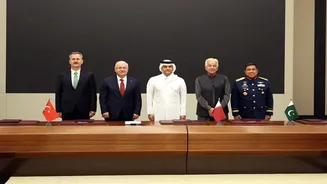
collaboration in defence manufacturing. The agreement, called the Badr Memorandum of Understanding (MoU), was signed in Doha, Qatar, on Wednesday, October 21, 2026.
According to Turkey’s Defence Ministry, the agreement seeks to build closer strategic partnerships among the four countries by combining their defence industry capabilities. It also provides a framework for cooperation in military production, technical training, research and development.
The pact brings together countries from the Middle East, South Asia and Southeast Asia. While the agreement focuses on defence industry cooperation, it also reflects efforts by the participating countries to deepen military ties and develop their domestic defence capabilities.
What does the Badr defence pact cover?
The Badr MoU aims to strengthen cooperation in defence manufacturing, improve military capabilities and encourage joint research and development. It also provides for collaboration in technical military training and the development of technologies suited to modern defence requirements.
Turkey’s Defence Ministry said the agreement would help the four countries combine their respective manufacturing capabilities, improve industrial integration and strengthen their defence sectors. The initiative could also help them meet the requirements of allied and friendly countries.
The signing ceremony was attended by Turkish Defence Minister Yaşar Güler, Qatar’s Deputy Prime Minister and Minister of State for Defence Affairs Sheikh Saud bin Abdulrahman Al Thani, Pakistani Defence Minister Khawaja Muhammad Asif and Indonesian Deputy Defence Minister Yusuf Jauhari.
The agreement also has an economic dimension, as closer industrial cooperation could create opportunities for joint production and technology development. However, the publicly reported details do not specify particular weapons systems to be jointly manufactured, financial commitments or a timeline for implementing individual projects.
The pact is therefore a framework for future cooperation rather than a publicly announced contract for a specific military platform.
How does the agreement fit into wider defence ties?
The agreement builds on existing defence industry relationships between Turkey and the other three countries. Turkey has developed a significant defence manufacturing sector and has expanded its military equipment exports and industrial partnerships across several regions.
Its cooperation with Pakistan includes naval shipbuilding projects, while Turkey and Indonesia have worked together on the development of the Kaplan MT medium tank. Turkey also maintains close defence ties with Qatar, which hosts a Turkish military presence and has pursued cooperation with Turkish defence companies.
The Badr agreement could provide a broader framework for coordinating such relationships and exploring new areas of joint production, research and technical cooperation.
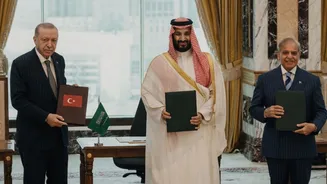
The pact also comes amid wider efforts to strengthen regional defence partnerships. In August 2026, Turkey, Pakistan and Saudi Arabia signed a separate mutual defence agreement. That arrangement concerns collective defence, while the Badr MoU focuses primarily on defence industries and military capabilities.
The two agreements should not be treated as identical; the Badr pact does not, in the publicly disclosed terms, establish a mutual defence commitment among its four signatories. Whether the new agreement leads to joint weapons production, technology transfers or additional industrial projects will depend on the arrangements developed by the participating countries in the coming months.