







New Delhi: Dussehra will be celebrated on October 20, 2026, across most of India, while Bengal’s Vijayadashami falls on October 21. Although both names
refer to the same Hindu festival, the dates differ this year because regional traditions follow different rules to determine when the festival should be observed.
The key lies in the Dashami tithi, the tenth lunar day of the Hindu calendar, which begins on October 20 and continues into October 21. While many regions prioritise the auspicious afternoon period for Dussehra rituals, Bengal follows a different convention for its Vijayadashami observance. This is why devotees may see two dates listed for what is essentially the same festival.
Why Are Dussehra and Vijayadashami Celebrated on Different Dates in 2026?
The difference comes from how regional Panchangs determine the festival date.
In most parts of India, Dussehra is observed when the Dashami tithi coincides with the prescribed afternoon period, known as Aparahna. The auspicious Vijay Muhurat during this period is traditionally associated with rituals such as Shami Puja and the worship of Goddess Aparajita. In 2026, Dashami begins around midday on October 20, making that date the chosen observance for much of the country.
Bengal follows a regional tradition that gives greater importance to the Dashami tithi itself rather than applying the same afternoon-muhurat rule. Since the tithi continues into the afternoon of October 21, Bengal’s Vijayadashami is observed on that date.
This is a calendar-based difference, not a disagreement over the festival’s religious meaning.
Are Dussehra and Vijayadashami the Same Festival?
Yes. Dussehra and Vijayadashami are generally two names for the same Hindu festival, associated with the victory of good over evil.
The word ‘Vijayadashami’ combines ‘vijaya’, meaning ‘victory’, and ‘dashami’, meaning ‘the tenth lunar day. Dussehra is another widely used name for the occasion.
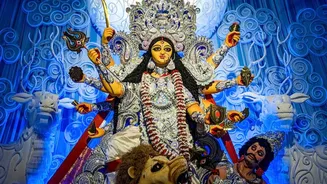
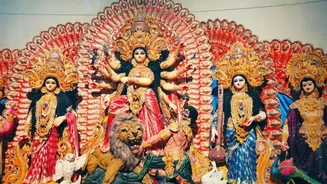
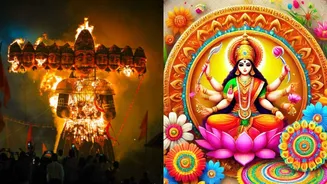
Their celebrations, however, reflect different regional traditions. In North India, Dussehra is closely associated with Lord Rama’s victory over Ravana, commemorated through Ramlila performances and the burning of Ravana’s effigy. In Bengal, Vijayadashami marks the conclusion of Durga Puja, when devotees bid farewell to Maa Durga after her victory over Mahishasura.
Both traditions celebrate the triumph of righteousness over destructive forces.
What Is the Dashami Tithi and Why Does It Affect Dussehra’s Date?
Unlike the Gregorian calendar, the Hindu lunar calendar follows tithis, which are determined by the relative positions of the Sun and Moon. A tithi does not necessarily begin at midnight or last for an entire calendar day.
In 2026, Dashami extends across October 20 and October 21. This means different regional observance rules can assign the same festival to different dates.
The precise timings also vary slightly by location, so devotees planning religious ceremonies should consult their local Panchang rather than relying solely on a national calendar.
When Should You Celebrate Dussehra or Vijayadashami in 2026?
For most parts of India, Dussehra is observed on Tuesday, October 20, 2026. In Bengal, Vijayadashami is observed on Wednesday, October 21, 2026, according to the regional festival calendar.
The appropriate date for a household or community ritual can depend on local customs and the Panchang being followed.
Ultimately, the one-day difference does not mean Dussehra and Vijayadashami are separate festivals. Both preserve the same central message: the victory of good over evil, the restoration of righteousness and the hope that courage and truth will ultimately prevail.
Written by: Tanya Singh of Astropatri.com. For feedback, please write to hello@astropatri.com.