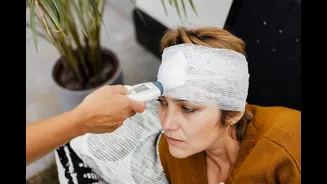










New Delhi: Head injuries are one of the most serious consequences of road collisions and remain a leading cause of death and permanent disability. Even
a mild bump to the head can result in severe brain injury if not caught and treated in time. In India, many unnecessary deaths occur due to a lack of timely medical intervention following accidents, especially involving two-wheelers and pedestrians.
Dr Bhupesh Kumar Mansukhani, Director- Neurology, Neuromet Wellness & Diagnostics, Gurugram, stressed the need for timely treatment and care in case of head injuries.
Importance of timely treatment and care
The brain responds rapidly to oxygen starvation and pressure changes. After a head injury, inflammation or bleeding may increase the skull’s pressure within minutes, leading to permanent damage within minutes. Early hospitalisation—with assistance such as CT scans, detailed neurological examinations, and surgery, if required—may make the difference between life and death. This most critical hour immediately after injury, often referred to as the “golden hour,” has a gigantic impact on the likelihood of survival, the ability to recover, and the rate of recovery.
Brain Functions and Areas Affected by Head Injuries
Different parts of the brain are in charge of different vital functions: if there is an injury to the frontal lobe, one could expect disruptions in behavior, judgment, and speech. Injury to the temporal lobe might lead to memory problems and changes in hearing, while trauma to the parietal lobe can affect how we sense things and coordinate movements. The brainstem controls the most vital body functions—responsible for breathing, heart rate, and state of consciousness. Severe injury to the brainstem can be life-threatening and may lead to coma and, in some cases, death.
Why Head Injuries Need Special Care in Winter
Winter conditions worsen the effects for patients with head injuries for reasons of poor circulation, possible hypothermia, and delayed responses. Also, it is believed that lower temperatures make brain injuries worse and reduce body compensatory responses to injuries sustained. Further, it is argued that icy roads and lack of visibility due to fog make accident prevention and quick medical attention more essential.
Organ Transplantations and Their Connection with Brain Death and Cardiac Functioning
In cases where there is serious and irreversible brain damage, this will lead to brain death. However, the heart is able to be alive since it might be supported through mechanical ventilation. In essence, there is no activity within the brain when one experiences brain death. In medical and legal terminology, this is referred to as death. It is clear how serious head trauma can be just by understanding this concept.
Bottom line
Head injuries are emergencies in themselves. Wearing headgear when biking, following road rules, and seeking medical attention immediately after a head injury could save lives and prevent permanent disability.