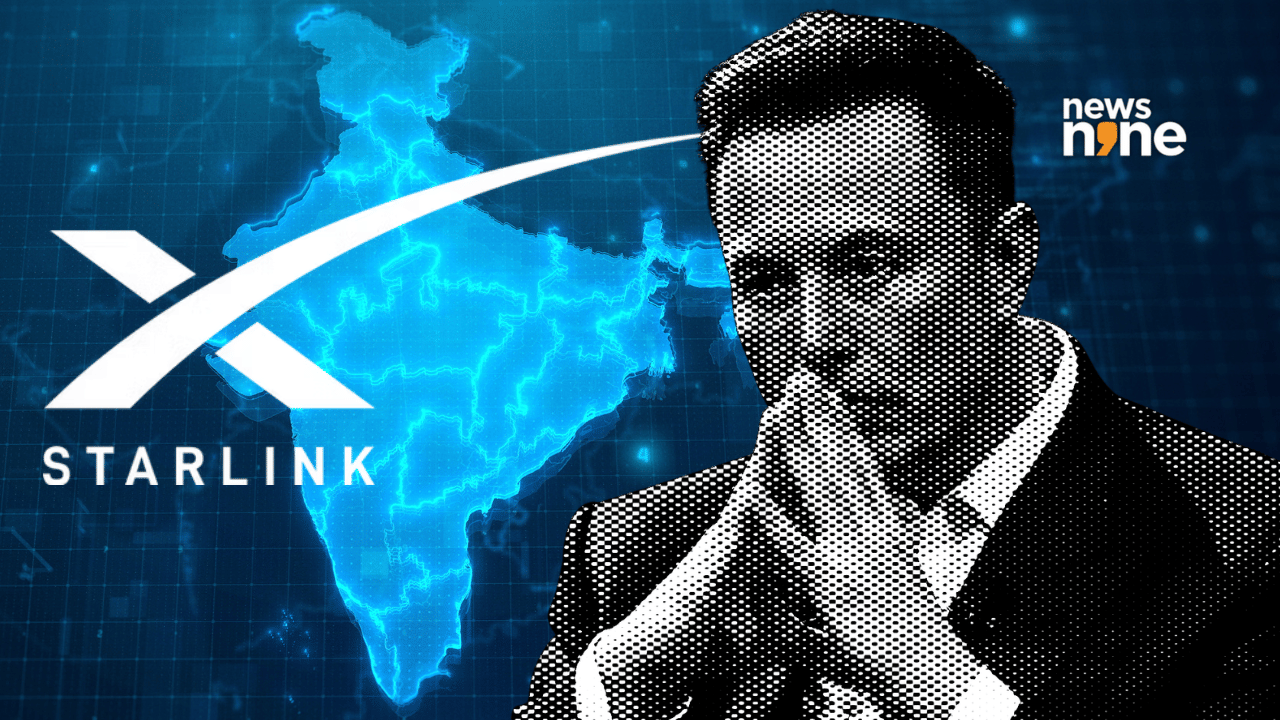








New Delhi: Elon Musk’s latest pitch for Starlink in India has triggered a sharp debate online, with some users questioning whether the country needs satellite
internet at a time when 4G and 5G networks have expanded rapidly. The discussion has also brought national security concerns around satellite terminals back into focus.
The SpaceX founder wrote on X, “Starlink would help the least served in India, especially in rural areas.” Musk was responding to DogeDesigner, which said 11,256 listed Indian villages still lacked 4G coverage as of May 2026. The account also said India had 1.093 billion internet subscriptions in March, of which 440.87 million were rural.
Starlink would help the least served in India, especially in rural areas https://t.co/ffCvpL61WQ
— Elon Musk (@elonmusk) August 21, 2026
Users question Starlink’s role in India
Several users responding to Musk argued that mobile networks already offer cheap and fast connectivity across large parts of India.
One user wrote, “No india doesn’t need starlink,” before saying they receive full-speed 5G even in remote villages in Bihar for around $4.
Another user wrote, “India don’t need Starlink because it was became a National security issue in Manipur when Starlink device was found with terrorist.”
Another reply told Musk, “It’s not 2020 elon. Come out of your Chinese data matrices.” The user shared a global 5G coverage map showing widespread coverage across India.
A separate post referenced the Ukraine conflict and said, “Please keep your internet connectivity to yourself. we don’t need it.”
No india doesn’t need starlink, fuck off
I go to the most remote villages in Bihar and still get full-speed 5G with unlimited data for around $4. Our mobile networks already cover the country better and cheaper than any satellite gimmick.
Yet Starlink terminals keep turning… pic.twitter.com/bt7vaXxiQE
— Anura 🇧🇹 (@Anura_Indo) August 21, 2026
Starlink still faces regulatory questions
The debate comes as Starlink is reportedly making a fresh application to provide satellite communication services in India.
IN-SPACe had earlier rejected Starlink’s Gen 2 satellite network application after finding that some proposed features and radio frequencies did not meet Indian requirements. The system includes direct-to-device connectivity.
Starlink uses low-Earth-orbit satellites to deliver internet. Its possible India entry now sits at the intersection of rural connectivity, telecom competition and national security scrutiny.