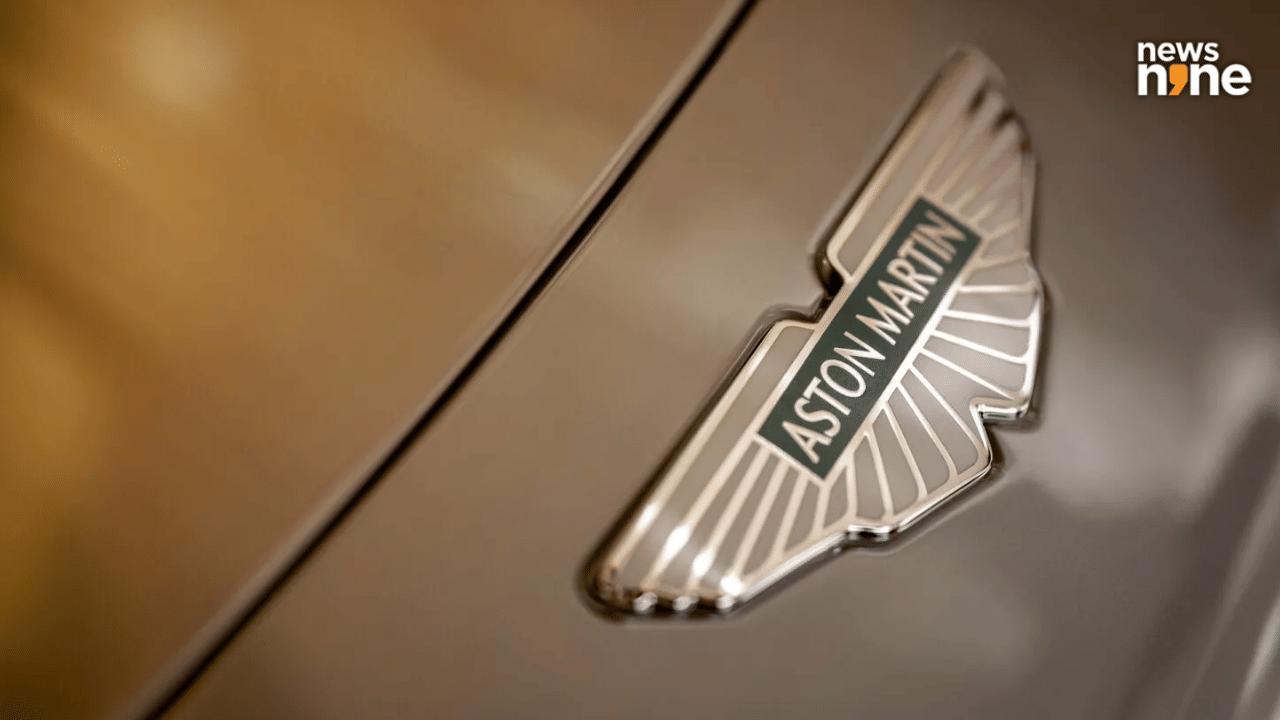






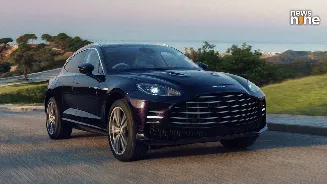
New Delhi:Aston Martin has pushed back the introduction of its first fully electric model once again. The brand is now looking at a launch sometime between
2033 and 2035. CEO Adrian Hallmark said there is no longer a firm date for the debut. He explained that the brand only needs to have battery-electric vehicles ready to meet regulatory requirements in certain markets shortly before 2035.
Speaking to
Autocar UK, Hallmark described Aston Martin as a “BEV delayer” rather than a “BEV denier” and said the brand will remain predominantly focused on internal-combustion engines until 2035. Aston Martin has revised its EV timeline several times. The brand originally planned to introduce its first electric car in 2025 before shifting the target to 2026 and later suggesting that the model would arrive by 2030. The newest plan pushes further back.Hallmark credited the newest delay to the rapidly changing EV market and regulatory landscape. As per him, both areas are making quicker faster than automakers can easily adapt to, making it difficult for Aston Martin to commit to a specific launch date. He ruled out 2031, however, and said the brand is currently looking at a three-year window between 2033 and 2035.
The new strategy follows comments from executive chairman Lawrence Stroll in 2024, when he said demand for EVs at Aston Martin’s price point had not developed as strongly as expected. At the time, the brand had planned four EVs on a dedicated architecture. This included a GT, SUV, crossover and mid-engined supercar.
Lucid technology to underpin future EVs
Aston Martin has an agreement with Lucid for electric-vehicle technology, while it also maintains a relationship with Mercedes-Benz, its current engine technology partner. The delayed EV programme means Aston Martin can spend more time assessing how battery and electric powertrain technology develops before committing significant funds to production.
Hallmark said the technology Aston Martin will eventually receive from Lucid is likely to be substantially different from what was originally agreed when the partnership was signed. The delay gives the company several more years to monitor developments in EV technology, market demand and legislation before making major investment decisions.
For now, Aston Martin’s spending on its EV programme remains relatively limited, with the company concentrating on research and evaluation rather than large-scale investment. Aston Martin is also preparing to keep its combustion engines alive well into the next decade. Hallmark confirmed that the brand has a development roadmap aimed at keeping both its V8 and V12 engines compliant through at least 2035.
This carries on with the strategy outlined by Stroll in 2024, when he said Aston Martin intended to continue producing ICE-powered cars for as long as regulations permitted. As the company has moved its EV plans further into the future, it has also explored greater use of hybrid technology.
However, Aston Martin’s current thinking appears to favour conventional hybrid systems rather than plug-in hybrids. Hallmark said the brand would continue with hybridisation but was unlikely to use plug-in systems because of the additional weight involved. He pointed to the roughly 200kg weight penalty associated with such systems as something Aston Martin does not need.
Hallmark also said Aston Martin expects its entire product range to be replaced between 2030 and 2035. The next generation of models is expected to bring improvements in performance, quality and overall vehicle characteristics.
The brand will also continue with the Valhalla hypercar programme. Hallmark hinted at the chance of another version of the model featuring a different roof design. He even confirmed that Aston Martin is investing in the Valhalla platform for future low-volume special editions.
Aston Martin’s previous attempt at launching a production EV was the Rapide E. Revealed in 2019, the electric four-door was originally planned to be produced in a limited run of 155 units. However, the programme was cancelled before customer cars entered production. Instead, the Rapide E project was repurposed as an electrification research programme. The prototype featured an 800V battery system and two electric motors, with a combined target output of more than 610hp and 950Nm.