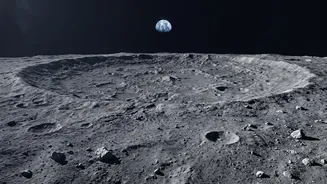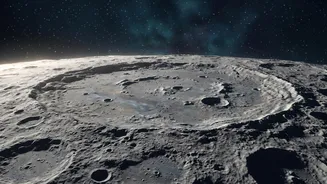




NASA has discovered a massive new crater on the Moon, formed after an asteroid or comet slammed into the lunar surface in 2024. The crater, named McGetchin,
measures around 222 metres across and 43 metres deep. Scientists say an impact of this size happens on the Moon roughly once in a century or even less frequently. The discovery gives researchers a rare chance to study how a major collision changes the lunar surface.
The crater formed between April 11 and May 22, 2024, but scientists discovered it in October 2025. NASA researcher Robert Wagner spotted an unusual mark in images captured by the Lunar Reconnaissance Orbiter (LRO), which has studied the Moon since 2009. The findings appeared in the journal Science Advances on September 16, 2026.
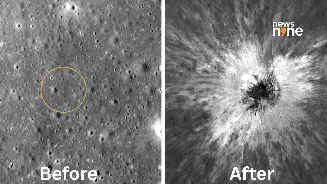
![Animated GIF of the before and after| Credit: [NASA/GSFC/Intuitive Machines].](https://images.news9live.com/wp-content/uploads/2026/09/content_mcgetchin_before_after.gif)
Animated GIF of the before and after| Credit: [NASA/GSFC/Intuitive Machines].
How did NASA discover the giant crater?
Wagner was checking images of the Moon when he noticed a bright patch surrounded by a dark ring. It suggested that something had disturbed the surface.
“I just stopped, dropped everything, and started looking into what that spot was,” Wagner said in a NASA report.
He compared older and newer images of the same area and confirmed that a new crater had appeared.
Scientists believe the object responsible was roughly the size of a three- to six-storey building. The collision created the largest newly formed crater discovered in the solar system through modern observations. Many older lunar craters are much bigger.
Why is this Moon crater so unusual?
The Moon is regularly hit by rocks travelling through space. Its extremely thin atmosphere offers almost no protection from incoming objects.
Smaller impacts happen frequently, but a collision large enough to create a 222-metre-wide crater is exceptionally rare.
NASA estimates that an impact of this magnitude occurs about once every century or longer.
Researchers studying the site discovered that the collision disturbed material across a much larger area than the crater itself.
Why does this discovery matter for future Moon missions?
The collision provides scientists with fresh evidence of how impacts change lunar soil and rock.
NASA’s instruments detected an area roughly 6.4 kilometres wide around the crater that becomes about 9 degrees Celsius cooler than nearby terrain at night. Researchers believe the impact loosened the soil, changing how it retains heat.
Such changes could affect how rover wheels move across the surface.
The findings could help scientists understand impact risks and surface conditions as the United States and China prepare for future crewed lunar missions.