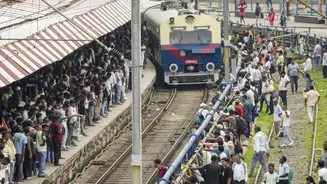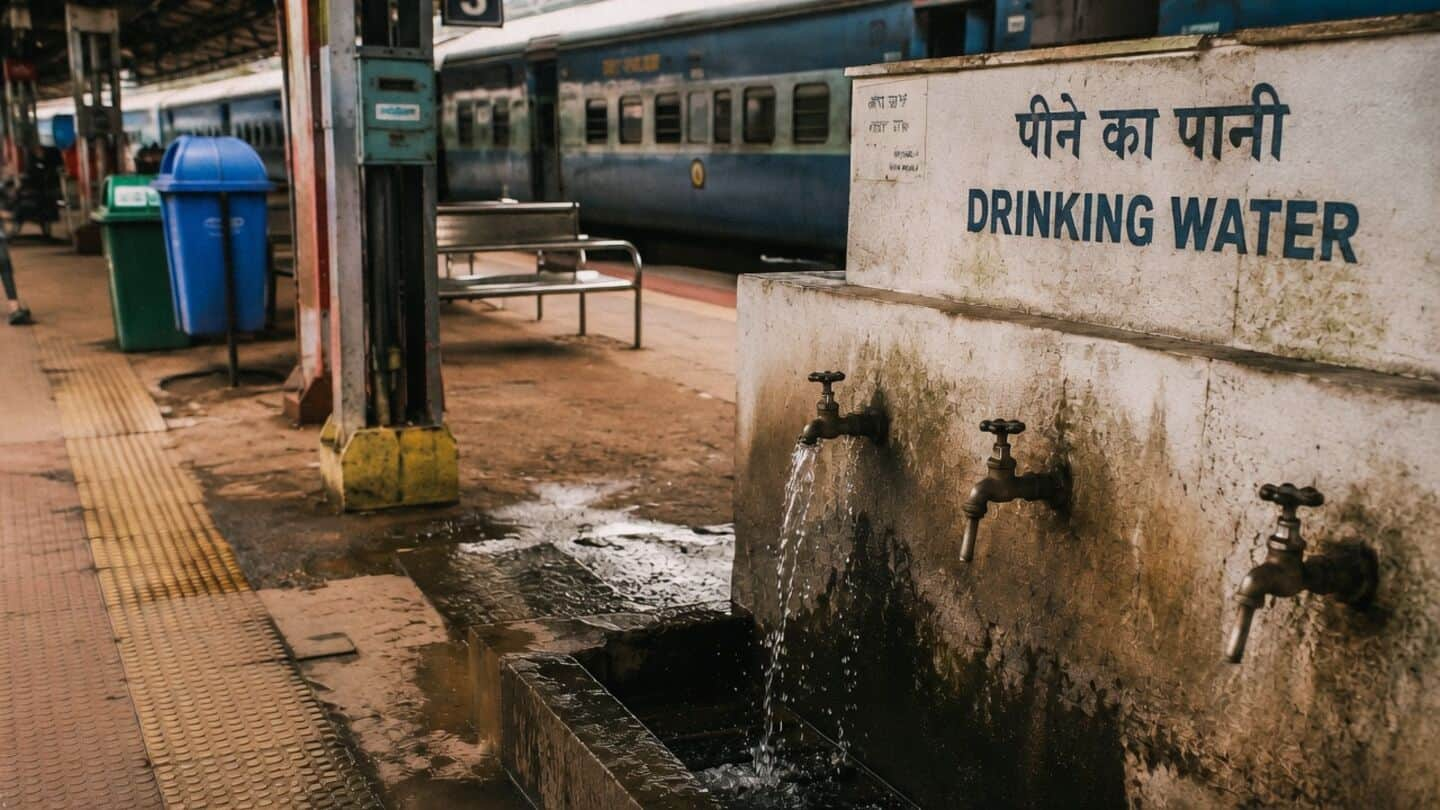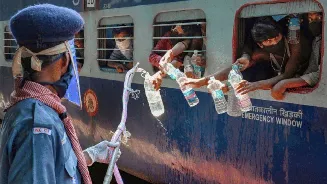








New Delhi: For millions of railway passengers, the water cooler on a crowded platform is not a convenience—it is a lifeline. But a recent audit by the Comptroller
and Auditor General of India (CAG) has put a serious question mark over that everyday assumption of safety. Water samples from coolers at eight railway stations across four railway zones tested positive for E. coli, a bacterium that can indicate faecal contamination and, in certain strains, cause potentially severe illness.
Which railway stations were flagged
According to the CAG’s Report No. 31 of 2026 on Passenger Amenities and Sanitation at Non-Suburban Railway Stations, the affected stations were:
- Southern Railway: Coimbatore and Palakkad Junction
- South Central Railway: Hyderabad
- Central Railway: Chhatrapati Shivaji Maharaj Terminus, Bhiwandi Road, Kalyan and Lonavala
- Eastern Railway: Madhupur
The audit covered passenger amenities and sanitation at 512 non-suburban railway stations across Indian Railways. Importantly, the report examines audit findings from 2019-20 to 2023-24, along with certain previously unreported observations. Therefore, the finding should not automatically be interpreted as proof that these eight stations’ water is contaminated today; rather, it identifies serious failures that require corrective action and continued monitoring.
How is E. coli in drinking water harmful for humans
E. coli is commonly found in the intestines of humans and animals, and most strains are harmless. However, its presence in drinking water is a major warning sign because it is used internationally as an indicator of faecal contamination. The World Health Organization says E. coli or thermotolerant coliform bacteria must not be detectable in any 100-ml sample of water intended for drinking, and detection should trigger immediate investigation.
That distinction is crucial: finding E. coli does not mean every bacterium present is a disease-causing strain. But it signals that contamination from human or animal faeces may have entered the water supply, storage or distribution system – raising the possibility of other pathogens being present.
Certain strains, particularly Shiga toxin-producing E. coli, can cause diarrhoea, severe abdominal cramps and sometimes bloody diarrhoea. In vulnerable patients, infection can progress to haemolytic uraemic syndrome (HUS), a potentially life-threatening condition that can cause kidney failure.
Bigger problem: Water testing gaps
The CAG findings extend beyond the eight positive cooler samples. The audit found that bacteriological analysis of drinking water was not carried out at 56 stations across five railway zones, despite Railway Board requirements for regular inspection and testing. The audit also flagged problems with residual chlorine levels, with water at numerous stations recording levels outside the prescribed 0.2-0.5 ppm range.
The concern is particularly significant because contamination can occur not only at the original water source but during storage, treatment, transportation or distribution. In other words, water that begins as potable can become unsafe before it reaches a passenger’s bottle.
The water findings form part of a wider picture of inadequate passenger facilities. CAG found that 458 of the 512 audited stations which is more than 89 per cent were deficient in one or more Minimum Essential Amenities. Shortfalls included drinking water, seating, toilets, platform shelters, fans, water coolers and signage.
The audit also noted unhygienic drinking-water booths at some stations and broader sanitation deficiencies, suggesting that the problem cannot be addressed simply by replacing a few coolers. It points to the need for stronger maintenance, testing, accountability and monitoring across the water chain.
Railways’ response: ‘Tank to tap’ system
Following the concerns highlighted by the CAG audit, the Railways has announced plans to install a “Tank to tap” water filtration system at around 20,000 locations, including water coolers, with filtration and monitoring mechanisms intended to improve drinking-water quality.
That move could prove important – but the real test will be implementation. Safe public drinking water requires more than filtration equipment. It demands regular microbiological testing, properly maintained storage tanks and pipelines, adequate disinfection, transparent reporting of test results and swift action whenever contamination is detected.
For passengers, the message is equally straightforward: clean-looking water is not necessarily safe water. For the Railways, the CAG report offers an opportunity to treat drinking-water safety not as an amenity, but as an essential public-health responsibility.