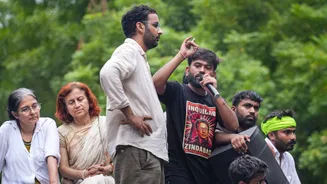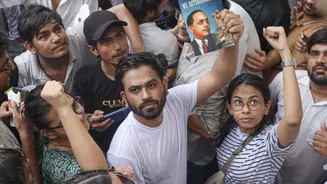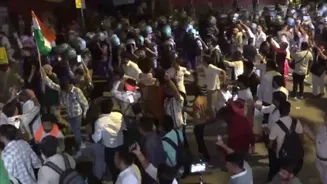






New Delhi: More than 50 people protesting against the caste-based reservation system were detained at Jantar Mantar in Delhi on Friday after a stand-off
with security personnel, officials said. The protesters had gathered under the banner of Reservation Hatao Andolan (RHA).
Hundreds of people associated with different groups representing general-category communities reached Jantar Mantar in the morning, demanding changes to the existing reservation system. Police had repeatedly told the protesters that permission had not been granted for a demonstration at the site.
By afternoon, police said the protest had been permitted at Ramlila Ground instead. However, the protesters refused to move from Jantar Mantar, leading to a confrontation with security personnel deployed at the protest site.
Why were protesters detained?
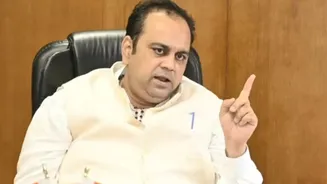
In a letter, Deputy Commissioner of Police (Central) Rohit Rajbir Singh said permission had been considered for a peaceful protest of up to 500 people at Ramlila Ground under the banner of Reservation Hatao Andolan.
Despite the permission for the alternative venue, protesters remained at Jantar Mantar. Police subsequently detained more than 50 people.
Some protesters also alleged that internet jammers had been used around Jantar Mantar, claiming they were unable to access social media properly. The allegation could not be independently verified.
What is Reservation Hatao Andolan?
The protest was promoted by an Instagram page named ‘Reservation Hatao Andolan’, which called on followers to attend a physical demonstration in Delhi on August 21. The page has around 5.6 million followers on Instagram.
The protesters are seeking a review of the reservation system and argue that economic circumstances should also be considered while deciding eligibility for government support.
What are the protesters demanding?
One protester associated with the Akhil Bharatiya Kshatriya Mahasabha told PTI that poor people, regardless of caste, should receive support for education, coaching and other needs.
The protesters have also called for a review of the existing reservation system to assess whether its benefits are reaching the most disadvantaged sections. Some have demanded stronger creamy-layer or income-based exclusion rules within reserved categories.
Their demands include expanding scholarships, fee assistance, coaching and other educational support for economically weaker people. They have also sought a review of reservation provisions concerning SCs, STs and OBCs, including policies relating to higher education.
The protesters further raised concerns about the Scheduled Castes and Scheduled Tribes (Prevention of Atrocities) Act and the University Grants Commission framework, calling for reservation policies to be reassessed in light of current social and economic conditions.