



Mumbai: “These generations have forgotten how to wait,” Viru Devgan once told me.
“They want the harvest before they have planted the seed.”
He said it
quietly. Not as a complaint. As an observation.
I met him during Mera Gaon Mera Desh. He was assisting Ravi Khanna, doubling for Dharamji—one of those men who built the hero, but were never seen as one.
I was a production manager-cum-assistant director. Restless. Eager. Already seduced by the idea of becoming someone.
Our real conversations didn’t happen on set. They happened after pack-up. Over drinks. When the seniors had retired and the noise had died. Two men, not yet who they would become, speaking about cinema like it was faith.
Then life separated us.
He went on to become a formidable action director—so trusted that distributors would buy a film simply because his name was attached. He understood the pulse of the masses.
And I went chasing stories of the heart. Not always wisely. Not always successfully.
Years later, at Mehboob Studio, while I was shooting Gumrah, he came up to me and said something that stayed with me:
“My son has done a film. But I want him to work with you. You can make an actor out of him.”
There was no hesitation in his eyes.
Only faith.
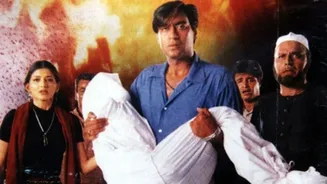
That is how my journey with Ajay Devgn began.
He did not arrive like a star’s son.
He arrived like someone who wished he could disappear.
He knocked before entering my vanity van. Sat carefully. Spoke little. Observed more.
At the premiere of Phool Aur Kaante, he invited me to KT Galaxy. I went, but I didn’t stay. I had a shoot the next morning.
But something about him lingered.
Not charisma. Not flamboyance.
Something quieter.
An ocean… waiting.
The film became a success. Then came confusion. Missteps. We even began Girvi—a story about bonded labour. It collapsed before it could find its feet.
Then came Naajayaz.
He was cast opposite Naseeruddin Shah. I could see the nervousness. He tried to hide it.
I told him, simply:
“If I say you can do it… you can.”
He didn’t retreat.
He stood his ground.
And something shifted.
People began to see him—not just as a star, but as an actor.
Then came Zakhm.
I called him when he was in Chennai. He was in the shower. He still took the call.
“I want you to do this film,” I told him. “It’s personal. My life.”
“I’m doing it,” he said.
No questions.
Just trust.
Zakhm gave me back something I had lost.
And it gave him what he had earned—a National Award.
But what stayed with me was something else.
When he received it, he spoke about the child who played his younger self—Kunal Khemu.
He said that the depth of his own performance came from that boy.
That takes grace.
During the release, when people doubted the film, he stood by it.
“Those who don’t understand this film don’t understand cinema.”
He stood by me.
At a time when I needed it the most.
And then, like everything in this business, we drifted.
Years later, at Rakesh Maria’s book launch, I saw him again.
A room full of power waited for him.
He walked in quietly. Spoke briefly. Claimed nothing more than what he knew.
And left.
No performance.
No excess.
That is Ajay Devgn.
But when I look at him today, I don’t just see the star.
I see the boy who came to me… carrying his father’s faith.
And I remember what Viru said.
“These generations have forgotten how to wait.
They want the harvest before they have planted the seed.”
I have seen the seed he planted.
I have seen it struggle… through doubt, through failure, through silence.
And I have seen it bloom.
Not suddenly.
Not loudly.
But truthfully.
Some seeds wait.
And when they bloom,
they justify the faith of the man who planted them.
Happy birthday Ajay.