






New Delhi: When disasters strike and wars tear communities apart, some people run towards the danger while the rest of the world watches from a distance.
They carry food into famine-hit regions, deliver medicines amid conflict, rescue families after disasters and stay with communities long after the headlines disappear.
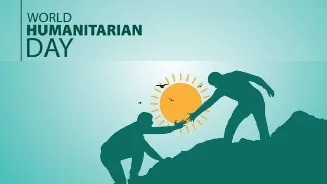
World Humanitarian Day, observed every year on August 19, is a tribute to these humanitarians, and a reminder that those who help people in crisis must themselves be protected.
World Humanitarian Day 2026 date
World Humanitarian Day 2026 is being observed on Wednesday, August 19. The United Nations Office for the Coordination of Humanitarian Affairs (OCHA) leads the annual campaign.
The date is rooted in tragedy. On August 19, 2003, a bomb attack on the Canal Hotel, which housed the UN headquarters in Baghdad, Iraq, killed 22 people, including Sergio Vieira de Mello, the UN Secretary-General’s Special Representative for Iraq.
Five years later, the UN General Assembly adopted Resolution 63/139, officially designating August 19 as World Humanitarian Day. The observance honours humanitarian workers who have lost their lives and recognises those continuing to provide assistance in some of the world’s most dangerous environments.
World Humanitarian Day 2026 theme
The official 2026 campaign message is: “Strengthening Global Solidarity and Empowering Local Communities” The campaign, led by the United Nations Office for the Coordination of Humanitarian Affairs (OCHA), calls attention to the need to protect humanitarian workers and uphold international humanitarian law.
The message comes as humanitarian needs continue to surge while funding and safe access for aid workers remain under severe pressure.
Significance of World Humanitarian Day 2026
The numbers underline the urgency. According to the UN, at least 326 humanitarian workers were killed across 21 countries in 2025. More than 1,010 humanitarians were killed over the three years to 2025, with the UN describing the trend as a collapse of protection for aid workers.
The humanitarian crisis itself is also enormous. The UN estimates that 239 million people require humanitarian assistance in 2026. Humanitarian partners are seeking around US$33 billion to assist 135 million people, with the most severe needs prioritised.
What do humanitarian workers do
Humanitarian action goes far beyond emergency food distribution. Aid workers provide or support healthcare, clean water, sanitation, shelter, nutrition, protection and assistance to displaced communities. They operate during armed conflicts, natural disasters, disease outbreaks and other emergencies.
Often, the first responders are people from the affected communities themselves. This was a central message of the UN’s 2025 humanitarian framework: local knowledge and leadership can make assistance faster, more relevant and more sustainable.
World Humanitarian Day is ultimately about defending the idea that every human life has equal value.
Humanitarian and medical personnel, their facilities, vehicles and operations must be respected and protected. Yet attacks, restrictions and funding shortages are increasingly making life-saving work harder and more dangerous. On World Humanitarian Day 2026, the world is therefore being asked not merely to remember the people who run towards crises, but to ensure they can continue doing so – safely, independently and with the support they deserve.