




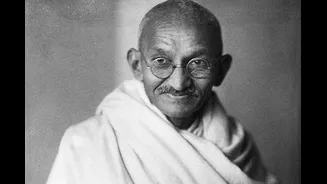
New Delhi: Khadi became closely associated with India’s freedom movement after Mahatma Gandhi placed hand-spun cloth at the centre of his campaign for
economic independence. British mill-made textiles had captured a large share of the Indian market, hurting traditional spinners and weavers while increasing dependence on imported goods. Gandhi encouraged people to boycott foreign cloth, spin yarn on the charkha and wear locally produced khadi. The practice gave Swadeshi a visible form while promoting employment among rural communities.
Khadi also carried a wider social message. Its simple appearance allowed Indians across economic backgrounds to adopt a shared symbol of resistance, even though deep social and caste inequalities remained. Gandhi favoured decentralised production that could provide work to villagers, artisans and women instead of concentrating manufacturing in large mills. On Gandhi Jayanti 2026, here is how khadi grew into an enduring symbol of self-reliance, freedom and Indian identity.
How khadi became a symbol of resistance and unity
Boycott of British textiles
British-manufactured textiles had a major presence in colonial Indian markets, affecting traditional spinning and weaving livelihoods. Gandhi encouraged Indians to boycott imported cloth as part of the Swadeshi campaign, turning clothing choices into a form of economic resistance.
Charkha and local production
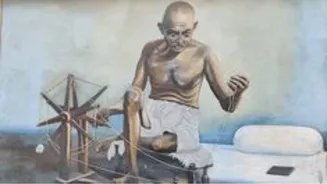
Gandhi urged people to spin yarn using the charkha and support locally produced cloth. Spinning represented his idea of self-sufficiency by reducing reliance on imported textiles and encouraging people to participate directly in domestic production.
Khadi as ‘livery of freedom’
Wearing khadi became a visible expression of participation in the freedom struggle. Gandhi described the fabric as the “livery of freedom”, linking everyday clothing with Swadeshi, economic independence and the larger pursuit of swaraj.
Livelihood for rural communities
Gandhi saw hand-spinning as a practical means of creating supplementary work for poor villagers. Khadi production could provide income while recognising the dignity of manual labour and supporting traditional skills.
Production by masses
His vision went beyond replacing British mills with Indian-owned factories. Gandhi advocated decentralised production carried out across villages. His idea of production by the masses sought to distribute economic opportunities more widely, including among artisans and women.
Shared national identity
Khadi’s plain appearance allowed people across different economic and social backgrounds to wear the same fabric as a political statement. It did not remove existing caste or class inequalities, but it offered a common symbol around which people could express solidarity with the freedom movement.
Symbol of self-reliance
Spinning and wearing khadi connected personal choices with Gandhi’s broader ideas about economic independence. The fabric came to represent Swadeshi, rural livelihoods, resistance to colonial economic control and a distinct national identity.
Khadi’s importance during the freedom movement extended well beyond clothing. Gandhi transformed the hand-spun fabric into an everyday expression of economic resistance, collective participation and the pursuit of self-reliance.