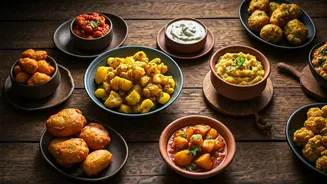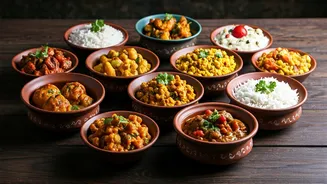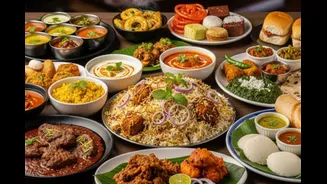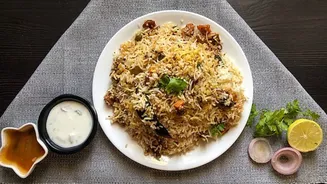







New Delhi: Researchers from IIIT Hyderabad have investigated the regional diversity across India in ingredients, preparation and presentation of biryani.
The research on Biryani is part of a wider effort build an Indian Food Map to capture the regional variations of food across the country. Indian food is deeply tied to the culture, and the effort is aimed at visualising and cataloguing the differences in ingredients, tastes and cooking styles across the country, including mapping raw materials, spice preferences and regional flavours. Lead of the project, CV Jawahar explains, “Different parts of the country have different types of food, or sometimes similar dishes but different ways of cooking them.”
The researchers have authored a paper titled ‘How Does India Cook Biryani?‘ Focusing on biryani allows for managing the scale of the problem. One of the authors of the study, Farzana S says, “We thought that in order to build a small prototype, why not focus on India’s most favourite and most ordered dish.” Due to the incredible variety, the researchers had to limit the number of biryani styles studied. The team examined YouTube cooking videos to understand cooking sequences, dependencies and unspoken expertise.
Can AI-powered robots cook biryani?
Farzana explains, “The diversity of cooking each style of biryani which varies with the choice of ingredients, cooking utensils, sequence of preparing steps has been documented through a plethora of online cooking videos. But if I wanted to compare the Hyderabadi style of cooking vs. the Awadhi style, or if I wanted to know which recipe uses more whole spices, it’s not easy to get answers by just viewing the videos.” A number of steps in the videos are implied, and are not explicitly explained. One of the most striking outcomes of the research is a system that can directly compare two recipes, for example, the variations in the making of the masalas for Hyderabadi vs Awadhi biryanis.
The long-term vision of the researchers is to assist people while they cook, beyond just following along to a video. Jawahar says, “In the future, an AI assistant could watch you cook and guide you in real time, almost like somebody standing next to you and keeping silent when it (commentary) is not required.” A step beyond would be cooking with the use of domestic robots. AI and robotics can potentially replicate the style of home-cooked food, that every Indian prefers and enjoys.
Using AI to understand instructional videos
The research addresses a challenge in artificial intelligence, using AI to understand instructional videos. Cooking videos are just one example of skill-based content, that includes dance, crafts and vocational training. Jawahar explains, “Understanding instructional videos is a very important area that is emerging, with applications that range from education and skill development to employment generation.”