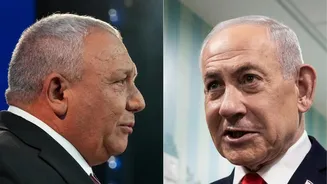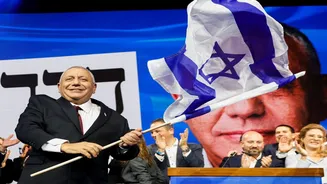








New Delhi: Israel’s President Isaac Herzog on Saturday picked Gadi Eisenkot, the former military chief and the primary political rival of Prime Minister
Benjamin Netanyahu, to attempt to stitch together a new government, Israeli media reported. The decision followed an inconclusive election on October 27 that left the country in political deadlock, with neither camp securing a straightforward route to a working parliamentary majority.
The mandate delivers a significant challenge to Netanyahu, Israel’s longest-serving leader, who is battling to keep his grip on power. His religious-nationalist coalition lost its absolute majority in the parliamentary vote, though his alliance still emerged from the contest as the single largest grouping in the Knesset.
Eisenkot leads an anti-Netanyahu bloc through his party, Yashar. While his camp has so far refused to formally team up with Arab parties whose votes could provide a clear majority, Arab leaders backed Eisenkot anyway. Driven by frustration over the policies of Netanyahu and his hardline right-wing allies, Arab party heads formally nominated the former army chief during marathon consultations held with President Herzog.
Netanyahu pushes for unity as tensions rise
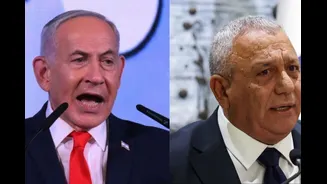
The president’s announcement, which had initially been anticipated on Sunday, arrived shortly after Netanyahu released a video appeal calling for a national unity government. In the clip, the prime minister warned against hastily swearing in a government with terrorist supporters, an apparent swipe aimed at the Arab-led factions.
Netanyahu and his coalition allies have consistently characterised Arab-led parties as a risk to national security. In contrast, Eisenkot has shown openness to working alongside them, provided specific ground rules are met as most notably that any partner explicitly labels Hamas a terrorist organisation that must be eliminated.
Yashar hits back over coalition red lines
Eisenkot’s party, Yashar, pushed back firmly against Netanyahu’s remarks via a statement on X, calling on members of the ruling Likud party to break ranks and disavow their existing tie-up with radical parties, referring to the more extreme factions within Netanyahu’s current base.
The party stressed that Eisenkot will maintain strict boundaries during negotiations, reiterating that he would only bring in parties and individual lawmakers who back Yashar’s core principles, including the formal recognition of Hamas as a terrorist outfit.