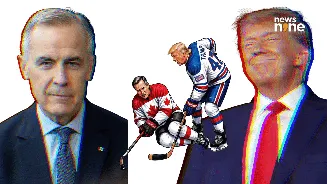



US President Donald Trump has taken another swipe at Canadian Prime Minister Mark Carney, this time using a hockey-themed cartoon shared on Truth Social.
The image showed Trump standing over Carney on the ice and telling him, “Get up, governor.”
The post landed at a tense moment in US-Canada relations. Canada’s new retaliatory tariffs on American goods took effect on September 8, covering C$27.6 billion worth of imports from the US. The duties range from 15 per cent to 50 per cent and cover products including steel, dairy, electronics and agricultural equipment.
What does Trump’s ‘get up, governor’ post show?
The cartoon shows Trump in a USA hockey jersey standing over Carney, who is lying on the ice in a Canada jersey.
Trump’s message in the image reads, “Get up, governor.”
The “governor” jibe has become one of Trump’s repeated ways of mocking Canadian leaders. He has used similar language against Carney during the trade dispute and previously referred to former Canadian prime minister Justin Trudeau as “Governor Trudeau.”
The hockey reference gives the latest post an extra sting. Hockey is deeply tied to Canadian national identity, making the picture easy to understand even for people who have not been following every round of the trade fight.
Trump targets Canadian dollar too
Trump followed the social media attack with criticism of the Canadian dollar’s exchange rate against the US dollar.
“Canada’s (currency) dollar imbalance with the U.S. is unacceptable,” his post said. “It has been that way for years – but no longer!”
Trump did not explain what policy action he was suggesting with the remark.
The exchange comes after Carney publicly criticised Washington’s approach to the dispute. Earlier this month, he told the Trump administration to “stop doing memes, stop throwing shade and stop trying to be tough.”
Canada’s tariffs have now moved the argument from social media posts to real trade costs. Ottawa says the measures are intended to match US tariffs dollar for dollar, putting further pressure on one of the closest economic relationships in North America.