







Chennai: Since the DMK formed the government for the first time in 1967, either the DMK or the AIADMK has governed Tamil Nadu for the past 59 years. Surpassing
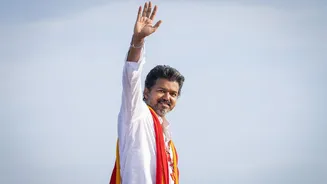
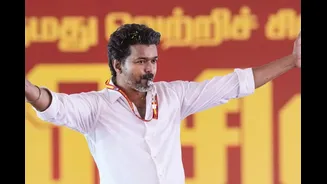
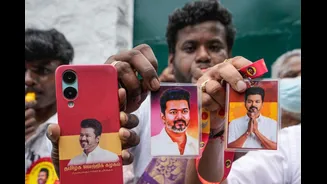
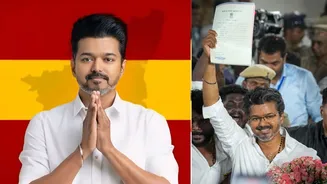
both these parties, Vijay’s TVK has emerged as the single largest party, capturing 108 constituencies in its very first electoral contest in the Tamil Nadu Assembly election 2026. However, since a party requires victory in 118 out of 234 constituencies to form a government, the TVK has not secured an absolute majority.
The math behind TVK’s effective strength
Vijay has won in two constituencies—Perambur and Trichy East—and must resign from one of them. Consequently, the party’s seat count will decrease by one, leaving the TVK with a total of 107 MLAs. Furthermore, a TVK candidate will be appointed as the Speaker of the Assembly. During a vote of confidence, the Speaker is ineligible to cast a vote; thus, for that specific instance, the effective strength of the TVK would drop by one again, leaving them with 106 MLAs. Therefore, to form a government and prove its legislative strength, the TVK requires the support of an additional 12 MLAs.
Other parties’ seat tally
Currently, excluding the DMK and AIADMK, other parties allied with these two major fronts have collectively won 20 seats. Within the DMK alliance, including the 5 seats won by the Congress, other parties account for a total of 14 MLAs. The VCK, CPI, CPI(M), and IUML have each won 2 seats, while the DMDK has secured 1 seat. In the AIADMK alliance, excluding the AIADMK itself, other allied parties have won only 6 seats in total. Among these, the PMK holds 4 seats, while the BJP and AMMK each have 1 MLA. A situation has emerged where the TVK can form a government only if parties currently aligned with the two major coalitions defect and extend their support to it.
Governor’s options
Given the formation of a hung assembly, Governor R.V. Arlekar is likely to offer Vijay two potential avenues to form a government. One option would be to invite Vijay and ask him to demonstrate his majority on the floor of the Legislative Assembly. Alternatively, he might instruct him to secure and submit letters of support from other parties willing to back his bid. If the TVK secures the support of more than 118 MLAs, the Governor will formally invite the party to form the government.
What if TVK fails to secure majority?
However, should the TVK fail to secure the support of the requisite 12 MLAs, it will be unable to form a government. In such a scenario, the Governor is likely to extend an invitation to the DMK—the party that secured the second-highest number of seats—to form the government. If the DMK, too, proves unable to form a government, the Governor may then impose President’s Rule. Should this occur, Governor’s Rule could remain in effect in Tamil Nadu for the subsequent six months, following which fresh elections would be conducted across all 234 constituencies.