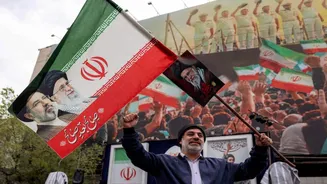







New Delhi: Amid escalation of war in the Middle East, US President Donald Trump has said that his country was ready to pull out of Iran in two-three weeks,
irrespective of whether the Strait of Hormuz remains closed or not. He also pointed out that it was up to countries dependent on the canal for their energy need and the US had nothing to do with it, saying, “get your own oil.”
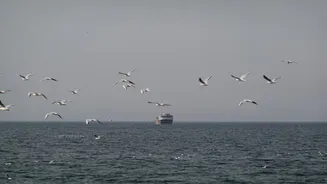
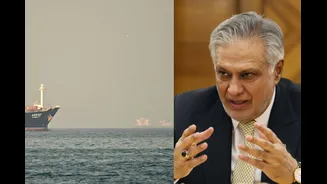
Trump had recently asked countries to join the US in its efforts to reopen the Strait of Hormuz. He has also been unhappy over allies not supporting the US much in its war on Iran. Notably, since the war on Iran started on February 28, Tehran took control of the canal, impacting the supply of energy in various countries, especially those in South Asia.
Why US not impacted?
While the other countries might be impacted by the closure of the Strait of Hormuz, the US import of crude oil has decreased over the last few years, making it a less impacted country. The US imported around 0.5 million bpd of crude from Gulf countries through the Strait in 2024. It accounted for around 7% of total US crude oil.
The energy import by the US has decreased in recent years due to an increase in domestic production and a surge in energy imports from Canada. In 2018, the US imported around 1.5 million bpd of crude and condensate from the Persian Gulf, while in 2008, the figure was higher at 2.34 million bpd.
However, among other states, California imported 21.26% of crude oil from Iraq, 5.31% came from Saudi Arabia, and 4.42% from the UAE, suggesting its reliance on Persian Gulf energy. It may be important to note that even as the US Gulf Coast is linked to the Permian Basin and Canada through crude pipelines, California does not enjoy the same connectivity. So, only California may be hit hard; other parts of the US may not be hit hard due to the closure of the canal.
Countries which are most impacted due to closure
Due to this crisis, food prices have skyrocketed in various countries. Among these countries are – Zambia (30.7%), Sri Lanka (15.3%), Taiwan (12.5%), Pakistan (11.4%), Equitorial Gunea (11.2%), India (10.7%), Greece (9.5%), Venezuela (8.4%), Turkey (8.3%) and Azerbaijan (8.1%). While Russia supplies one-fifth of global fertilizers, the supply may increase if the Strait of Hormuz continues to remain closed.
Since the war started, the price of petrol has gone up dramatically. Apart from petrol, the supply of chemicals, gases and other products has also been impacted due to the closure of routes. According to data by the United Nations, around a third of the world’s fertilisers, including urea, ammonia, potash, and phosphates, pass through this canal. The World Trade Organisation (WTO) has said that ever since the start of the conflict, outbound shipments of fertiliser-related products through the region have collapsed.
20 million barrels of oil products passed through Strait last year
In 2025 alone, nearly 20 million barrels of oil and oil products passed through the canal as per the US Energy Information Administration (EIA), which means around $600billion worth of energy trade per year. Apart from Iran, oil also comes from other countries like Kuwait, Iraq, Qatar, Saudi Arabia, and the UAE.
Apart from these, around 20% of global Liquefied Natural Gas (LNG) also passes through the site, mostly from Qatar. In 2024, the country exported 9.3 billion cubic feet per day (Bcf/d) of LNG through the Strait of Hormuz, while UAE exported nearly 0.7 Bcf/d, the data added further.
Notably, a third of global shipments of helium gas are exported from Qatar and pass through the Strait of Hormuz. Helium is used in the manufacture of semiconductor wafers, which are then s used in computers, vehicles, and household appliances. It is also used to cool the magnets in Magnetic Resonance Imaging (MRI) scanners that are used in hospitals.