






New Delhi: US President Donald Trump has ordered the Pentagon to substantially reduce joint military exercises with South Korea, citing the high cost of
the drills, Seoul’s refusal to support US efforts against Iran and his ‘very good relationship’ with North Korean leader Kim Jong Un.
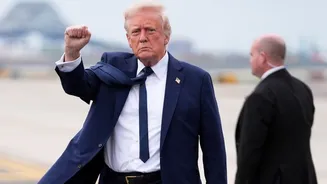
Trump made the announcement on Sunday, just as the annual ‘Ulchi Freedom Shield’ exercises were due to begin. He said the drills send an ‘inappropriate and hostile’ signal to North Korea, which he described as ‘unthreatening and respectful’ during his presidency. Trump also said he had asked South Korean President Lee Jae Myung to support US efforts to denuclearise Iran, but Seoul declined.
“Based on my very good relationship with Kim Jong Un,” Trump said he was unhappy that Washington had agreed to participate in the exercises. He then instructed Defence Secretary Pete Hegseth to ‘substantially reduce’ them, while acknowledging that it was too late to cancel the drills altogether.
What are the US-South Korea drills?
The Ulchi Freedom Shield exercises are among the two major annual military drills conducted by the US and South Korea. This year’s exercise is scheduled to run for 11 days from August 17 to 27, with about 18,000 South Korean troops participating. The drills are designed to improve the allies’ ability to respond to a North Korean attack and include training across multiple domains, including cyber operations, drones and electronic warfare.
South Korea’s Defence Ministry said the exercises would proceed according to the previously announced schedule, despite Trump’s order to reduce their scale. The Pentagon has not yet publicly detailed which parts of the exercises will be cut.
Why Trump’s decision matters
Trump’s move could raise fresh questions about the credibility of the US security commitment to South Korea at a time when North Korea is expanding its nuclear and missile capabilities. Pyongyang has repeatedly condemned US-South Korean exercises as rehearsals for an invasion and recently resumed ballistic missile testing.
The decision is also significant because North Korea has gained battlefield experience through its support for Russia in the Ukraine war. US and South Korean officials have warned that this experience could improve Pyongyang’s military capabilities.
Trump, however, has consistently argued that reducing military pressure could create space for diplomacy with Kim Jong Un. His latest decision reflects his preference for personal engagement with the North Korean leader, even as critics warn that reducing joint exercises could weaken deterrence and raise concerns among US allies in Asia.