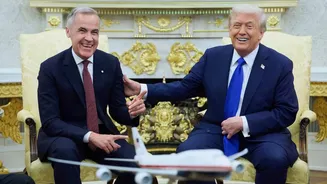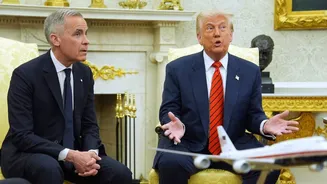









New Delhi: Canadian Prime Minister Mark Carney has suspended trade negotiations with the United States after the two countries failed to reach an agreement
before a Friday night deadline. Carney warned that Canada would respond to new US tariffs dollar for dollar to protect its workers and businesses.
Carney said the United States was preparing to impose 50 per cent tariffs on around $28 billion worth of Canadian goods from midnight. Canada, he said, would introduce reciprocal tariffs on US products in response.
The decision followed three days of talks in Washington aimed at preventing the new tariffs. Carney said the negotiations had made important progress but did not result in a deal that met Canada’s objectives.
“As a result, this evening, I have decided to suspend trade negotiations with the US and have directed Canada’s negotiators to return to Ottawa,” Carney said.
US says Canada walked away from negotiations
US Trade Representative Jamieson Greer gave a different version of events, saying Canada had walked away from the discussions despite progress towards an agreement.
Greer said Washington had offered Canada the best treatment among major exporters to the US. However, he accused Ottawa of introducing new demands and reversing earlier commitments, which he said disrupted the progress made during the talks.
A senior US official said Canada was seeking concessions that Washington was not prepared to offer, particularly in the automotive, steel, aluminium and lumber sectors.
The official also warned that any Canadian retaliation could lead to further action from President Donald Trump.
New US Tariffs to take effect at midnight
US Customs and Border Protection issued guidance to importers shortly before Greer’s briefing, confirming that tariffs on specified Canadian products would take effect after 12:01 am.
The new tariffs cover a relatively small portion of Canadian exports but come on top of existing US duties on steel, lumber and automobiles. The measures could put additional pressure on Canada’s economic recovery and make wider trade negotiations more difficult.
The tariffs will also cover some Canadian goods that qualify for preferential treatment under the US-Mexico-Canada Agreement, which had protected large parts of Canadian industry from earlier US tariffs.
The latest dispute has renewed trade tensions between the two neighbours, with Canada preparing reciprocal measures as Washington moves forward with the new tariffs.