







New Delhi: Janmashtami fasting does not end with simply sitting down for a regular meal. For devotees who observe the vrat with religious discipline, the way
the fast is opened is also considered part of the observance. After completing the midnight worship of Lord Krishna, the first food should be taken with the same sense of devotion with which the fast was kept.
The traditional approach is simple. Complete the Janmashtami puja, accept the bhog offered to Lord Krishna as prasad, and then begin with fresh fruit. Regular food should follow only after this.
How to break Janmashtami fast
The vrat can be opened in a few simple steps:
- Complete the midnight Krishna puja
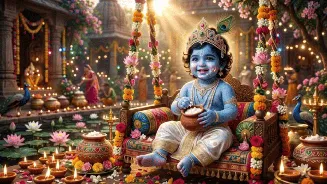
Janmashtami worship is traditionally performed around midnight, when devotees celebrate the birth of Lord Krishna. Complete the puja, offer prayers and receive the deity’s bhog as prasad.
Many devotees also sing bhajans or recite Krishna’s names during the birth celebration.
- Have Krishna’s bhog as prasad
The first food after the vrat should preferably be the prasad offered to Lord Krishna. This gives the fast a proper devotional conclusion and keeps the focus on worship rather than immediately returning to a normal meal.
If you have prepared makhan-mishri, fruits, milk or another vrat-appropriate offering for Krishna, it can be taken as prasad after the puja.
- Start with fresh fruit
After prasad, fresh fruit is a gentle way to begin eating again. A long fast often leaves the stomach empty for several hours, so there is little reason to begin with a heavy meal.
Take small portions and give your body some time before eating more.
What to eat after Janmashtami fast
Once the vrat has been opened, devotees who continue with vrat-friendly food can choose simple sattvic options.
Some commonly followed choices include:
- Fresh fruits
- Milk and curd
- Makhan-mishri
- Sabudana preparations
- Kuttu flour dishes
- Singhara flour preparations
The idea is to keep the first meal simple and consistent with the spirit of the festival.
What should you avoid after breaking the vrat
Breaking the fast does not mean immediately returning to an ordinary diet. Traditional Janmashtami observance generally favours simple, sattvic food.
Devotees following these fasting rules avoid grains, onion, garlic and non-vegetarian food during the observance. Refined or heavily processed foods are also better avoided when opening the fast.
A heavy, oily meal immediately after a long fast can also feel uncomfortable, so a gradual return to regular eating is a sensible choice.
Is prasad necessary to break the Janmashtami fast
In the tradition described above, Krishna’s bhog is taken as prasad before other food. The significance lies in completing the worship first and accepting the offered food with devotion.
The sequence therefore matters: finish the midnight puja, take the offered prasad, have fruit, and then move towards other vrat-friendly food.
What is the right way to open Janmashtami vrat
The essence of Janmashtami Parana is restraint and devotion. Prepare the bhog and fruit before the midnight puja so there is no rush once the worship ends. After offering the food to Krishna, accept it as prasad and begin eating slowly.
For devotees following a specific traditional Parana time, the fast should be broken according to that prescribed time rather than treating the midnight celebration itself as an automatic end to every form of Janmashtami fasting.
Janmashtami fast is meant to end with the same mindfulness with which it begins. Complete Krishna’s midnight worship, accept his bhog as prasad, start with fruit and keep the first meal simple. The food marks the end of the vrat, while the devotion behind it gives the observance its meaning.
Written by: Tanya Singh of Astropatri.com. For feedback, please write to hello@astropatri.com.