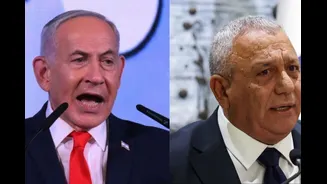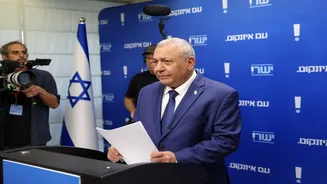








New Delhi: Former Israeli military chief Gadi Eisenkot has secured his first coalition agreement in his bid to form a new government and end Prime Minister
Benjamin Netanyahu’s rule. Eisenkot’s Yashar party has reached an agreement with Avigdor Lieberman’s right-wing opposition party, Yisrael Beiteinu, following a meeting between the two leaders.
The agreement is the first formal step towards building an alternative government since Israel’s October 27 election failed to give any political bloc a clear majority in parliament. However, Eisenkot still faces the challenge of bringing together parties with different political positions to secure the numbers needed to form a government.
Lieberman joins Eisenkot’s coalition bid
According to reports, the agreement brings together Eisenkot’s Yashar party, which won 21 seats, and Lieberman’s Yisrael Beiteinu, which secured seven seats in the 120-member Knesset. Together, the two parties account for 28 seats.
The full text of the agreement has not been made public, and the ministerial positions that Lieberman’s party could receive in a future government remain unclear. Lieberman could seek the Defence Ministry, although no appointment has been officially confirmed.
The agreement is significant because Lieberman has previously opposed forming a government that depends on the support of Arab parties. He has also rejected the possibility of joining a unity government with Netanyahu, despite his differences with the prime minister.
Meanwhile, Yair Golan’s left-wing Democrats party has suspended coalition talks with Eisenkot. The party objected to Yashar’s parallel negotiations with Netanyahu’s Likud over a possible unity government.
Can Eisenkot secure the numbers to replace Netanyahu?
The October 27 election left Israel facing a political deadlock. Netanyahu’s Likud-led right-wing and religious bloc secured 53 seats, falling short of the 61 needed for a parliamentary majority. Eisenkot’s existing opposition partners hold 48 seats, while Arab parties have 19 seats.
The Arab parties could therefore play an important role in determining the next government. While Golan has backed forming a government with their outside support, Lieberman has opposed such an arrangement. Eisenkot is also holding discussions with ultra-Orthodox parties and has not ruled out further negotiations with Likud.
President Isaac Herzog has given Eisenkot until December 6 to form a government. He can seek an additional 14 days if required. If he fails, Netanyahu could get another opportunity to form the government. If neither leader succeeds, Israel could face another election next year.
Even after reaching coalition agreements, Eisenkot will need to present his proposed cabinet and secure a vote of confidence in the Knesset.