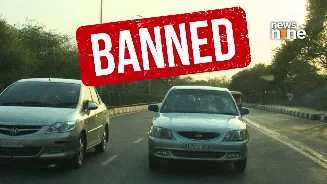









New Delhi: The Supreme Court has tightened the rules on old vehicles in Delhi NCR, and this time there is little room left for confusion. Owners of ageing
diesel and petrol cars have been watching this case closely, especially after the August 12 order that had temporarily shielded many vehicles from action. That protection has now been rolled back.
On December 17, the top court accepted the recommendation of the Commission for Air Quality Management and allowed authorities to act against older and more polluting vehicles again. For anyone who drives in Delhi NCR daily, this decision directly affects what stays on the road and what does not.
Supreme Court removes shield for older polluting vehicles
The Supreme Court modified its August 12, 2025 order which had stopped coercive action against 10-year-old diesel and 15-year-old petrol vehicles. The new direction clearly allows action against BS-III and older emission standard vehicles.
The bench, led by Chief Justice of India Surya Kant along with Justice Joymalya Bagchi and Justice Vipul M Pancholi, stated that the August 12 order is modified so that no coercive steps shall be taken only against BS-IV and newer emission standard vehicles, even if they are 10-year-old diesel or 15-year-old petrol vehicles.
In simple words, if your car or bike meets BS-IV or BS-VI norms, age alone will not get it off the road. If it is BS-III or older, enforcement agencies can step in again.
Why CAQM pushed for this change
The Commission for Air Quality Management told the court that the earlier order had an unintended effect. More polluting vehicles had quietly returned to the roads since authorities could not impound them.
The recommendation was placed before the court by additional solicitor general Aishwarya Bhati. She pointed out that BS-I, BS-II, and BS-III vehicles were still operating across Delhi NCR, adding to the pollution load and harming public health.
CAQM noted that BS-III vehicles have been plying for over 15 years, BS-II vehicles for more than 20 years, and BS-I vehicles for over 24 years. Compared to modern BS-VI vehicles, their emission levels are significantly higher.
Why vehicles matter so much in Delhi NCR pollution
Vehicular pollution remains one of the biggest contributors to poor air quality in Delhi NCR. CAQM said light motor vehicles and two wheelers make up around 93 percent of the vehicle population in the region.
We see this every morning. Older hatchbacks, ageing diesel SUVs, and well-used bikes still form a big part of traffic. Many of them are reliable machines, no doubt. But reliability does not mean clean emissions.
The commission also reminded the court that the National Green Tribunal had passed multiple orders between 2014 and 2015 to restrict end-of-life vehicles in NCR. The Supreme Court had confirmed those directions back in October 2018.
Fuel denial and what comes next
To enforce compliance, CAQM has already taken steps beyond court orders. In April 2025, it directed fuel stations to deny fuel to all end-of-life vehicles from November 1 this year. The same rule will extend to five high vehicle density NCR districts from April 1, 2026.
This means even if an old vehicle somehow avoids checks, refuelling it will soon become impossible.
What this means for car and bike owners
For automobile enthusiasts, this ruling draws a clear line.
- BS-IV and newer vehicles can continue if otherwise compliant
- BS-III and older vehicles face impounding and fuel denial
- Age alone no longer decides legality, emission standard does
Many enthusiasts love maintaining older cars, especially diesels from the early 2010s. But in Delhi NCR, the space for keeping such machines on public roads is shrinking fast.