



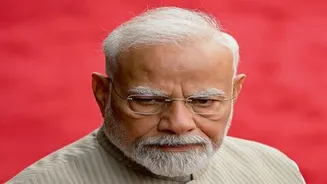
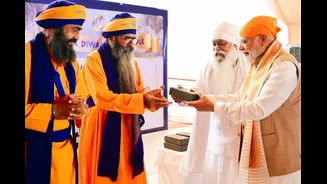
New Delhi: A golden painting from Rajasthan, a hand-woven silk carpet from Kashmir, a bronze sculpture inspired by the Chola dynasty and a delicate stole
from Banaras. Prime Minister Narendra Modi’s gifts to the world leaders during his visit to Manila, Philippines, gave a glimpse of India’s exquisite artistic heritage.
PM Modi’s gifts during his November 16-17 visit were a mix of presents representing different regions of India, each with its own history, craftsmanship and cultural symbolism. The gifts, instead of the usual diplomatic souvenirs, were examples of art forms handed down from generation to generation, some dating back centuries.
From the intricate gold work of Pichwaai paintings to the ancient lost-wax process used to create Dokra sculptures, here’s a closer look at the 14 traditional Indian gifts given to world leaders and their cultural value.
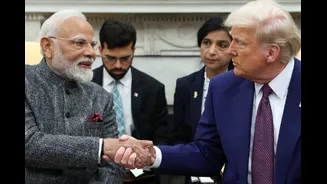
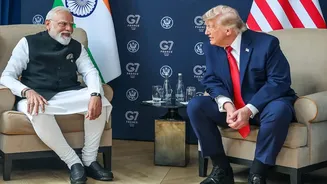
1. Golden Pichwaai painting for US President Donald Trump
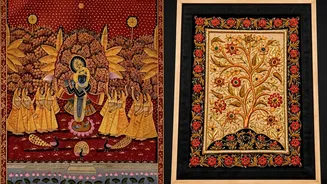
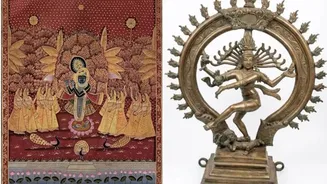
Prime Minister Modi presented US President Donald Trump with a Golden Pichwaai painting from Nathdwara in Rajasthan. Pichwai is a traditional style of painting, closely associated with the worship of Shrinathji, a form of Lord Krishna. The name comes from the words ‘pichh’, meaning ‘behind’, and ‘wai’, meaning ‘hanging’, referring to the decorative cloth paintings traditionally displayed behind the deity.
The paintings are done on specially prepared cloth with mineral-based pigments, fine brushwork and gold detailing. Cows, lotuses, trees and elaborate floral borders are recurring elements.
Prime Minister Narendra Modi gifted a Golden Pichwaai painting from Nathdwara, Rajasthan, to US President Donald Trump during his visit to Manila, Philippines.
Originating in Nathdwara, the traditional cloth-painting art is known for its intricate detailing, luminous colours, and elaborate compositions. Created on finely prepared cloth using mineral pigments and gold detailing, it features motifs such as lotuses, cows, trees, and ornamental borders, reflecting exceptional artisan craftsmanship, while its golden finish lends it a regal appeal
— ANI (@ANI) November 18, 2026
The golden finish adds richness to the composition, and traditional motifs evoke devotion, beauty and the artistic heritage of Nathdwara. The gift is in line with Rajasthan’s age-old tradition of devotional painting.
2. Kashmiri Silk Carpet For Philippine President Ferdinand Marcos Jr.
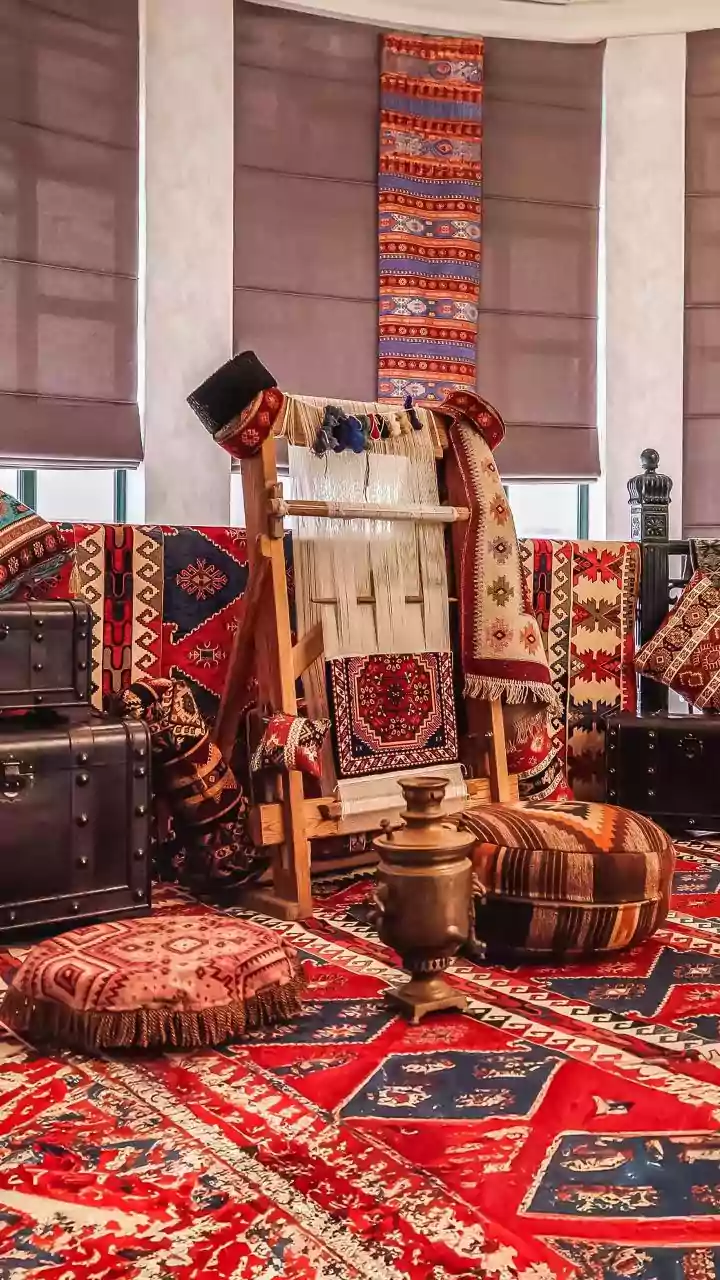
For Philippine President Ferdinand Marcos Jr, PM Modi picked a traditional Kashmiri silk carpet. Known for their fine silk threads, detailed patterns and intricate hand-knotted designs, Kashmiri carpets are famous. Their designs are often inspired by the natural landscape of Kashmir and often feature flowers, vines, geometric patterns and chinar leaves.
Depending on the size and complexity, a carpet can take months or even years to produce. Each knot is tied by hand by artisans to create the design. The result is a product known for its softness, sheen and durability.
Prime Minister Narendra Modi gifted a traditional Kashmiri silk carpet to Philippine President Ferdinand Marcos Jr. during his visit to Manila, Philippines
The hand-knotted craft is admired for its luminous sheen, soft texture, intricate designs, and durability. Made from fine silk, it involves thousands of knots tied by skilled artisans, with some carpets taking months or even years to complete. Its motifs, inspired by Kashmir’s natural beauty, including floral patterns, chinar leaves, and geometric designs, reflect the region’s rich artistic identity.
— ANI (@ANI) November 18, 2026
This carpet is not just a decorative piece. It is a symbol of Kashmir’s weaving heritage, the patience of its craftspeople, the art of turning fine silk into a lasting work of art.
3. Philippine First Lady Louise Araneta-Marcos’ Kashmiri Pashmina shawl
The First Lady of the Philippines, Louise Araneta-Marcos, received a traditional Kashmiri Pashmina shawl in a papier-mâché box. The value of pashmina lies in its very fine, soft fibres and warmth. The textile has historic roots in the luxury weaving tradition of Kashmir, where artisans turn delicate yarn into lightweight shawls.
Another Kashmiri craft is featured in the accompanying papier-mâché box. Traditionally made from moulded paper pulp, these boxes are decorated with intricate hand-painted designs. The shawl and its presentation box represent two traditions of Kashmir: fine textile weaving and ornamental craftsmanship. The gift is elegant, warm and reflects the artistic identity of the region.
4. Chola bronze sculpture for Indonesian President Prabowo Subianto
Indonesian President Prabowo Subianto was given a traditional Chola bronze sculpture – a symbol of Tamil Nadu’s rich metalwork heritage. The Chola bronze art flourished between the 9th and 13th centuries during the reign of Chola rulers. The sculptures have been praised for their elegant poses, balanced proportions and expressive detailing.
They are traditionally made using the lost-wax technique, or Madhuchista Vidhana. Artisans first model the sculpture in wax, cover it with a mould and heat it until the wax melts away. Molten metal is then poured into the space left behind. Because the original wax model is destroyed during casting, each sculpture is individually made.
Prime Minister Narendra Modi gifted a traditional Chola Bronze Sculpture to Indonesian President Prabowo Subianto during his visit to Manila, Philippines.
Chola bronze sculptures represent the pinnacle of classical Indian metallurgy and artistic excellence, flourishing between the ninth and thirteenth centuries under the Chola dynasty in South India. Created using the traditional lost-wax casting technique, known as Madhuchista Vidhana, each sculpture is individually handcrafted, making it a unique work of art.
Renowned for their anatomical precision, graceful forms and expressive detailing, these sculptures also preserve valuable insights into the clothing, jewellery, hairstyles and aesthetic traditions of the Chola era. They stand as enduring symbols of Tamil Nadu’s rich cultural heritage, advanced metallurgical skills and India’s artistic legacy.
— ANI (@ANI) November 18, 2026
The gift is a tribute to the artistic achievements of the Chola period and the continuing craftsmanship of the South Indian bronze sculptors.
5. Boat of dokra artwork for Prime Minister of Cambodia Hun Manet
PM Modi gifted a traditional Dokra metal artwork of a boat carrying human figures and birds to the Cambodian Prime Minister, Hun Manet. Dokra is a traditional method of metal crafting using the lost wax method. The technique has its roots going back thousands of years and is still practised by artisan communities in India.
Dokra objects are celebrated for their textured surfaces, handmade appearance and unique figures drawn from daily life, animals and nature. The boat is very important. Its figures and birds portray the relationship of the communities and their natural surroundings.
Prime Minister Narendra Modi gifted a traditional Dokra Artwork Boat to Cambodian Prime Minister Hun Manet during his visit to Manila, Philippines.
The traditional Indian metal craft is created using the ancient lost-wax casting technique, a tradition dating back over 4,000 years. Handcrafted by skilled artisans, it depicts a boat carrying figures and birds, reflecting community life and harmony with nature.
Each piece is individually modelled in wax and cast in metal, making it unique. The boat symbolises unity, cooperation, resilience, and collective progress, while the craft preserves ancestral skills, supports artisan livelihoods, and represents India’s rich folk-art heritage.
— ANI (@ANI) November 18, 2026
It is a diplomatic gift, a symbolic object representing unity, cooperation, resilience and collective progress.
6. Silver inlay vase, Myanmar Bidriware
A Bidriware silver-inlaid vase was presented to Myanmar by Bidar, Karnataka. Bidriware is a unique metallic craft with its characteristic black surface and elaborate silver designs.
The alloy the artisans use is mostly zinc and copper. Decorative patterns are engraved on the surface, and grooves are filled with silver wire or sheets. The object is treated in a special way to darken the metal while leaving the silver detailing prominent. Often, the designs are inspired by flowers and vines, geometric patterns and the architectural traditions of the Deccan.
Prime Minister Narendra Modi gifted a Silver Worked Urli to Malaysian Prime Minister Anwar Ibrahim during his visit to Manila, Philippines.
The Silver Worked Urli is a traditional Indian decorative vessel adorned with intricate silver embellishments, showcasing the skill and artistry of Indian metalworkers. Traditionally filled with water and decorated with floating flowers, it symbolises purity, prosperity, hospitality and harmony.
— ANI (@ANI) November 18, 2026
This craft has a Geographical Indication (GI) tag and is named after Bidar. The vase is a symbol of the region’s metalworking knowledge and artistic heritage.
7. Bidriware Silver-Inlay Vase for Sultan Hassanal Bolkiah of Brunei
Sultan Haji Hassanal Bolkiah of Brunei was also presented with a Bidriware silver inlay vase. The gift is a reflection of the centuries-old craftsmanship of Bidar, where artisans use metal casting, engraving and silver inlay to create ornamental objects. Bidriware has a unique black and silver finish. The intricate motifs also tell of the artistic influences that have shaped the Deccan over generations.
Prime Minister Narendra Modi gifted a Bidriware Silver Inlay Vase from Bidar, Karnataka, to Myanmar during his visit to Manila, Philippines.
The traditional metalcraft is made from a zinc-and-copper alloy and adorned with intricate pure silver inlay. Artisans engrave designs, insert silver wire, and treat the surface to achieve its distinctive deep black finish, creating a striking contrast with the silver detailing. Its floral and geometric motifs draw inspiration from the architectural heritage of Bidar Fort. Recognised with a Geographical Indication (GI) tag, Bidriware represents the rich artistic legacy of the Deccan region, the craftsmanship of Bidar’s artisans, and India’s enduring metalworking traditions.
— ANI (@ANI) November 18, 2026
In choosing Bidriware for both Brunei and Myanmar, Modi has spotlighted a traditional Indian craft that still uses historic metalworking techniques.
Prime Minister Narendra Modi gifted a Bidriware Silver Inlay Vase from Bidar, Karnataka, to Sultan Haji Hassanal Bolkiah of Brunei during his visit to Manila, Philippines.
The traditional metalcraft is made from a zinc-and-copper alloy and adorned with intricate pure silver inlay. Artisans engrave designs, insert silver wire, and treat the surface to achieve its distinctive deep black finish, creating a striking contrast with the silver detailing.
— ANI (@ANI) November 18, 2026
8. Japanese PM Sanae Takaichi’s royal blue Banarasi Katan silk stole
Prime Minister of Japan Sanae Takaichi was presented with a royal blue Banarasi Katan silk stole in a Sadheli box.
Banarasi textiles are one of India’s most famous weaving traditions. Katan silk is a yarn made from pure silk threads, spun together into a strong, smooth yarn that is perfect for intricate weaving.
Prime Minister Narendra Modi gifted a Royal Blue Banarasi Katan Silk Stole in a Sadheli box to Japanese Prime Minister Sanae Takaichi during their meeting in Manila, Philippines
The stole, presented in an elegant Sadheli box, symbolises India’s enduring friendship, warmth, and cultural esteem. Woven from fine Katan silk, it showcases the centuries-old textile artistry of Banaras, with intricate motifs reflecting the precision and craftsmanship of generations of weavers, while its royal blue colour evokes dignity, wisdom, and harmony.
— ANI (@ANI) November 18, 2026
The stole is embellished with intricate designs, paying tribute to the art of the weavers of Banaras, which has been passed down from generation to generation. Royal blue is a colour of dignity, wisdom and harmony. The gift is a beautiful mix of the grace of Banarasi silk and the delicate art of traditional Indian weaving.
9. Jaipur blue pottery for Australian PM Albanese, Anthony
Australian Prime Minister Anthony Albanese received a traditional Jaipur blue pottery artefact from Rajasthan. Jaipur blue pottery is not made from ordinary clay pottery but is traditionally made from a quartz mix. It is known for its glossy surface, delicate finish and vibrant cobalt blue designs. Artisans paint flowers, birds, geometric shapes and decorative borders on the pieces before glazing and firing them.
Prime Minister Narendra Modi gifted a traditional Jaipur Blue Pottery artefact from Rajasthan to Australian Prime Minister Anthony Albanese during his visit to Manila, Philippines
Known for its glossy white surface and luminous cobalt-blue designs, it features intricate hand-painted floral patterns, birds, geometric motifs and decorative borders.
— ANI (@ANI) November 18, 2026
The craft’s visual identity is defined by the distinctive blue and white palette, although other colours may be used. The artifact is a representation of Jaipur’s decorative arts and the skills of artisans who have preserved this unusual tradition of pottery.
10. Lao PM gets gold elephant of rose quartz Sonexay Siphandone
Lao Prime Minister Sonexay Siphandone received a rose quartz elephant decorated with gold work. Rose Quartz is a naturally pink gem with a soft, translucent appearance. Craftspeople carefully carve and polish the stone. Gold paint is used to make fine details, as well as ornamental patterns. The elephant is a big symbol in many Asian cultures and is often associated with strength, wisdom, dignity and royal grandeur.
Prime Minister Narendra Modi gifted a Rose Quartz Elephant with Gold Work to Lao Prime Minister Sonexay Siphandone during his visit to Manila, Philippines
Particularly associated with Rajasthan’s stone-carving centres such as Jaipur, the decorative craft is carved from natural rose quartz and polished to reveal its soft, translucent sheen, before being adorned with intricate hand-painted gold detailing, floral motifs, and traditional ornamental designs.
The artwork combines the skills of gemstone carving and miniature painting. The elephant symbolises strength, wisdom, dignity, and royal grandeur in Indian tradition, while the gilded craftsmanship reflects India’s rich heritage of luxury handicrafts and royal decorative arts.
— ANI (@ANI) November 18, 2026
The combination of gemstone carving and delicate gold decoration is also an expression of Indian ornamental craftsmanship. The gift unites traditional symbolism with decorative artistry.
11. Rogan art painting for Thai PM Anutin Charnvirakul.
Thailand’s Prime Minister Anutin Charnvirakul was gifted a Rogan art painting from Kutch, Gujarat. Rogan painting is a rare textile art practised by a small number of artisan families in Nirona village.
Its distinctive paint is traditionally prepared by heating castor oil and mixing it with pigments. Artisans use a slender metal stylus to guide the thick paint into intricate patterns on fabric.
One of the most interesting things about the technique is the way it makes symmetrical designs. The artist paints one side of the fabric and folds it carefully to stamp the design onto the other half. Historically, Rogan art was used to decorate bridal trousseaus and festive garments.
Prime Minister Narendra Modi gifted a traditional Rogan Art painting from Kutch, Gujarat, to Thai Prime Minister Anutin Charnvirakul during his visit to Manila, Philippines
Practised by a handful of artisan families in Nirona village, Rogan art is a rare, centuries-old textile painting tradition. The art uses a thick, elastic paint prepared by boiling castor oil and mixing it with natural pigments. Artisans create intricate designs freehand on fabric using a slender metal stylus, then fold the cloth to transfer a symmetrical mirror image onto the other half.
Traditionally used in bridal trousseaus and festive attire, Rogan art is renowned for its intricate patterns, geometric precision, and exceptional craftsmanship. It represents Kutch’s rich cultural heritage, sustainable artistic traditions, and the ingenuity of its artisans.
— ANI (@ANI) November 18, 2026
The gift represents the preservation of a specialised Indian craft that relies on extraordinary hand control, patience and skills handed down through generations.
12. Handmade agate bowl for Timor-Leste PM Xanana Gusmão
Khambhat in Gujarat gifted a handcrafted agate bowl to Timor-Leste Prime Minister Kay Rala Xanana Gusmão. Stone processing and gemstone craftsmanship have been linked to Khambhat for centuries. Agate is a semi-precious stone valued for its natural banding, colours, and texture. Because these patterns are formed naturally, no two pieces will ever be the same.
Prime Minister Narendra Modi gifted a handcrafted Agate Bowl from Khambhat, Gujarat, to Timor-Leste Prime Minister Kay Rala Xanana Gusmão during his visit to Manila, Philippines.
The Agate Bowl is a handcrafted stoneware piece made from agate, a semi-precious gemstone known for its distinctive natural bands, colours and textures, making each piece unique. The craft is particularly associated with Khambhat in Gujarat, a centuries-old centre of agate processing and stone carving. Skilled artisans carefully cut, shape and polish the stone to create decorative and functional objects.
— ANI (@ANI) November 18, 2026
Artisans cut and shape the stone into a bowl, and then polish it to reveal its natural beauty. The gift highlights Khambhat’s tradition of stone-carving and the transformation of a natural material into a refined decorative item.
13. Traditional Indian leather wall hanging presented to PM of Vietnam Le Minh Hung
Vietnamese Prime Minister Le Minh Hung was presented with a traditional Indian leather wall hanging. This kind of folk art involves multi-stage preparation. Artisans cure, soften and stretch the leather before decorating it with painted, embossed or perforated designs. The common designs are flowers, animals, birds and geometric arrangements. Traditional methods can also include vegetable-based dyes.
The finished object combines the technical skill of leatherworking with decorative storytelling. This wall hanging, a gift of friendship, embodies the many folk-art traditions of India and the ongoing importance of handmade decorative objects.
Prime Minister Narendra Modi gifted a traditional Indian Leather Wall Hanging to Vietnamese Prime Minister Le Minh Hung during his visit to Manila, Philippines.
Indian leather wall hangings are traditional handcrafted decorative artworks made from treated and cured leather, showcasing the country’s rich folk-art heritage. Skilled artisans soften and stretch the leather before creating intricate designs through perforation, embossing, and painting, featuring floral, geometric, and wildlife motifs, often using natural vegetable dyes.
Rooted in rural traditions and passed down through generations, these artworks reflect regional artistic styles, resourcefulness, and storytelling. They preserve traditional craftsmanship, support artisan livelihoods, and represent India’s enduring creative and cultural heritage.
— ANI (@ANI) November 18, 2026
14. Malaysian PM’s Silver-worked Urli Anwar Ibrahim
Malaysian Prime Minister Anwar Ibrahim received a silver-worked Urli. Urli is a traditional Indian container generally used in homes and ceremonial places, it is wide and shallow in shape. It is often filled with water and adorned with floating flowers or lamps, especially on festive and auspicious occasions. Traditional Urlis are associated with South Indian households and decorative customs.
The silver work adds an ornamental dimension to the vessel, turning an everyday traditional form into a ceremonial gift. An Urli is commonly associated with hospitality, auspiciousness and a welcoming atmosphere. The gift reflects the place of traditional vessels in Indian domestic and festive culture.
Indian craftsmanship takes centre stage in Manila
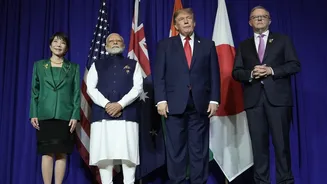
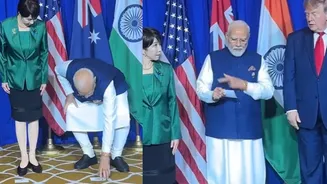
PM Modi presented these gifts during his November 16–17 visit to Manila, where he participated in the 23rd ASEAN-India Summit and the 21st East Asia Summit. He also attended a Quad leaders’ meeting alongside Donald Trump, Sanae Takaichi and Anthony Albanese.
The collection brought together remarkably different forms of Indian craftsmanship. Rajasthan’s devotional paintings and pottery, Kashmir’s fine textiles, Tamil Nadu’s bronze casting, Karnataka’s silver-inlaid metalwork and Gujarat’s textile and gemstone traditions all found a place in the diplomatic exchanges.
Each gift carried a connection to the region where it was made, the techniques used by its artisans and the cultural traditions that continue to shape Indian craftsmanship.