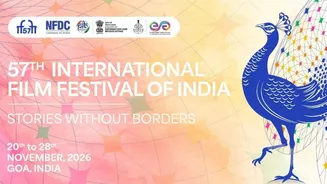







New Delhi: Marathi cinema will enjoy a prominent presence at the 57th International Film Festival of India (IFFI), scheduled to take place in Goa from
November 20 to 28. The festival will showcase a diverse collection of Marathi films exploring social realities, family relationships and personal struggles, while also paying tribute to two celebrated figures of Indian cinema, Suryakant Mandhare and Nana Patekar.
According to the Ministry of Information and Broadcasting, seven Marathi films have secured places in the Indian Panorama section. The festival will also feature a Marathi film in the Gala Premieres category, a web series competing for recognition, and a digitally restored classic celebrating the industry’s cinematic heritage.
Among the selected feature films is Aadi Anant, directed by Mahesh Limaye. Featuring Ashok Saraf, Sankarshan Karhade, Sakhi Gokhale and Yogesh Shirsat, the film follows an aspiring actor and his relationship with his grandfather. Through their emotional journey, the narrative examines caregiving, family obligations and changing perceptions of success.
The Indian Panorama’s Mainstream Cinema section will feature Deool Band 2 (Temple Closed 2) and Baapya (The Man).
Written and directed by Pravin Vitthal Tarde, Deool Band 2 addresses the hardships faced by farming families through the experiences of a woman struggling to rebuild her life following her husband’s death.
Samir Tewari’s Baapya, meanwhile, centres on a transgender individual returning to their hometown. The film explores questions of belonging, family acceptance and gender identity.
Another Marathi feature, Tighee, directed by Jeejivisha Kale, has been selected for the Best Debut Director of Indian Feature Film category. The family drama examines complicated relationships, emotional sacrifices and feelings that often remain unexpressed.
Marathi cinema will also be represented by three productions in the Indian Panorama non-feature category.
Amyth Patkar’s Punishment (Shiksha) investigates the psychological consequences of wrongdoing through two apparently disconnected thefts. Santosh Davakhar’s Sky Tree (Abhal-Vriksh) portrays the aspirations of a rural resident confronting drought, while Nipun Dharmadhikari’s The Moon (Chandoba) follows an adolescent navigating the emotional challenges and social stigma associated with vitiligo.
The Gala Premieres section will screen Tu Aahes Na (You Are There, Right?), directed by National Award-winning filmmaker Deepak Gawade. The film examines grief, isolation and the search for identity, with human relationships forming the emotional foundation of its story.
Marathi-language content will also feature in the festival’s Best Web Series Award category through Devkhel, directed by Chandrakanth Lata Gaikwad. Set in a coastal village, the crime thriller revolves around mysterious killings linked to rituals and local superstitions, gradually revealing a disturbing reality.
Beyond contemporary storytelling, the festival will revisit the contributions of legendary Marathi actor Suryakant Mandhare as part of his birth centenary celebrations.
His 1965 film Sadhi Manase will be screened in a restored version prepared by the National Film Archive of India under the National Film Heritage Mission. The screening is part of the festival’s Centenary Tributes programme, which aims to introduce landmark cinematic works to new generations.
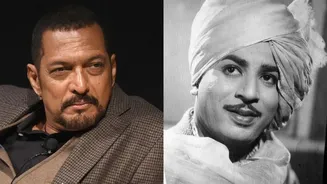
IFFI will also honour Nana Patekar, whose performances across Marathi and Hindi cinema earned him widespread recognition. The tribute programme will include a screening of his Hindi film Diksha, along with an open-air presentation of the acclaimed Marathi film Natsamrat at Miramar Beach.
The 57th edition of IFFI is expected to provide Marathi filmmakers with an international platform while highlighting the language industry’s ability to combine culturally rooted narratives with contemporary themes.
With stories ranging from rural hardship and social exclusion to family bonds and psychological conflict, this year’s Marathi selections reflect the evolving creative landscape of regional Indian cinema.