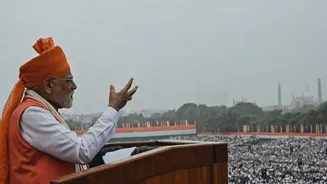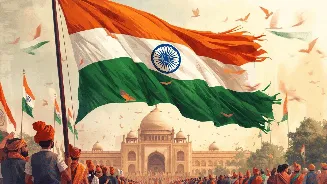






New Delhi: On August 15, the Indian Tricolour is more than a flag – it becomes a moving backdrop to the country’s Independence Day story. From the Red
Fort, where the Prime Minister hoists the national flag before addressing the nation, to giant tricolours rising above border posts, hilltops and city landmarks, these flags turn familiar places into powerful symbols of freedom, sacrifice and national pride. As India prepares for Independence Day 2026, here are some of the country’s most iconic flag landmarks to explore.
1. Red Fort, Delhi: The flag that defines August 15
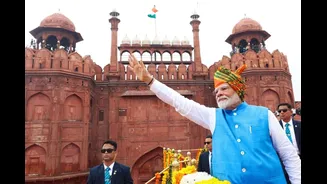
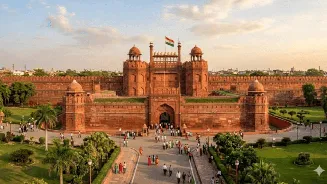
No Independence Day flag is more closely associated with India’s freedom story than the one at Delhi’s Red Fort. The Ministry of Defence confirms that the ceremonial national flag hoisting takes place here every August 15, followed by the Prime Minister’s address to the nation. The ceremony includes a Guard of Honour, the National Anthem, a 21-gun salute and other ceremonial elements.
2. Attari-Wagah: The Tricolour at India’s western frontier
At the Attari-Wagah border in Punjab, the Tricolour takes on an especially dramatic setting. The border is famed for its daily Beating Retreat ceremony, when Indian and Pakistani forces perform a highly choreographed flag-lowering ritual. Incredible India describes Attari-Wagah as one of the country’s most prominent patriotic attractions.
The Indian side also became known for a 360-foot flagpole, one of the country’s landmark giant flag installations.
3. Belagavi, Karnataka: One of India’s tallest flagpoles
Belagavi’s historic Fort area is home to a towering national flag installation measuring about 361 feet (110 metres). The flagpole was unveiled in 2018, making it one of the most striking places in the country to see the Tricolour rise above a historic landscape.
The combination of an imposing flag, the fort precinct and Karnataka’s rich history makes Belagavi an unusual Independence Day destination beyond the usual Delhi-Punjab circuit.
4. Bhakti Shakti Chowk, Pimpri-Chinchwad: A giant flag in Maharashtra
Maharashtra’s Bhakti Shakti area in Pimpri-Chinchwad is another prominent giant-flag landmark. The installation, listed by Times of India Travel at around 351 feet, ranks among India’s notable tall flagpoles.
Its scale makes the Tricolour visible from a considerable distance, offering a distinctly urban setting for Independence Day celebrations.
5. Gandhi Mandap, Guwahati: The Tricolour over Sarania Hill
In Guwahati, the national flag at Gandhi Mandap on Sarania Hill adds a powerful historical setting to the list. The flagpole stands at 319.5 feet, with the installation dating to 2018. The flag itself covers about 9,600 square feet.
The site combines the symbolism of Mahatma Gandhi’s legacy with the visual impact of an enormous Tricolour overlooking the Assam capital.
This year, the government’s Har Ghar Tiranga campaign is again encouraging citizens to bring the national flag into their homes and communities.
From a historic fort in Delhi to a frontier in Punjab and towering city landmarks across the country, these flags offer five very different ways to experience the same national symbol. And on August 15, when the Tricolour catches the morning light, the scale of the flag matters far less than the story it represents.