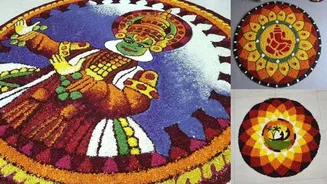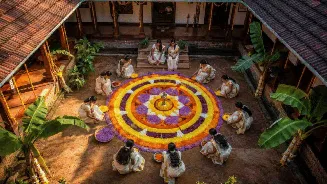








New Delhi: For generations, Onam has arrived in Kerala not merely as a festival, but almost like a homecoming. Courtyards bloom with pookkalams, banana
leaves fill with elaborate sadya, boats race through the backwaters and, at the heart of it all, lives the enduring story of a king whose subjects are said to have loved him so deeply that even his banishment could not keep him away forever.
In 2026, as Kerala prepares to celebrate Thiruvonam on August 26, the history of Onam remains a fascinating blend of mythology, agrarian tradition, temple culture and centuries of evolving social memory.
The Mahabali legend: The story at the heart of Onam
The best-known Onam tradition centres on Mahabali, or Maveli, the legendary Asura king remembered in Kerala folklore as a generous and just ruler. According to the popular story, his kingdom prospered so greatly that the devas became concerned about his growing power and influence.
Lord Vishnu then appeared before Mahabali in the form of Vamana, a dwarf Brahmin, and asked for as much land as could be covered in three steps. Mahabali agreed. Vamana expanded to cosmic proportions, covering the earth and heavens in two strides. With nowhere left for the third, Mahabali offered his own head.
Vishnu sent him to the netherworld but, moved by his devotion and generosity, granted him permission to return once a year to see his beloved subjects. Thiruvonam is traditionally understood as the day of that homecoming.
It is important, however, to distinguish mythology from established history. There is no historical evidence that a king named Mahabali literally ruled the territory of present-day Kerala. Historians have instead examined how the Mahabali story became attached to an older festival tradition and gradually assumed its central place in Kerala’s cultural imagination.
How old is Onam
The origins of Onam are considerably more complicated than the familiar Mahabali story suggests.
Kerala Tourism itself notes references to Onam in Sangam-era Tamil literature, including Madurai Kanji, traditionally associated with the early centuries of the Common Era. The Indian Express, citing historians and researchers, reports that the Sangam literary tradition contains what may be the earliest literary reference to Onam celebrations, suggesting that the festival, or an antecedent celebration, was known in southern India long before the modern Kerala identity of Onam took shape.
There is also considerably stronger documentary evidence from the early medieval period. A copper-plate inscription from around 861 CE, associated with the reign of Chera Perumal ruler Sthanu Ravi, records arrangements connected with an Avani Onam feast at Thiruvattuvayi in present-day Thiruvalla. Later temple records from Kerala likewise point to Onam as an established institutional and temple-centred celebration.
These records do not, by themselves, prove the modern Mahabali narrative. Rather, they demonstrate that an Onam observance existed centuries ago and evolved over time.
Modern Onam also has a distinctly post-independence history. According to Kerala Tourism, the festival was formally declared Kerala’s national festival in 1961, during the tenure of Chief Minister Pattom Thanu Pillai. Public celebrations subsequently expanded, and the Kerala Tourism Department played a major role in transforming Onam into the large-scale cultural festival seen today.
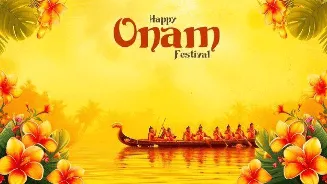
Traditional events such as Athachamayam, once associated with the royal household of Cochin, also evolved into public cultural celebrations. Today, Onam encompasses pookkalam competitions, Vallamkali or snake-boat races, Pulikali, Kaikottikali, temple festivities and the iconic Onasadya.
Perhaps the most enduring feature of Onam is that its meaning is larger than any single version of its origin. It carries a harvest festival’s celebration of abundance, a myth’s memory of Mahabali, a temple tradition’s association with Vamana and a modern Kerala identity built around community and cultural pluralism.
That is why, in 2026, Onam remains much more than a date on the calendar. It is a festival in which mythology becomes memory, harvest becomes celebration and the imagined return of a just king becomes a yearly reminder of the society people wish to live in.