


New Delhi: Durga Puja 2026 begins on October 16 and continues until October 21, with Mahalaya falling on October 10. As Bengali households and communities
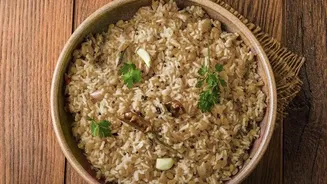
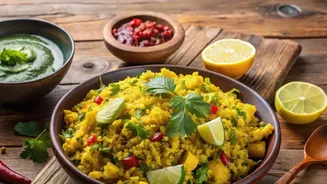
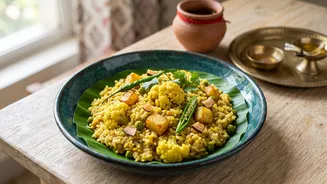
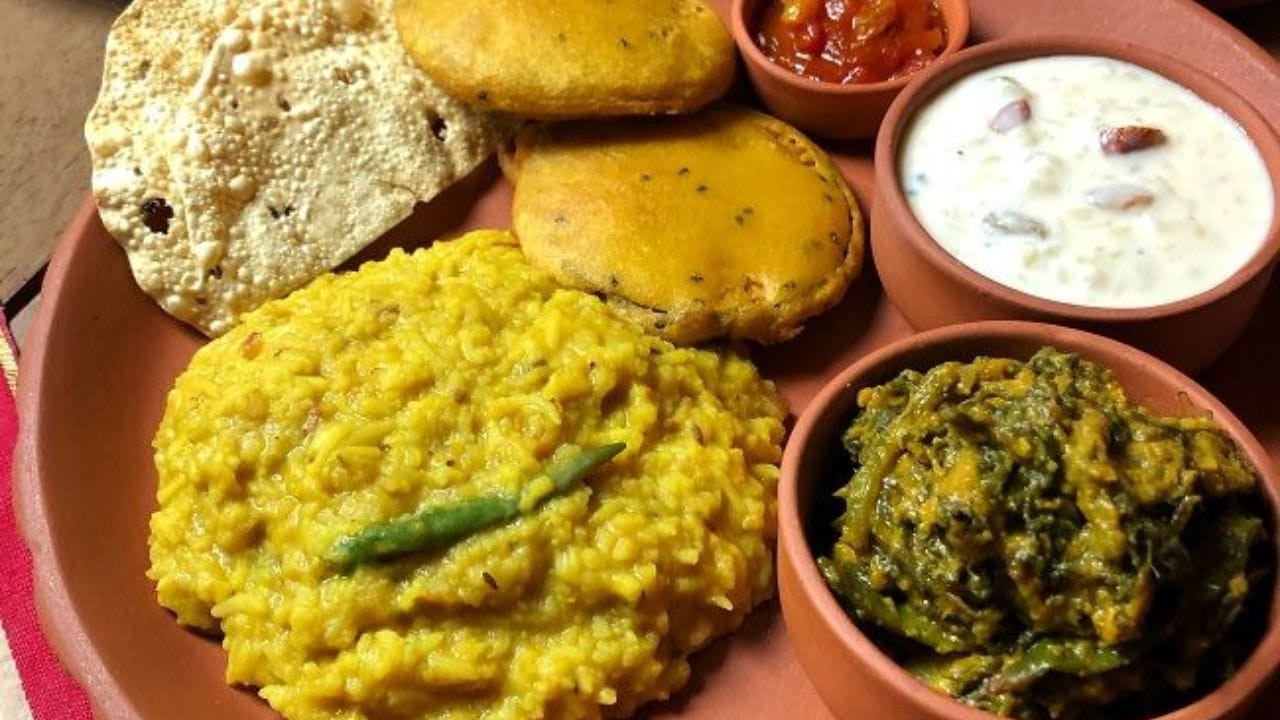
prepare for the festivities, bhog-er khichuri remains one of the most recognisable dishes served during the celebrations. Unlike everyday khichdi, this traditional offering has a distinctive aroma, rich texture and flavour shaped by specific ingredients and cooking methods. Home-style khichdi is often prepared as a simple, nourishing meal with rice, lentils, vegetables and a little ghee.
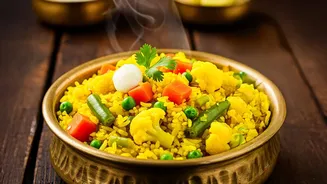
Bhog khichuri, however, follows niramish cooking practices that exclude onion and garlic. Fragrant Gobindobhog rice, dry-roasted moong dal, ginger and whole spices build its characteristic taste, while ghee adds richness. Seasonal vegetables and slow cooking bring the ingredients together. The dish’s religious significance also distinguishes it from an everyday meal, making its preparation an integral part of Bengali Durga Puja traditions.
Why bhog khichuri has a distinctive flavour
Everyday khichdi is valued for its simplicity, but the version prepared for Durga Puja follows a different culinary tradition. The ingredients are chosen to create a fragrant, satisfying dish that can be offered to the Goddess and shared as prasad.
The absence of onion and garlic is one of its defining features. Rather than relying on these ingredients for depth, Bengali bhog khichuri draws its flavour from ginger, cumin, bay leaves, dried red chillies and traditional Bengali spice blends.
Gobindobhog rice adds fragrance
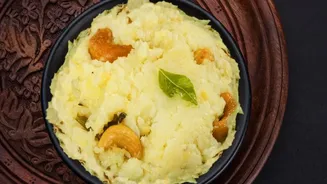
Traditional Bengali bhog khichuri often uses Gobindobhog rice, a short-grained variety known for its distinctive aroma. Its natural fragrance and starch contribute to the dish’s rich consistency and subtly sweet flavour. This variety gives the khichuri a characteristic taste associated with Bengali festive cooking.
Roasted moong dal for nutty aroma
Yellow moong dal is dry-roasted before cooking, allowing it to develop a golden colour and toasted aroma. This step gives bhog khichuri a deeper flavour than preparations in which rice and lentils are cooked together without roasting. Once simmered with rice, spices and vegetables, the dal helps create a hearty texture.
Cooking without onion and garlic
Durga Puja bhog follows niramish cooking practices, which exclude onion and garlic. The resulting flavour profile depends on carefully chosen aromatics and spices. Ginger paste, cumin, bay leaves and dried red chillies provide warmth and depth. Panch pooron, a traditional Bengali five-spice blend, may also be used in some preparations. These ingredients help create a layered flavour without relying on onion or garlic.
Ghee gives a rich texture
Ghee is another important element in traditional bhog khichuri. Added during cooking or toward the end in a generous amount, it lends the dish a rich aroma and has a more indulgent finish. The quantity of ghee varies between households, temples and community kitchens, but its fragrance is an important part of the dish’s appeal.
Seasonal vegetables
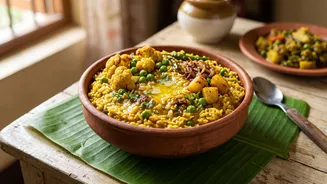
Potatoes, cauliflower and green peas are among the vegetables that may be added to Bengali bhog khichuri. Their flavours mingle with the rice, lentils and spices as the mixture cooks. As they soften, they contribute texture and flavour, making the preparation more substantial than a basic rice-and-lentil dish.
Slow cooking method
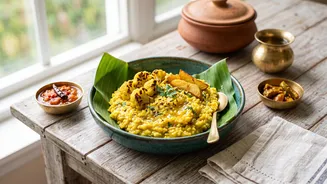
The method of preparation also influences the final taste. Cooking rice, lentils, spices and vegetables together over a steady heat allows their flavours to develop and blend. Traditional cooking methods, including the use of earthen pots and wood fires in some settings, can further shape the aroma and texture.
Durga Puja bhog khichuri’s distinctive rice, roasted lentils, aromatic spices, ghee and niramish preparation give it a flavour closely associated with the festival. The ritual of preparing and sharing the offering makes this familiar combination of rice and lentils an essential part of the Bengali festive table.