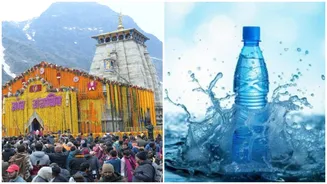








Kedarnath: A simple video of a tourist buying a bottle of water in Kedarnath has gone viral, sparking a nationwide debate.
The shopkeeper explained why
the price was Rs 80, pointing to the harsh terrain, limited access, and costly logistics of transporting goods to high-altitude shrines.
This video is going viral on social media where a tourist is having a conversation with a shopkeeper about why a bottle of water is priced at ₹80 in Kedarnath?
But look at where you are.
High altitude, limited access, short working season, and every single item reaching there… pic.twitter.com/qtj203CP7p— Kumaon Jagran (@KumaonJagran) April 23, 2026
The reality of difficult terrain
The Char Dham routes in Uttarakhand are among the toughest pilgrimage paths in India. Steep mountains, narrow roads, and sharp curves make travel risky. Landslides, sudden weather changes, and fragile terrain often disrupt connectivity. Every item sold in Kedarnath—from water bottles to food—must be carried either by mules, porters, or helicopters, adding to costs.
Transporting essentials like food, fuel, and medical aid is complicated. Vehicles struggle on narrow paths, and emergency services often take hours to reach accident sites. These challenges highlight why even basic items become expensive in Kedarnath. The shopkeeper’s calm explanation in the viral video reminded viewers that “nothing about that place runs on plain convenience.”
Social media reactions
The video triggered mixed reactions online. Some users praised the tourist for patiently listening and buying the bottle with a smile. One user wrote, “Wish all tourists had decency like her. Such tourists are always welcome.”
Others criticized the administration, saying better logistics should prevent such high prices. A Twitter user commented, “This is a failure of governance. With genuine focus and less corruption, solutions can be found.”
Many defended the shopkeeper, pointing out that pilgrims often pay Rs 200 for water at airports or Rs 500 for popcorn in malls without complaint. “These shopkeepers earn for only 4–5 months a year. If prices are fixed, they won’t survive,” wrote another user.
Voices of support
Several users highlighted the seasonal nature of business in Kedarnath. Shopkeepers depend on a short window of pilgrimage season to earn their livelihood. “The price is absolutely justified. These people provide service at a critical place. We should voluntarily give them a tip,” one user suggested.
Another added, “Last year, a 500 ml bottle cost Rs 50 and a 1-liter bottle Rs 100. Honestly, it felt reasonable after seeing the risk and effort involved.”
Criticism and alternatives
Not everyone agreed. Some argued that overcharging should not be normalized. “Overcharging a little at such difficult locations is okay, but making it legal and justifying it is not,” one user wrote.
Others pointed out that natural water streams are available along the route. “Who asks you to pay Rs 80? After every kilometer, there is free water flowing from pipes. Drink that instead,” commented another.
Broader perspective
The debate reflects a larger issue—how urban expectations clash with mountain realities. In cities, people expect instant convenience, but Kedarnath is different. As one pilgrim from Punjab said, “This journey is about faith and patience, not luxury. Facilities have improved, but it will never be like Blinkit or Zomato delivery.”
केदारनाथ में Blinkit, Zomato या Rapido जैसी सुविधाओं की तलाश मत करिए
आजकल कुछ कंटेंट क्रिएटर्स और यहां तक कि कुछ चर्चित लोग भी केवल सनसनी फैलाकर व्यूज़ बटोरने की कोशिश कर रहे हैं। छोटी-छोटी असुविधाओं को इस तरह पेश किया जा रहा है जैसे पूरी यात्रा में कोई व्यवस्था ही न हो, जबकि… pic.twitter.com/uwr0cJ7dNr
— ABHISHEK SEMWAL (@abhiisshhek) April 23, 2026
Experts also note that the Iran war and global supply chain disruptions have affected fuel and LPG availability, indirectly raising costs in Uttarakhand. With limited transport options, shopkeepers face higher expenses, which trickle down to pilgrims.
Effort behind every item that reaches Kedarnath
The viral Kedarnath video has become more than a debate about water prices. It has opened conversations about logistics, governance, and respect for local livelihoods in high-altitude regions. While some see it as administrative failure, others view it as a reminder of the resilience of mountain communities.
Ultimately, the issue is not just about cost—it is about understanding the effort behind every item that reaches Kedarnath. Pilgrimage here has always been a test of faith, patience, and endurance. The viral video simply reminded everyone that the journey is not about convenience, but about devotion and respect for the mountains.