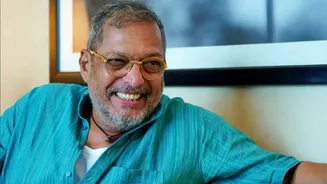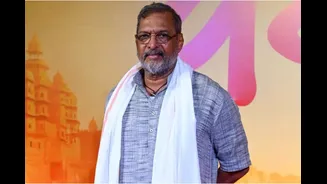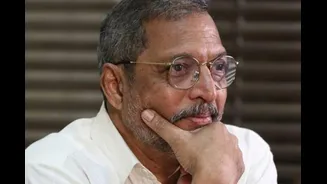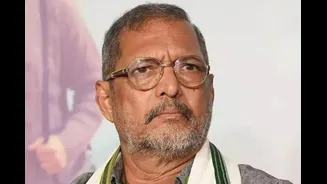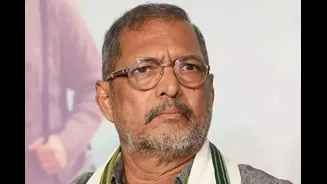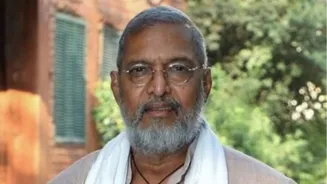

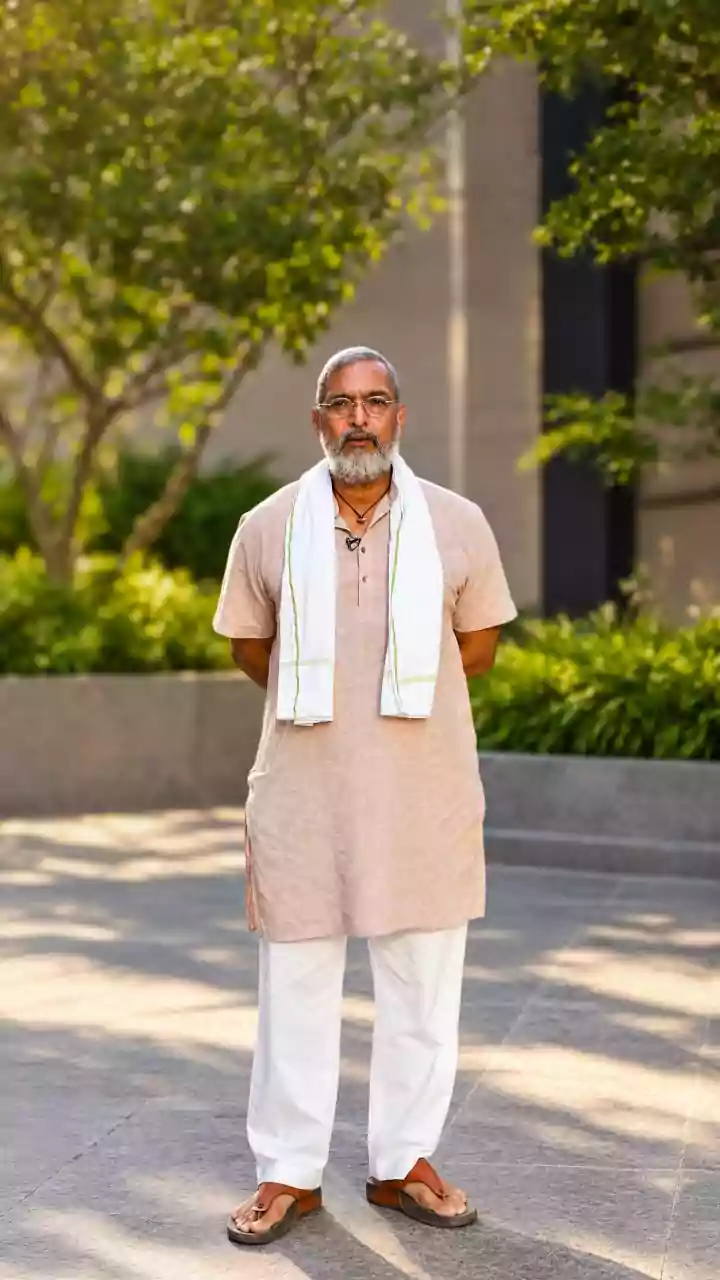

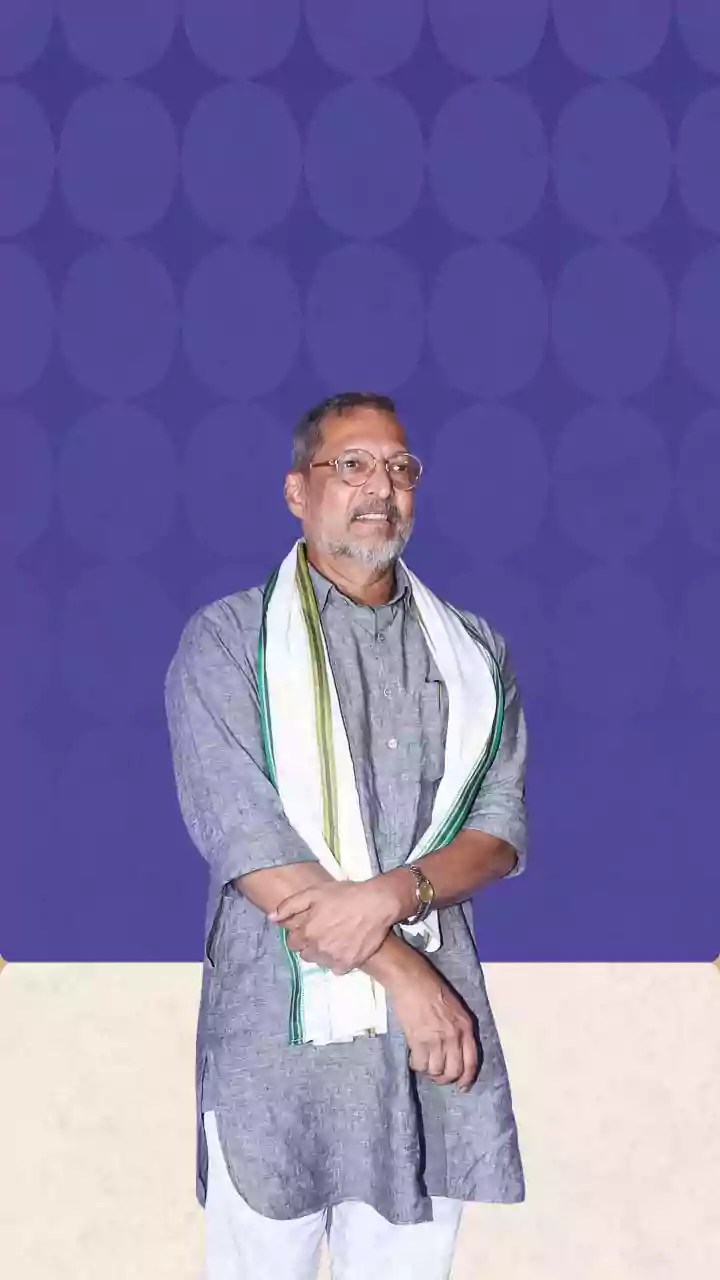




New Delhi: Veteran actor Nana Patekar died at the age of 75 on Thursday, October 8, after suffering a severe cardiac arrest at his residence in Goa. Known
for his distinctive voice, restrained mannerisms and intensely powerful performances, Patekar leaves behind a body of work that spans Hindi and Marathi cinema and several generations of audiences.
Patekar was found unconscious at his Goa residence and was taken to Manipal Hospital in Dona Paula. Doctors attempted to revive him for around 45 minutes, but could not save him. Dr Shekhar Salkar, Chief of the Oncology Department at Manipal Hospital, confirmed his death. He was declared dead at 5:20 am. A medico-legal case has been registered and a post-mortem examination will be conducted.
His final public appearance came just four days before his death at an event in Goa. The actor, who had largely stayed away from the spotlight in recent years, was seen attending the event before returning to his home state.
Patekar’s death brings to an end a career marked by remarkable performances, unexpected choices and a life that extended well beyond cinema. Born Vishwanath Patekar in Murud-Janjira in Maharashtra’s Raigad district, he studied at the Sir JJ Institute of Applied Art in Mumbai before entering the world of acting.
He made his Hindi film debut with Gaman in 1978 and gradually built a reputation for taking on complex and unconventional characters. His breakthrough came with films such as Parinda, for which he won the National Film Award for Best Supporting Actor, and Krantiveer, which earned him the National Film Award for Best Actor.
Patekar continued to demonstrate his range through films including Agni Sakshi, Khamoshi: The Musical, Ab Tak Chhappan and Apaharan. His performances often relied less on conventional theatrics and more on voice modulation, pauses, expressions and body language, giving even restrained scenes a strong impact.
He also proved that his intensity was not limited to serious cinema. His portrayal of gangster Uday Shetty in Welcome introduced another side of the actor to a much wider commercial audience. The character became one of his most recognisable comic performances and showed his ability to move comfortably between drama and mainstream entertainment.
Patekar’s association with the Indian armed forces also became an important part of his life story. At the peak of his acting career, he stepped away from films to serve alongside the Indian Army during the Kargil War. During his time at the front, he reportedly lost around 20 kg while serving with the troops.
His connection with soldiers and the armed forces was also reflected in his filmmaking. He directed Prahaar: The Final Attack, apart from contributing to writing and other aspects of filmmaking. His career therefore extended beyond performing in front of the camera, with the actor exploring different facets of cinema over the years.
Patekar’s contribution to Indian cinema was recognised with three National Film Awards, four Filmfare Awards, Maharashtra State Film Awards and several other honours. He was awarded the Padma Shri in 2013 for his contribution to cinema and the arts.
Away from films, Patekar was closely associated with social causes, particularly issues affecting farmers and rural communities in Maharashtra. His concern for farmers was not limited to public statements, with the actor repeatedly lending his support to those affected by agrarian distress.
His personal life also saw its share of tragedy. Patekar married Neelkanti Patekar in 1978. The couple had two sons, Durvasa and Malhar. Their elder son, Durvasa, died in childhood following an illness. Nana and Neelkanti later lived separately but remained legally married.
Patekar’s final rites are expected to be performed in a field in Goa, according to reports.
Across a career lasting more than four decades, Nana Patekar refused to remain confined to one kind of role or one definition of stardom. He could be fierce and unsettling in a serious drama, understated in a character-driven film and effortlessly funny in a commercial entertainer.
Films such as Parinda, Krantiveer, Ab Tak Chhappan and Welcome represent different chapters of that journey. But his lasting contribution lies in a performance style that was unmistakably his own – a commanding voice, carefully controlled expressions, sharp physicality and the ability to communicate as much through silence as through dialogue.
Nana Patekar’s death marks the loss of one of Indian cinema’s most distinctive performers, an actor whose presence on screen could rarely be mistaken for anyone else’s.