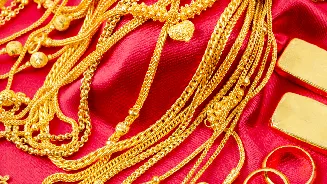








Kolkata: India is believed to be sitting on gold worth $5 trillion, which is far higher than the country’s GDP, and the government is planning to revamp
its flagship Gold Monetisation Scheme to turn this idle asset into a financial instrument, says reports. The plan comes against the backdrop of surging crude oil prices, thanks to the continuing West Asia crisis, which is putting a lot of stress on the rupee and the stress is only rising due to gold imports. Reports state that such a monetisation scheme can be announced later in August and it will rope in jewelers for the first time to ensure this vast amount of yellow metal is rolled back into the jewellery production mill, which is the single biggest origin of demand.
“We are awaiting just one or two final approvals, and most of the approvals have been sought… Utilising this mobilised gold as raw material for the jewellery industry will directly reduce India’s gold imports,” Rajesh Rokde, Chairman, Gems & Jewellery Council, was quoted by the media as saying.
World Gold Council estimates on Indian gold holdings
According to an estimate by the World Gold Council, households and temples in India could be holding about 25,000 tonnes of gold. Estimates by iothers riase it by 5,000 tonnes. Yet other think the amount could even be 50,000 tonnes. If an individual or body (say a trust) deposits gold in this scheme, it will earn it a pre-determined interest, turning it into a lice economic asset.
Gold deposit schemes in India
The Centre launched the Gold Deposit Scheme in 1999 with the express objective of mobilising idle household and institutional gold. But it required one to deposit at least 500 grams of the yellow metal, a quantity that appeared too large for the scheme to become popular. Later, in 2015, scheme was revamped and merged into the modern Gold Monetisation Scheme launched in November 2015. While the medium-term and long-term government deposit components were discontinued in March 2025, banks continue to offer Short-Term Bank Deposits (STBD) at their discretion, says a post on the State bank of India website.
Benefits to the economy
If the gold monetisation scheme can be revived, it can help the country cut down its huge import bill. Gold is the second most expensive item in India’s import bill after crude oil. At a time when gold imports are adversely impacting the rupee which is already under immense pressure against the US dollar, a gold monetisation scheme can curb import. The government has to allow local jewellers to act as collection and recycling partners of the gold being deposited by individuals and bodies. Thus a properly conducted gold monetisation scheme can help the Indian currency against the US dollar.
In May Modi’s appeal to stay away from gold
In the second week of May 2026, Prime Minister Narendra Modi urged Indians not to buy gold to help conserve foreign exchange reserves. More and more gold imports put immense pressure to the country’s import bill, thereby raising country’s trade deficit and pull down the rupee. The gold imports on the back of surging crude oil bill due to the West Asia crisis, was giving sleepless night to the country’s economic policymakers.