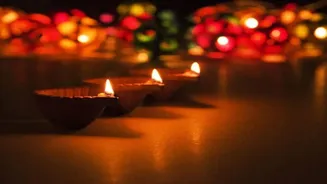







New Delhi: Lighting diyas is one of the most familiar Diwali traditions, but some households follow a more specific custom on Choti Diwali: they light
14 earthen lamps around the home. The number is linked to Chaturdashi, the 14th day of the lunar fortnight, and to traditional beliefs about remembering ancestors and protecting the household from negative forces.
The ritual is particularly significant in Bengal, where it is known as Choddo Prodeep and forms part of Bhoot Chaturdashi celebrations. According to a popular Bengali belief, the spirits of 14 generations of ancestors return to visit their families on this night. The lamps are lit to guide them home and help keep harmful spirits away.
This custom is not followed in exactly the same way across India. The number and meaning of lamps can vary according to regional traditions and family practices.
Why Are 14 Diyas Lit on Choti Diwali?
The number 14 has a direct connection with Chaturdashi, which falls on the fourteenth day of the lunar fortnight. In Bengal, this connection is reflected in two important Bhoot Chaturdashi customs: lighting 14 lamps, called Choddo Prodeep, and eating 14 varieties of leafy greens, known as Choddo Shaak.
One widely followed belief is that the 14 lamps represent the 14 generations of ancestors. Families light them in different parts of the house so that their departed relatives can find their way back and bless the household. The lamps also symbolise remembrance and respect for those who came before the family.
Another belief connects the lamps with protection. People place them near entrances, windows and darker corners of the house to keep away unwanted spirits and negative influences. These explanations belong to regional folklore and religious customs, and families may understand the ritual differently.
What Is the Connection Between 14 Diyas and Bhoot Chaturdashi?
Bhoot Chaturdashi is observed in Bengal on the night before Kali Puja. The word Chaturdashi refers to the fourteenth lunar day, while Bhoot is associated in this context with departed beings and spirits.
The belief that ancestors visit their families gives the evening its distinctive meaning. Lighting 14 lamps is considered a way to welcome and guide them. Some households also place the lamps in the darker areas of their homes, believing that the light protects the family from wandering spirits.
The tradition is accompanied by Choddo Shaak, a meal prepared using 14 varieties of leafy greens. Together, the two customs connect the occasion with ancestral remembrance, protection and the changing season.
Although Bhoot Chaturdashi falls around the same period as Narak Chaturdashi, the two observances have different regional customs and meanings. The Bengali tradition of 14 lamps should therefore not be treated as a universal Choti Diwali ritual.
Where Should the 14 Diyas Be Placed?
There is no single placement rule followed by every family. In households observing Choddo Prodeep, lamps are commonly placed around different parts of the home, including:
- Near the main entrance and doorways.
- Beside windows and balconies.
- In the prayer room or near the family shrine.
- Near the Tulsi plant, where present.
- In darker corners and other spaces around the house.
The idea is to spread light through the home rather than keep all the lamps in one place. Families generally follow the placement customs passed down through their elders.
Are 14 Diyas Compulsory on Choti Diwali?
No. Lighting exactly 14 diyas is a regional tradition, not a compulsory ritual for every Hindu household. It is especially associated with Bhoot Chaturdashi in Bengal. Other regions observe Narak Chaturdashi through customs such as the pre-dawn oil bath, prayers, lighting lamps and remembering the victory of Lord Krishna over Narakasura.
It is also useful to distinguish the 14-lamp custom from Yama Deepdaan. Yama Deepdaan is a separate ritual in which a lamp is offered in the name of Yama, the god of death. Its timing, number of lamps and method can differ according to regional and family traditions.
What Is the Significance of Lighting Diyas on Choti Diwali?
The lamps carry a message of remembrance, protection and the victory of light over darkness. In the Bengali tradition, they honour departed ancestors and reflect the belief that family bonds continue beyond death. In the wider Diwali celebrations, diyas represent hope, goodness and the welcoming of prosperity.
For families observing the 14-lamp ritual, the custom is also a way to keep ancestral traditions alive. Each lamp becomes a small act of remembrance, connecting the present generation with those who came before it.
In 2026, Bengali households will observe Bhoot Chaturdashi on Saturday, November 7, before Kali Puja and Diwali on November 8. The morning observance of Narak Chaturdashi falls on November 8 in New Delhi, so the dates of these regional observances should not be confused.
Written by: Tanya Singh of Astropatri.com. For feedback, please write to hello@astropatri.com.