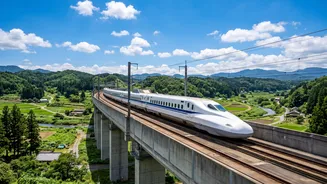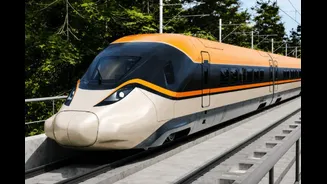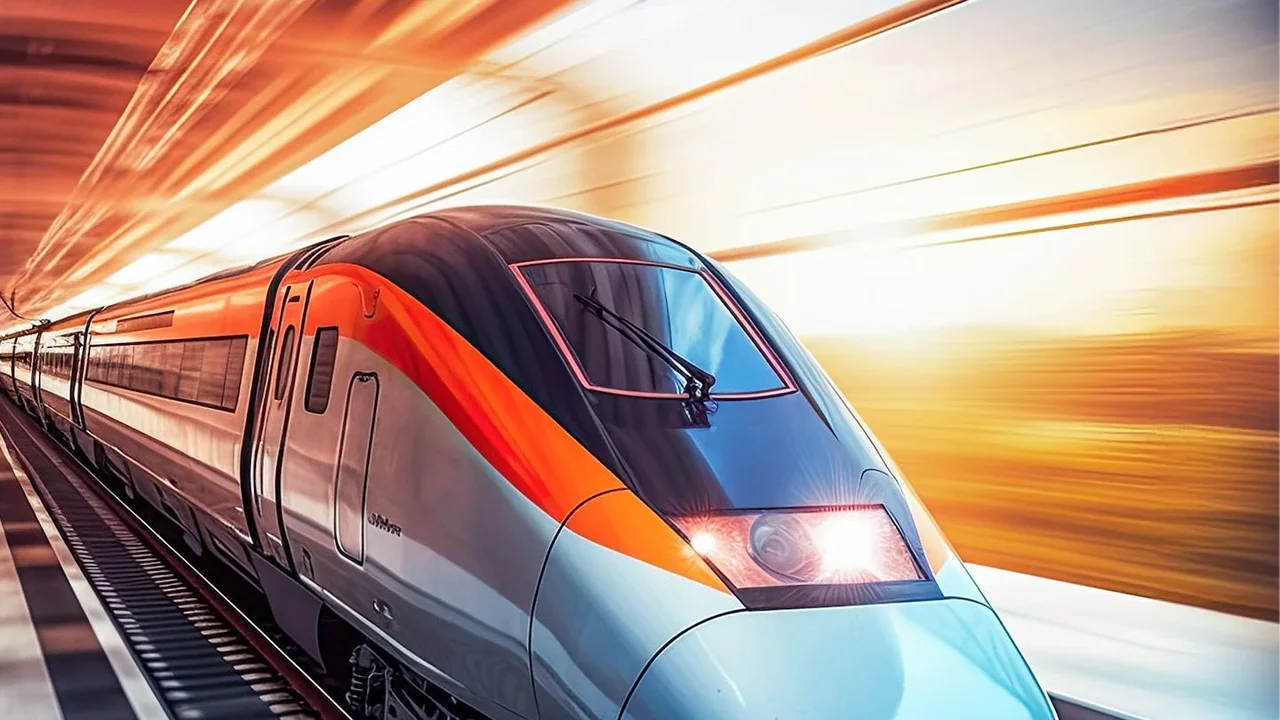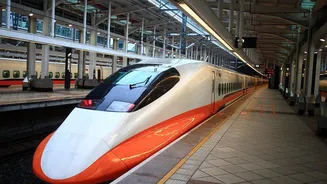




India’s first indigenous bullet train is expected to begin trial runs in May or June 2027, Railway Minister Ashwini Vaishnaw has said, giving the Mumbai-Ahmedabad
high-speed rail project a fresh timeline.
Vaishnaw said testing will begin on a completed stretch of the corridor and could continue for two to four months before passenger services start. He was speaking at the “Namo for Vikasit Bharat” event in Vadodara.
#WATCH | Vadodara, Gujarat | At the ‘NaMo for Viksit Bharat’ event, Union Minister Ashwini Vaishnaw says, “Regarding the bullet train being built in India—driven by the Prime Minister’s vision of Atmanirbhar Bharat—its first body frame was completed just the day before yesterday… pic.twitter.com/LaQYu9eLZD
— ANI (@ANI) September 8, 2026
India bullet train trials expected in May or June 2027
The minister said the first body frame of the high-speed train has been completed and sent for squeeze testing, which checks the structural strength of the coach body.
He said, “By May or June next year, India’s own bullet train will be on the tracks for testing. After 2-4 months of testing, Prime Minister Narendra Modi will inaugurate the bullet train.”
The project is being developed on the Mumbai-Ahmedabad corridor, with work moving in phases across Gujarat and Maharashtra.
Vaishnaw said the Surat-Vapi stretch is expected to be completed by December 2026.
Travel time from Vadodara to Mumbai could fall sharply
Vaishnaw said the high-speed service would cut travel time between Vadodara and Mumbai to around one and a half hours.
He said, “When you travel on the bullet train from Vadodara, you will reach Mumbai in just one and a half hours.”
The corridor is expected to open in stages. The Surat-Bilimora section is planned as the first operational stretch, followed by Vapi-Surat, Vapi-Ahmedabad, Ahmedabad-Thane and then the full Ahmedabad-Mumbai route.
More high-speed rail corridors proposed
The government has proposed seven more high-speed corridors, including Delhi-Varanasi, Mumbai-Pune, Bengaluru-Chennai and several routes linking Hyderabad with major cities.
Vaishnaw also referred to wider railway modernisation work covering reservation systems, operating systems and construction standards.
He said, “We are improving and modernising everything, from operating systems and reservation systems to outdated construction protocols.”
The minister said 280 stations have been redeveloped and about 36,000 kilometres of new track has been laid across the country. He also cited completed projects such as the Chenab Bridge and the railway link connecting Mizoram with the national network.
The Mumbai-Ahmedabad bullet train remains one of India’s biggest transport projects, and the next major test will come when the indigenous train set begins running on the corridor in 2027.