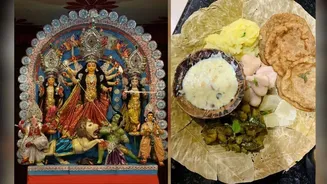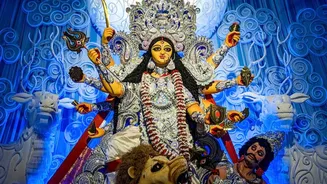






New Delhi: Maha Ashtami and Maha Navami fall on October 19, 2026, in the North Indian Panchang calendar followed by many devotees. The unusual arrangement
means that two important days of Shardiya Navratri will be observed on the same calendar date, leaving devotees with questions about Kanya Pujan, Navami Havan and the completion of their vrat.
The reason lies in the timing of the lunar tithis. Ashtami ends at 10:51 AM on October 19, and Navami begins immediately afterwards. Because the two tithis transition within the same day, specific Hindu ritual-calendar rules allow both observances to be performed on October 19. However, practices can differ by region and family tradition.
When Are Maha Ashtami and Maha Navami in 2026?
According to the Delhi Panchang timings, Maha Ashtami falls on Monday, October 19, 2026, and Maha Navami is also listed for October 19.
Here is how the tithis unfold:
- Ashtami Tithi: Begins at 8:27 AM on October 18 and ends at 10:51 AM on October 19.
- Navami Tithi: Begins at 10:51 AM on October 19 and ends at 12:50 PM on October 20.
- Vijayadashami: Follows on October 20 in the general North Indian festival calendar.
These timings are based on Delhi calculations. Local Panchang timings can vary, and some regional traditions assign the observances differently.
Why Are Ashtami and Navami Falling on the Same Day?
The Hindu lunar calendar does not follow fixed midnight-to-midnight days. Instead, festival dates are determined by tithis, which can begin or end at any time.
In 2026, Ashtami remains in effect on the morning of October 19, while Navami begins at 10:51 AM. Under specific Durga Puja observance rules, when the transition between Ashtami and Navami occurs before the prescribed evening period, both days’ worship can be performed on the same calendar date.
This does not mean the two tithis merge into one. Ashtami and Navami remain separate lunar days, each associated with its own form of Maa Durga and its own religious significance. It is the ritual calendar that determines how their observances are arranged.
Which Goddess Is Worshipped on Ashtami and Navami?
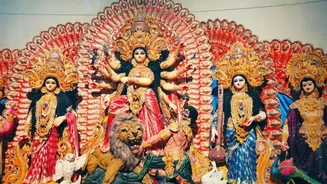
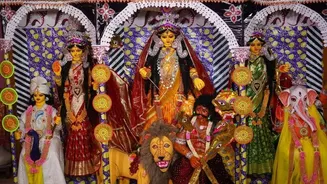
Each day honours a different manifestation of Maa Durga, making the double observance particularly significant for devotees.
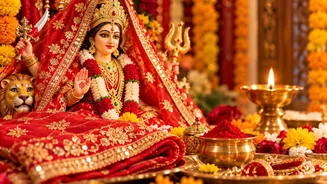
Maha Ashtami: Devotees worship Maa Mahagauri, the eighth form of Navadurga, associated with purity, peace and spiritual fulfilment. Pushpanjali, special prayers and Kanya Pujan are important observances in many households.
Maha Navami: Devotees worship Maa Siddhidatri, the ninth form of Navadurga, associated with spiritual accomplishment and divine blessings. Navami is traditionally associated with Havan and the completion of the main Navratri worship in many families.
When both observances fall on one date, devotees can follow the prescribed sequence of rituals according to their local Panchang and family customs.
When Should You Perform Kanya Pujan in 2026: Ashtami or Navami?
Kanya Pujan can traditionally be performed on either Maha Ashtami or Maha Navami. The choice depends on family tradition, the fasting practice being followed and the applicable Panchang.
For devotees following the cited Delhi timings, the Ashtami Kanya Pujan muhurat is approximately 8:29 AM to 10:16 AM on October 19. A Navami observance is also associated with October 19, with the cited Abhijit Muhurat falling around 11:43 AM to 12:29 PM.
These timings are location-specific, not universal. Devotees should check their local Panchang before arranging Kanya Pujan or Havan, particularly when following a particular regional tradition.
Does the Ashtami-Navami Date Coincidence Affect Navratri Fasting?
Yes, it can affect when devotees perform Kanya Pujan, complete their prayers or conclude their fast. Some families observe their vrat and Kanya Pujan on Ashtami, while others continue their worship through Navami and perform Havan according to their customary practice.
The date of the ritual and the date on which the fast is completed do not always have to be identical. Devotees should follow the rules prescribed by their family tradition or local religious calendar.
The key takeaway: October 19 is unusual because Ashtami ends and Navami begins on the same date. Both retain their separate significance, but the precise observance depends on regional customs and Panchang calculations. Checking the local calendar is the best way to avoid confusion while preparing for Kanya Pujan, Navami Havan and the concluding days of Shardiya Navratri.
Written by: Tanya Singh of Astropatri.com. For feedback, please write to hello@astropatri.com.