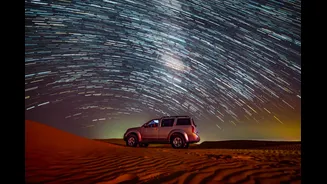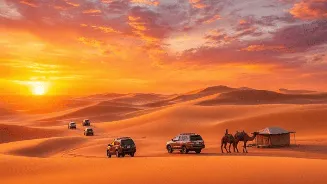









New Delhi: Imagine driving through a landscape of sand dunes after sunset, with the darkness broken only by carefully controlled lighting and the movement
of animals adapted to some of the world’s harshest environments. That unusual wildlife experience could soon become a reality in Gujarat. The state’s Forest Department has received approval from the Central Zoo Authority (CZA) for a 103-hectare Desert Zoological Park and drive-through Night Safari at Juna Deesa in Banaskantha district, a project being described as Asia’s first desert-themed night safari and zoological park.
The proposed facility is estimated to cost ₹542.14 crore and will be developed on contiguous government land at Juna Deesa. According to details released by Gujarat authorities, the project is designed not merely as a tourism attraction but as a combined centre for wildlife conservation, rescue and rehabilitation, conservation breeding, environmental education and scientific interpretation.
The location itself has been selected for its natural characteristics. Officials cited the presence of sand dunes, proximity to the Banas River and road and railway connectivity as factors supporting the choice of Juna Deesa.
Five night-safari enclosures
One of the project’s biggest draws will be its dedicated night-safari component. Plans call for five specialised night-safari enclosures, alongside a separate day zoo. Visitors will be able to observe nocturnal animals after sunset in environments designed around desert ecosystems rather than conventional zoo enclosures.
The proposed park is expected to house around 2,700 animals and birds representing nearly 83 species, although the final animal collection and displays will be subject to the project’s implementation and applicable regulatory requirements.
Lions, wolves, caracals and desert wildlife
The animal collection is planned to showcase wildlife associated with Indian, African and Australian desert ecosystems. Native species listed in the project details include the chinkara, blackbuck, Indian wild ass, Indian wolf, caracal, striped hyena, golden jackal, desert fox, Indian porcupine, Indian hare and hedgehog. The proposal also includes Asiatic lions and leopards.
The international desert theme will bring an even broader mix. Proposed African species include the Angolan giraffe, Grevy’s zebra, scimitar oryx, springbok, addra gazelle, African cheetah, African lion, black rhinoceros, meerkat and ostrich. Australian desert fauna is expected to include kangaroos, emus and wallabies.
Beyond the safari, the master plan includes a reptile safari, aviary, reptile house, butterfly park, aquarium, rainforest biome and interpretation centre, as well as visitor facilities such as a food court, souvenir shop and golf-cart services.
Designed with sustainability in mind
Environmental safeguards are also built into the proposal. Officials say the project will incorporate rainwater harvesting, a sewage treatment plant, solid-waste management, solar energy, native plantations and green buffer zones to reduce its ecological footprint.
The CZA approval is particularly significant because night safaris operate under specific regulatory and animal-welfare considerations. CZA guidelines stipulate that night-safari facilities must be designed and operated without compromising animal facilities and welfare, with provisions governing visitor access and the separation of animals used for daytime and night-time viewing.
New wildlife tourism hub for north Gujarat
For Banaskantha, the project could add a major new attraction to a region already connected to destinations such as Ambaji, Vadnagar and Nadabet. Officials expect the park to strengthen tourism infrastructure and create a flagship destination combining wildlife viewing with conservation and environmental education.
Importantly, the project has received approval but is not yet an operational safari. Details such as the opening date, visitor timings and ticket prices have not been announced in the reports reviewed. For now, the CZA clearance marks the green light for what could become one of Gujarat’s most distinctive wildlife-tourism projects – turning the desert landscape of Juna Deesa into an after-dark encounter with creatures built for life in the arid wild.